Donders Institute for Brain, Cognition and Behaviour, Radboud University, Kapittelweg, Netherlands.
Elife. 2020 Jun 1;9:e55389. doi: 10.7554/eLife.55389.
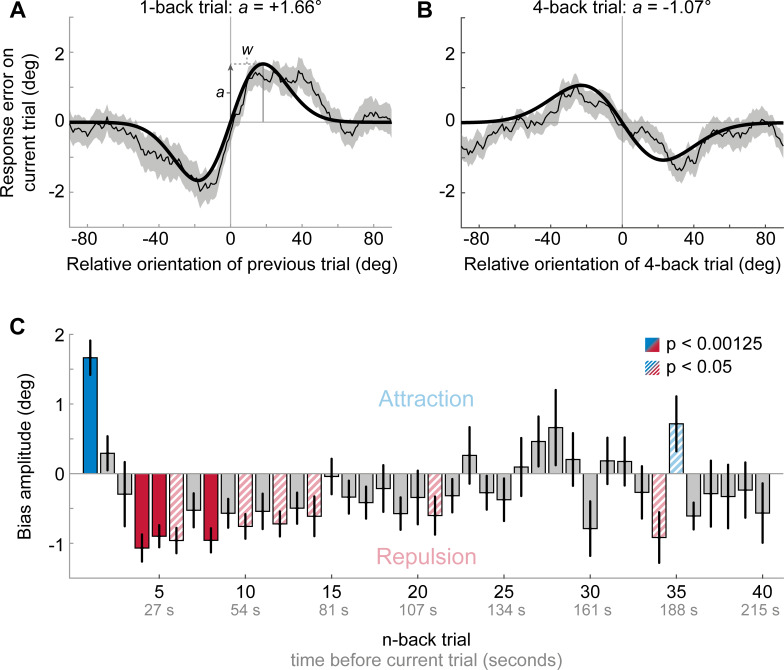
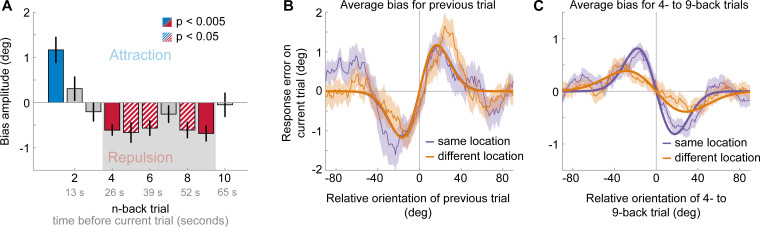
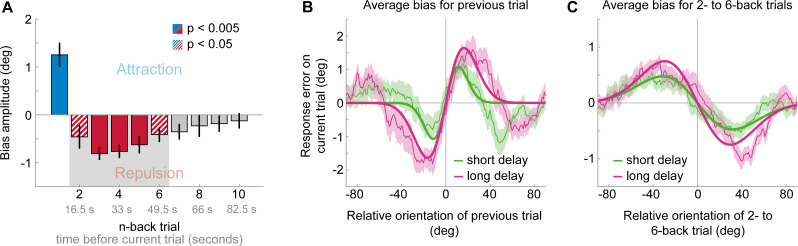
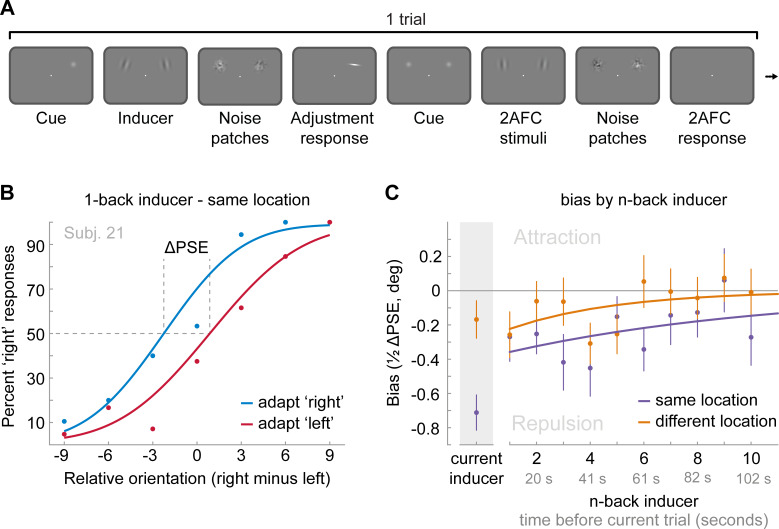
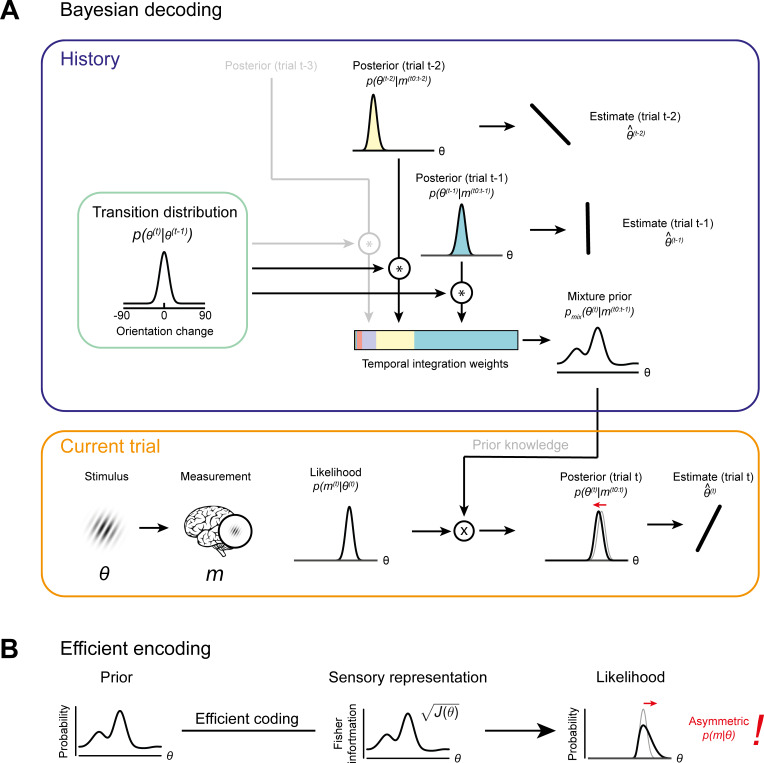
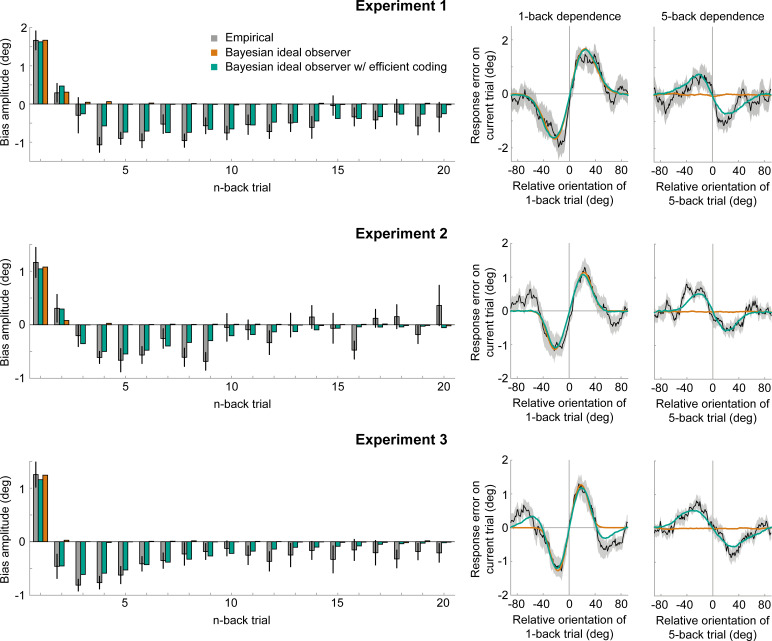
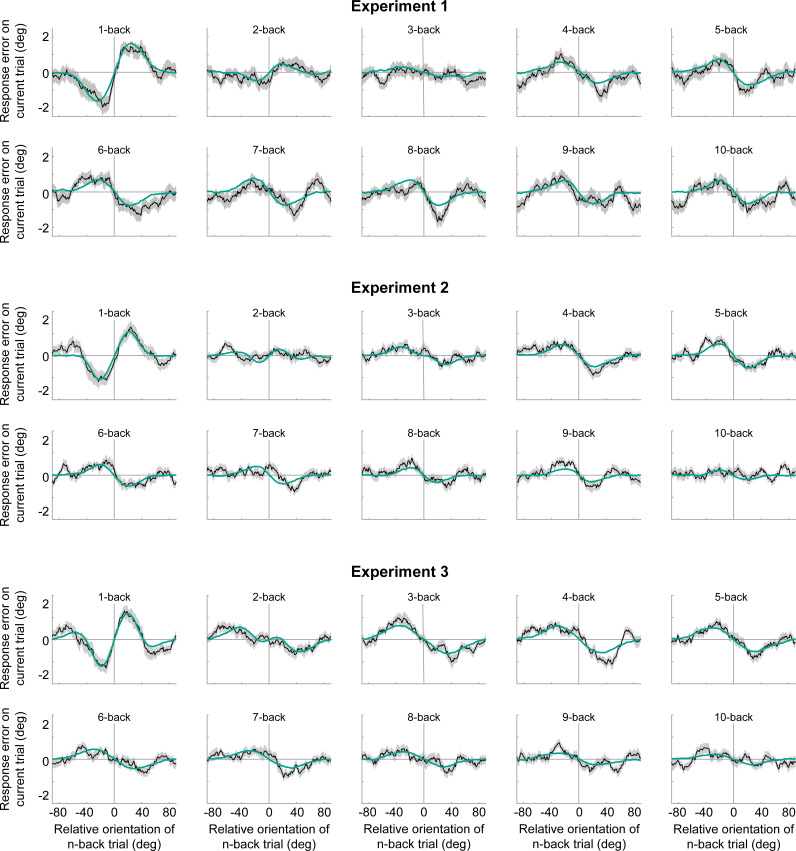
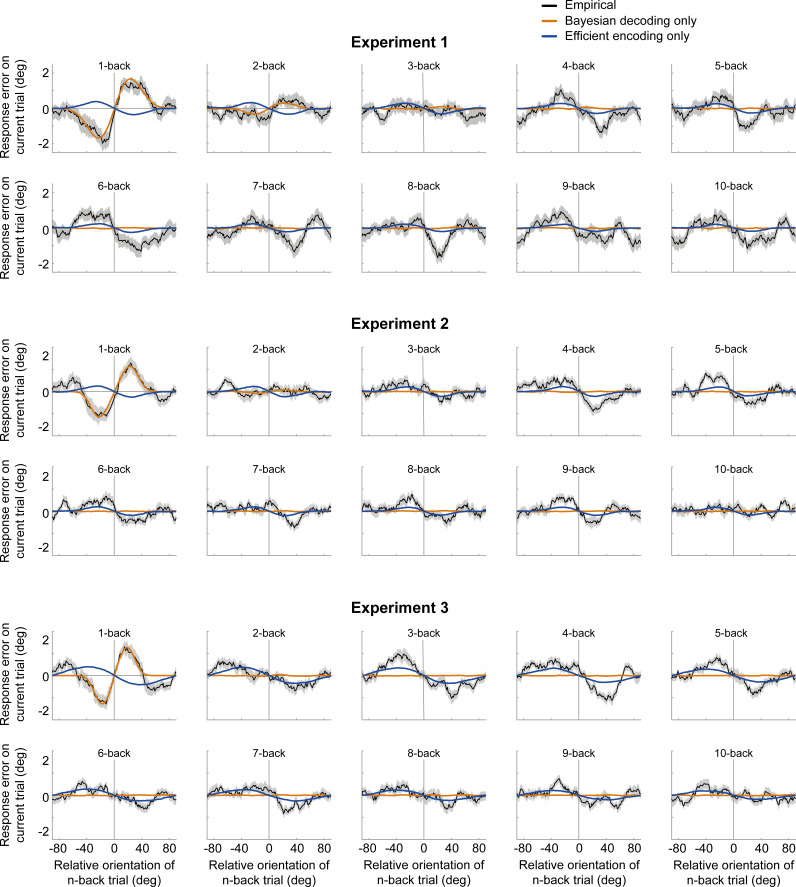
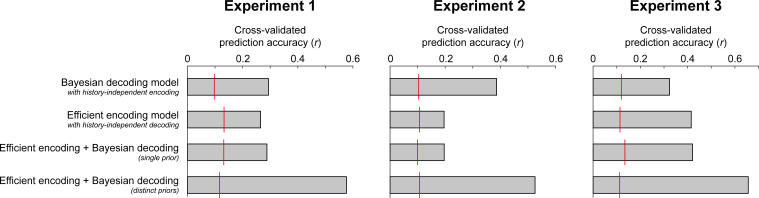
Human perceptual decisions can be repelled away from (repulsive adaptation) or attracted towards recent visual experience (attractive serial dependence). It is currently unclear whether and how these repulsive and attractive biases interact during visual processing and what computational principles underlie these history dependencies. Here we disentangle repulsive and attractive biases by exploring their respective timescales. We find that perceptual decisions are concurrently attracted towards the short-term perceptual history and repelled from stimuli experienced up to minutes into the past. The temporal pattern of short-term attraction and long-term repulsion cannot be captured by an ideal Bayesian observer model alone. Instead, it is well captured by an ideal observer model with efficient encoding and Bayesian decoding of visual information in a slowly changing environment. Concurrent attractive and repulsive history biases in perceptual decisions may thus be the consequence of the need for visual processing to simultaneously satisfy constraints of efficiency and stability.
人类的知觉决策可以被排斥远离(排斥适应)或被近期的视觉经验吸引(吸引序列依赖)。目前尚不清楚这些排斥和吸引的偏差在视觉处理过程中是否以及如何相互作用,以及什么计算原理是这些历史依赖性的基础。在这里,我们通过探索它们各自的时间尺度来区分排斥和吸引的偏差。我们发现,知觉决策同时受到短期知觉历史的吸引和被几分钟前经历过的刺激排斥。短期吸引和长期排斥的时间模式不能仅由理想的贝叶斯观察者模型来捕捉。相反,它可以由一个理想的观察者模型来很好地捕捉,该模型在一个缓慢变化的环境中对视觉信息进行高效的编码和贝叶斯解码。因此,知觉决策中的同时存在的吸引和排斥的历史偏差可能是视觉处理需要同时满足效率和稳定性约束的结果。