Department of Neurology, Medical University of Innsbruck, Innsbruck, Austria.
Department of Therapeutic Radiology and Oncology, Medical University of Innsbruck, Innsbruck, Austria.
PLoS One. 2020 Jun 1;15(6):e0233982. doi: 10.1371/journal.pone.0233982. eCollection 2020.
The aim of this study was to investigate the effects on subjective and objective sleepiness of a stay above a large struck singing bowl compared to a relaxation period in a silent singing bowl.
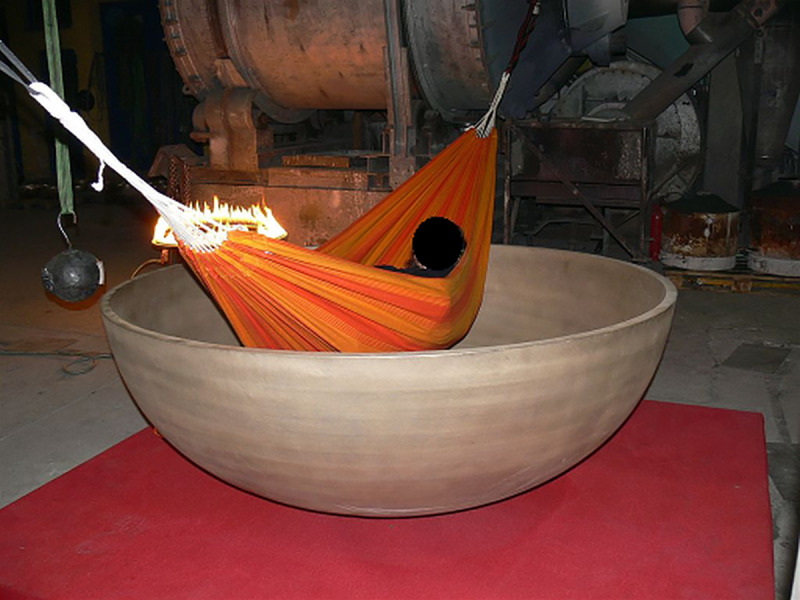
Fifty-eight healthy subjects were recruited for the study, 48 participated on two days, one week apart, during the same timeslot. The Karolinska sleepiness scale was used to evaluate current subjective sleepiness, and the relative pupillary unrest index to assess objective sleepiness. In this randomized cross-over study, the intervention consisted of a 20-minute stay in a hammock while the singing bowl, positioned beneath, was struck seven times. The controlled comparator was a 20-minute stay in the same hammock above the singing bowl, but without being struck. After these two interventions subjective and objective sleepiness were re-evaluated.
The mean relative pupillary unrest index values after relaxation in the struck and silent singing bowl groups were 0.74 and respectively 0.71 (p = 0.460). The median Karolinska sleepiness scale value after relaxation with the struck singing bowl was 3 compared with 4 (p = 0.041) for the silent singing bowl.
This study evaluated the influence of a struck singing bowl on sleepiness during daytime. Subjective sleepiness was significantly lower after relaxation above a struck singing bowl. After gender stratification, the difference was still significant in women. Objective sleepiness was not different in both groups. Finally, we can only speculate if women may be more susceptible to subjective improvements in case of sleepiness and show another perception of relaxation in a struck singing bowl compared to men.
本研究旨在探究与在安静的颂钵上方保持安静相比,待在敲击后的大型颂钵上方对主观和客观嗜睡的影响。
招募了 58 名健康受试者参加本研究,其中 48 名受试者在相隔一周的两天内分两次参加研究,在同一时间段内进行。使用 Karolinska 嗜睡量表评估当前的主观嗜睡程度,并用相对瞳孔不自主指数评估客观嗜睡程度。在这项随机交叉研究中,干预措施包括在吊床上躺 20 分钟,同时位于下方的颂钵被敲击七次。对照组为在同一吊床上保持 20 分钟,但不敲击颂钵。在这两种干预措施后,重新评估主观和客观嗜睡程度。
敲击和安静颂钵组放松后的平均相对瞳孔不自主指数值分别为 0.74 和 0.71(p=0.460)。敲击颂钵放松后,Karolinska 嗜睡量表的中位数为 3,而安静颂钵为 4(p=0.041)。
本研究评估了白天敲击颂钵对嗜睡的影响。在敲击后的颂钵上方放松后,主观嗜睡程度显著降低。在按性别分层后,女性的差异仍然显著。两组的客观嗜睡程度没有差异。最后,我们只能推测女性是否更容易在嗜睡的情况下主观上改善,并在敲击后的颂钵中表现出与男性不同的放松感知。