Cechin Joanei, Piasecki Cristiano, Benemann Daiane P, Kremer Frederico S, Galli Vanessa, Maia Luciano C, Agostinetto Dirceu, Vargas And Leandro
Department of Crop Protection, Federal University of Pelotas, Pelotas, RS 96160-000, Brazil.
Department of Plant Sciences, University of Tennessee, Knoxville, TN 37996, USA.
Plants (Basel). 2020 May 28;9(6):685. doi: 10.3390/plants9060685.
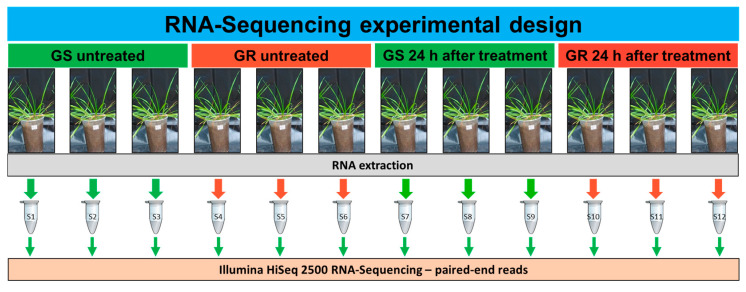
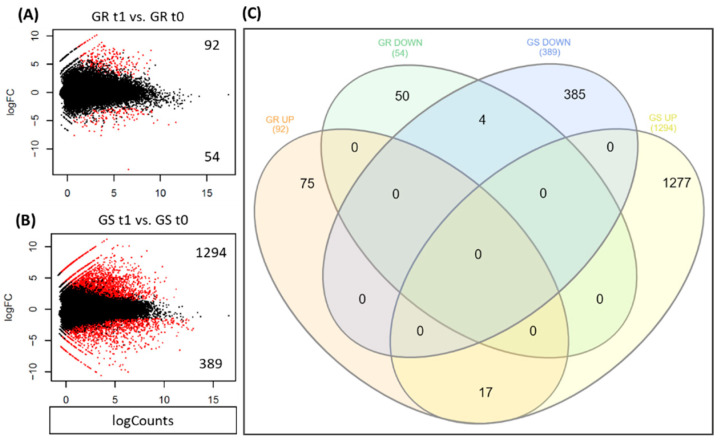
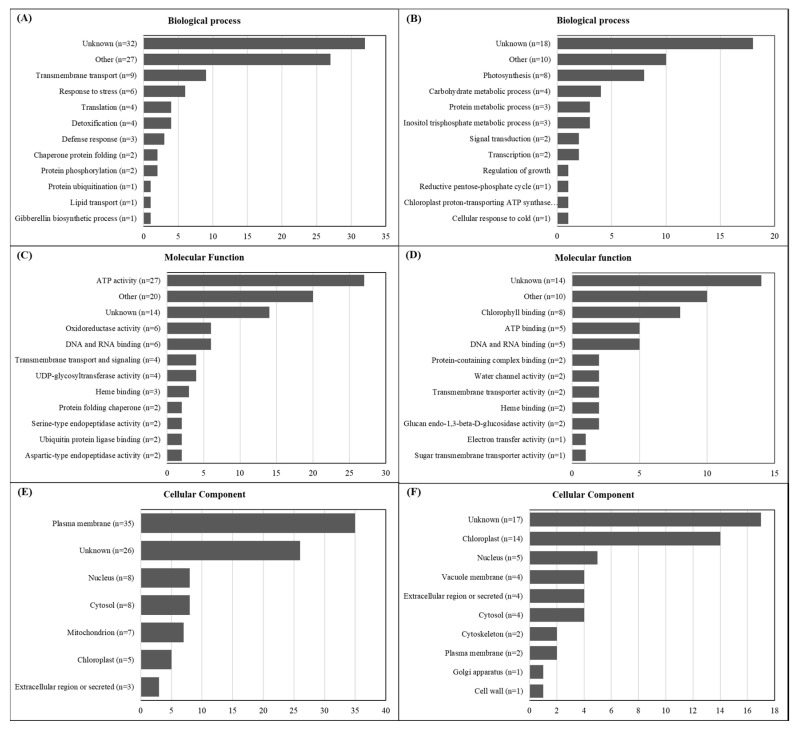
Italian ryegrass (; LOLMU) is one of the most troublesome weeds in temperate regions in the world. This weed species interfere with wheat, corn, rye, and oat, causing significant crop yield losses. This species has evolved glyphosate resistance, making it difficult to control. The mechanisms of glyphosate resistance are still unknown, and an understanding thereof will favor the development of new strategies of management. The present study is the first transcriptome study in LOLMU using glyphosate-resistant and -sensitive biotypes, aiming to identify and to provide a list of the candidate target genes related to glyphosate resistance mechanism. The transcriptome was assembled , producing 87,433 contigs with an N50 of 740 bp and an average length of 575 bp. There were 92 and 54 up- and down-regulated genes, respectively, in the resistant biotype, while a total of 1683 were differentially expressed in the sensitive biotype in response to glyphosate treatment. We selected 14 highly induced genes and seven with repressed expression in the resistant biotype in response to glyphosate. Of these genes, a significant proportion were related to the plasma membrane, indicating that there is a barrier making it difficult for glyphosate to enter the cell.
意大利黑麦草(; LOLMU)是世界温带地区最棘手的杂草之一。这种杂草会干扰小麦、玉米、黑麦和燕麦,导致作物产量大幅损失。该物种已进化出对草甘膦的抗性,使其难以控制。草甘膦抗性机制仍然未知,了解其机制将有助于开发新的管理策略。本研究是首次对意大利黑麦草抗草甘膦和敏感生物型进行转录组研究,旨在鉴定并提供与草甘膦抗性机制相关的候选靶基因列表。转录组进行了组装,产生了87,433个重叠群,N50为740 bp,平均长度为575 bp。抗性生物型中分别有92个上调基因和54个下调基因,而在敏感生物型中,共有1683个基因因草甘膦处理而差异表达。我们选择了14个在抗性生物型中对草甘膦高度诱导表达的基因和7个表达受抑制的基因。在这些基因中,很大一部分与质膜相关,这表明存在一个屏障,使草甘膦难以进入细胞。