Hwang Jae-Joon, Ko Il-Gyu, Jin Jun-Jang, Hwang Lakkyong, Kim Sang-Hoon, Jeon Jung Won, Paik Seung Sook, Chang Bok Soon, Choi Cheon Woong
Department of Pulmonary and Critical Care Medicine, Kyung Hee University Hospital at Gangdong, College of Medicine, Kyung Hee University, Seoul, Korea.
Department of Physiology, College of Medicine, Kyung Hee University, Seoul, Korea.
Int Neurourol J. 2020 May;24(Suppl 1):S56-64. doi: 10.5213/inj.2040152.076. Epub 2020 May 31.
Acute respiratory distress syndrome (ARDS) is characterized by its acute onset of symptoms such as bilateral pulmonary infiltrates, severe hypoxemia, and pulmonary edema. Many patients with ARDS survive in the acute phase, but then die from significant lung fibrosis.
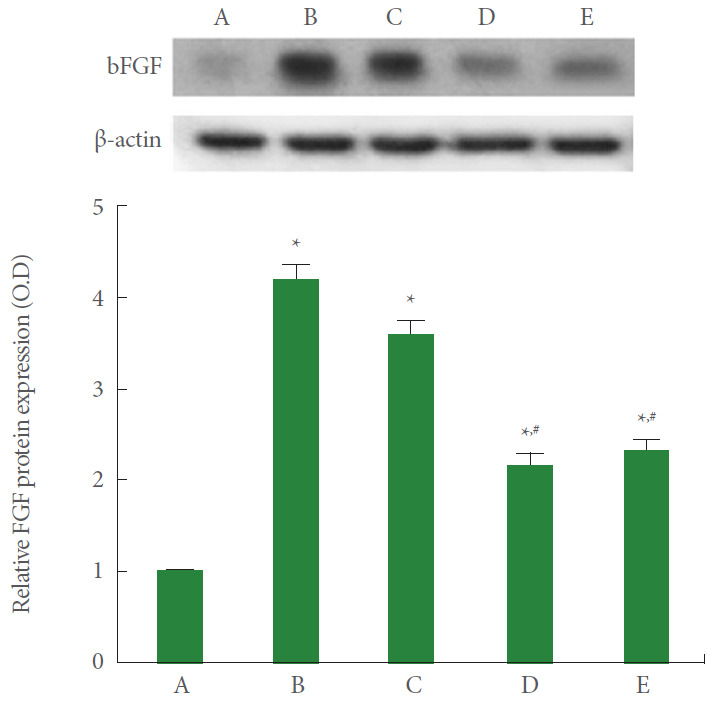
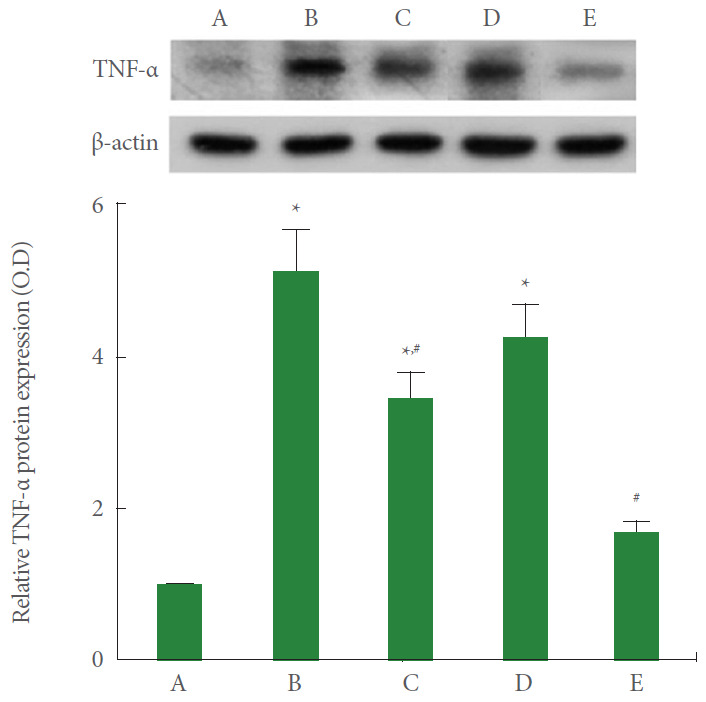
The effect of combination therapy with polydeoxyribonucleotide (PDRN) and pirfenidone on ARDS was investigated using human lung epithelial A549 cells. ARDS environment was induced by treatment with lipopolysaccharide and transforming growth factor (TGF)-β. Enzyme-linked immunoassay for connective tissue growth factor (CTGF) and hydroxyproline were conducted. Western blot for collagen type I, fibroblast growth factor (FGF), tumor necrosis factor (TNF)-α, and interleukin (IL)-6 was performed.
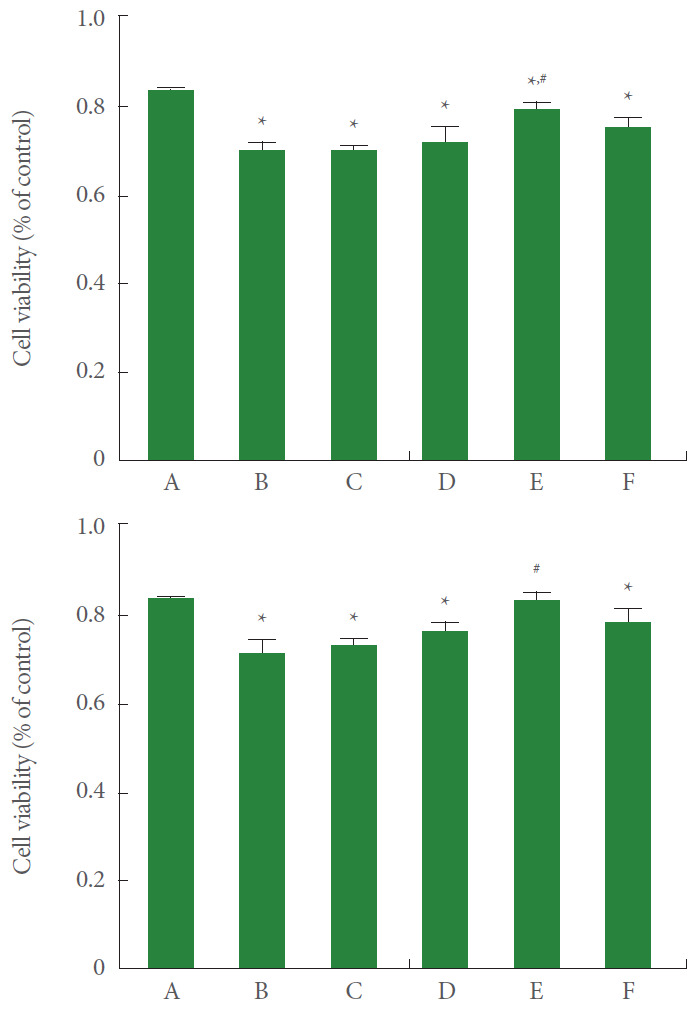
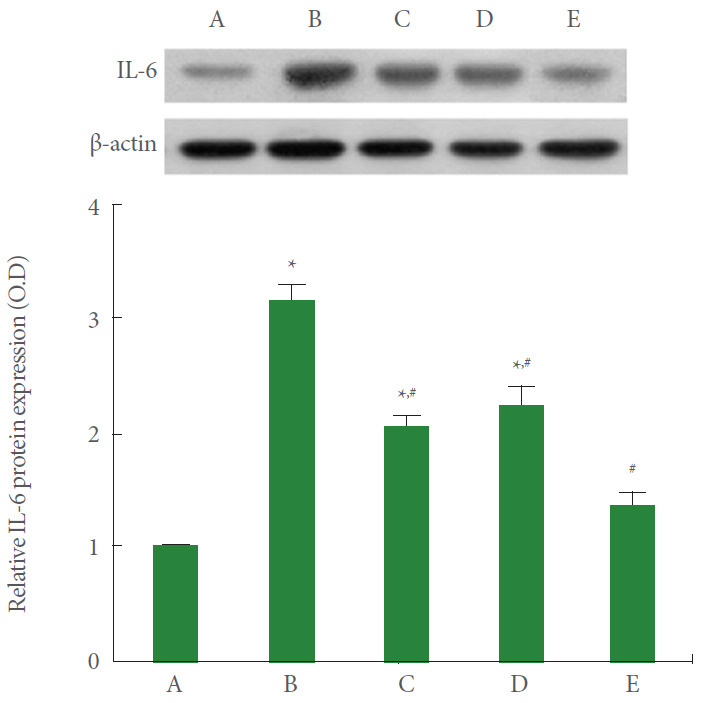
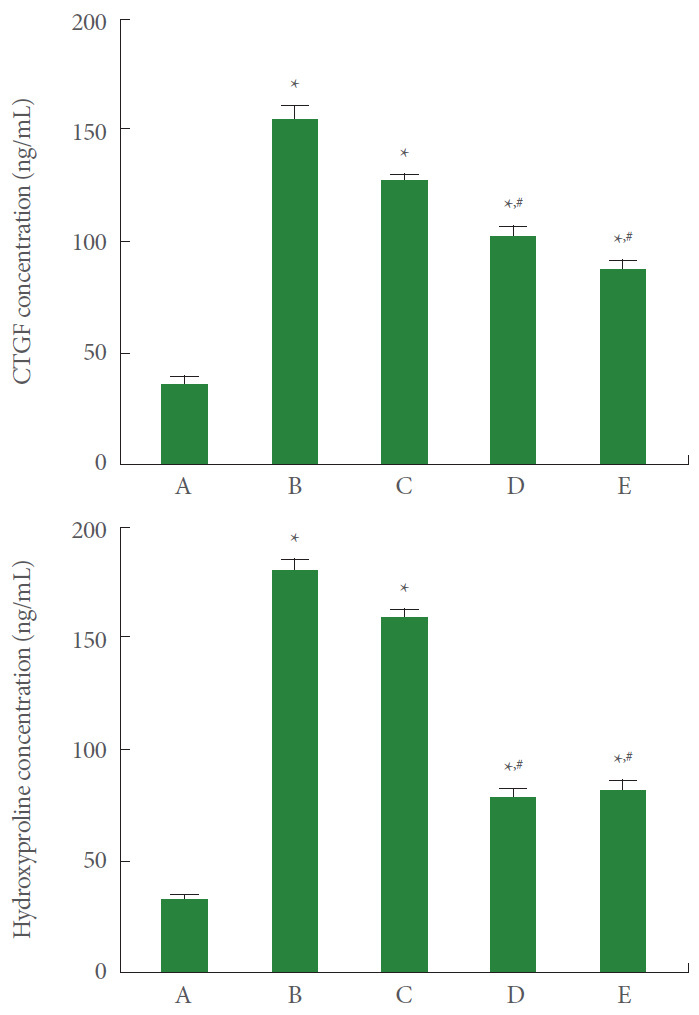
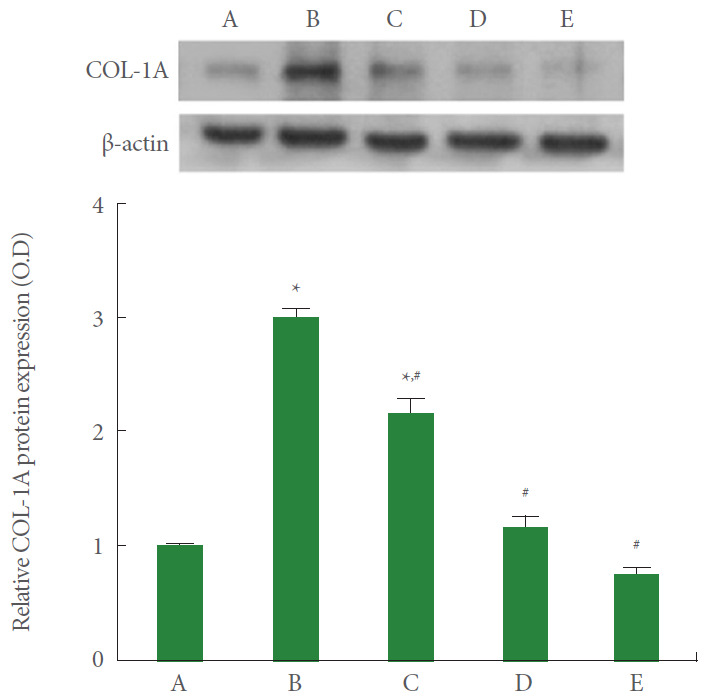
In this study, 8-μg/mL PDRN enhanced cell viability. Combination therapy with PDRN and pirfenidone and pirfenidone monotherapy suppressed expressions of CTGF and hydroxyproline and inhibited expressions of collagen type I and FGF. Combination therapy with PDRN and pirfenidone and PDRN monotherapy suppressed expression of TNF-α and IL-1β.
The combination therapy with PDRN and pirfenidone exerted stronger therapeutic effect against lipopolysaccharide and TGF-β-induced ARDS environment compared to the PDRN monotherapy or pirfenidone monotherapy. The excellent therapeutic effect of combination therapy with PDRN and pirfenidone on ARDS was shown by promoting the rapid anti-inflammatory effect and inhibiting the fibrotic processes.
急性呼吸窘迫综合征(ARDS)的特征为急性起病,伴有双侧肺部浸润、严重低氧血症和肺水肿等症状。许多ARDS患者在急性期存活下来,但随后死于严重的肺纤维化。
使用人肺上皮A549细胞研究聚脱氧核糖核苷酸(PDRN)与吡非尼酮联合治疗对ARDS的影响。通过脂多糖和转化生长因子(TGF)-β处理诱导ARDS环境。进行结缔组织生长因子(CTGF)和羟脯氨酸的酶联免疫测定。进行I型胶原、成纤维细胞生长因子(FGF)、肿瘤坏死因子(TNF)-α和白细胞介素(IL)-6的蛋白质印迹分析。
在本研究中,8μg/mL的PDRN可提高细胞活力。PDRN与吡非尼酮联合治疗以及吡非尼酮单药治疗可抑制CTGF和羟脯氨酸的表达,并抑制I型胶原和FGF的表达。PDRN与吡非尼酮联合治疗以及PDRN单药治疗可抑制TNF-α和IL-1β的表达。
与PDRN单药治疗或吡非尼酮单药治疗相比,PDRN与吡非尼酮联合治疗对脂多糖和TGF-β诱导的ARDS环境具有更强的治疗效果。PDRN与吡非尼酮联合治疗对ARDS具有优异的治疗效果,表现为促进快速抗炎作用并抑制纤维化进程。