Microbial Genetics, Interfaculty Institute of Microbiology and Infection Medicine Tübingen (IMIT), University of Tübingen, D-72076, Tübingen, Germany.
Biology Department, Institut Teknologi Sepuluh Nopember, 60111, Surabaya, Indonesia.
Commun Biol. 2020 Jun 1;3(1):277. doi: 10.1038/s42003-020-1000-7.
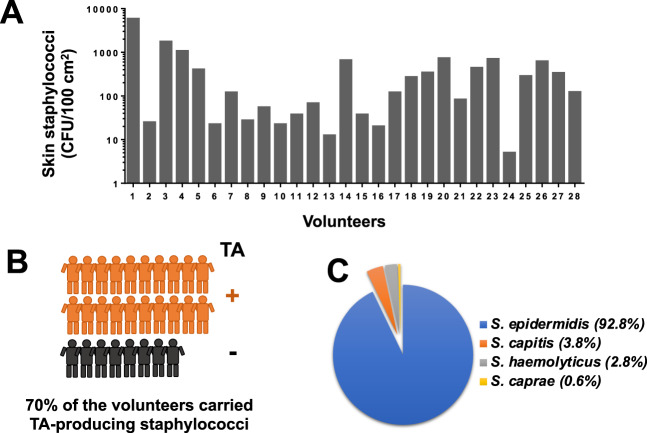
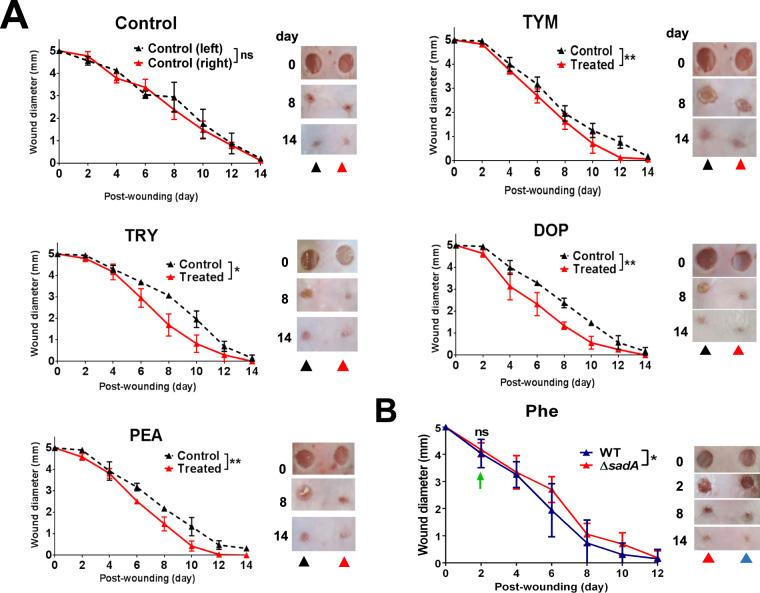
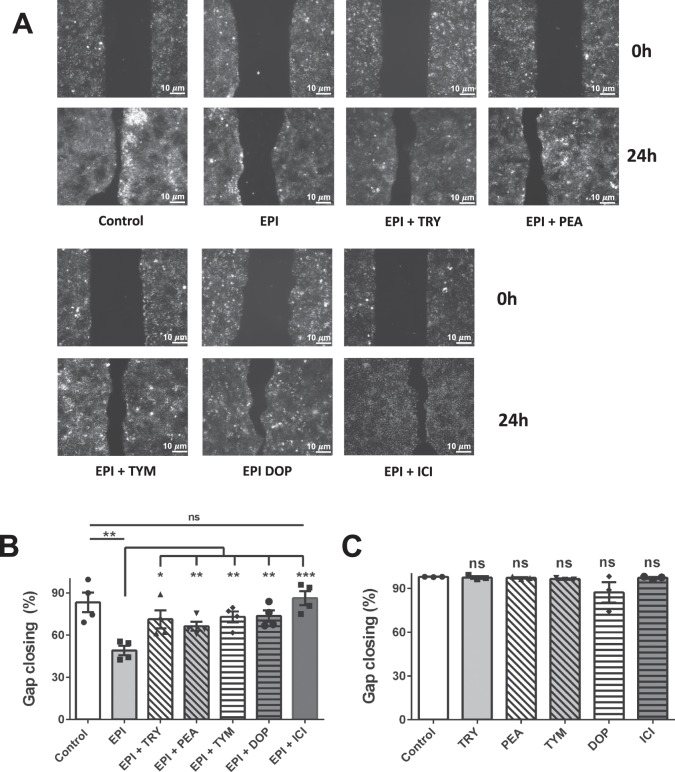
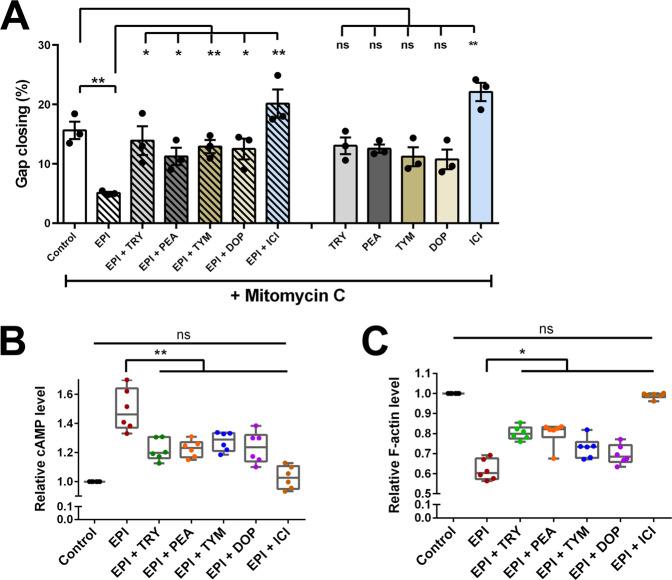
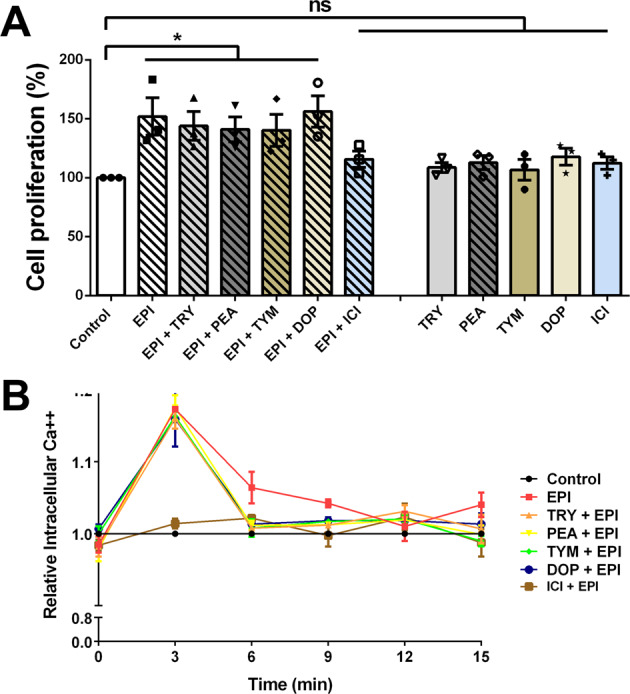
Certain skin bacteria are able to convert aromatic amino acids (AAA) into trace amines (TA) that act as neuromodulators. Since the human skin and sweat contain a comparatively high content of AAA one can expect that such bacteria are able to produce TA on our skin. Here we show that TA-producing Staphylococcus epidermidis strains expressing SadA are predominant on human skin and that TA accelerate wound healing. In wounded skin, keratinocytes produce epinephrine (EPI) that leads to cell motility inhibition by β2-adrenergic receptor (β2-AR) activation thus delay wound healing. As β2-AR antagonists, TA and dopamine (DOP) abrogate the effect of EPI thus accelerating wound healing both in vitro and in a mouse model. In the mouse model, the S. epidermidis wild type strain accelerates wound healing compared to its ΔsadA mutant. Our study demonstrates that TA-producing S. epidermidis strains present on our skin might be beneficial for wound healing.
某些皮肤细菌能够将芳香族氨基酸(AAA)转化为痕量胺(TA),作为神经调节剂发挥作用。由于人体皮肤和汗液中含有相对较高含量的 AAA,人们可以预期这些细菌能够在我们的皮肤上产生 TA。在这里,我们表明表达 SadA 的产 TA 表皮葡萄球菌菌株在人体皮肤上占优势,并且 TA 能够加速伤口愈合。在受伤的皮肤中,角质形成细胞产生肾上腺素(EPI),通过β2-肾上腺素能受体(β2-AR)的激活导致细胞迁移抑制,从而延迟伤口愈合。作为β2-AR 拮抗剂,TA 和多巴胺(DOP)消除了 EPI 的作用,从而在体外和小鼠模型中加速伤口愈合。在小鼠模型中,与 sadA 缺失突变体相比,野生型表皮葡萄球菌菌株加速了伤口愈合。我们的研究表明,存在于我们皮肤表面的产 TA 表皮葡萄球菌菌株可能有益于伤口愈合。