Institut de Biotecnologia i de Biomedicina and Departament de Bioquímica i Biologia Molecular, Universitat Autònoma de Barcelona, 08193, Bellaterra, Barcelona, Spain.
Microb Cell Fact. 2020 Jun 1;19(1):117. doi: 10.1186/s12934-020-01375-4.
Recombinant protein expression in bacteria often leads to the formation of intracellular insoluble protein deposits, a major bottleneck for the production of soluble and active products. However, in recent years, these bacterial protein aggregates, commonly known as inclusion bodies (IBs), have been shown to be a source of stable and active protein for biotechnological and biomedical applications. The formation of these functional IBs is usually facilitated by the fusion of aggregation-prone peptides or proteins to the protein of interest, leading to the formation of amyloid-like nanostructures, where the functional protein is embedded.
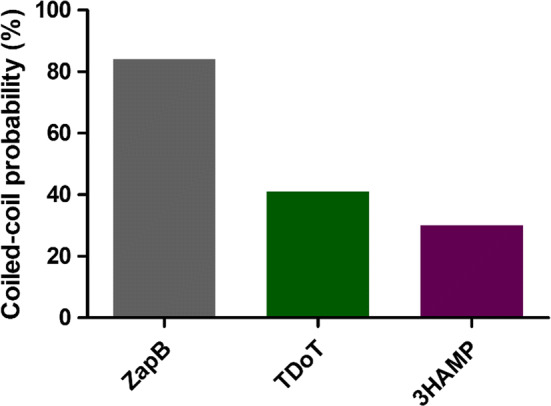
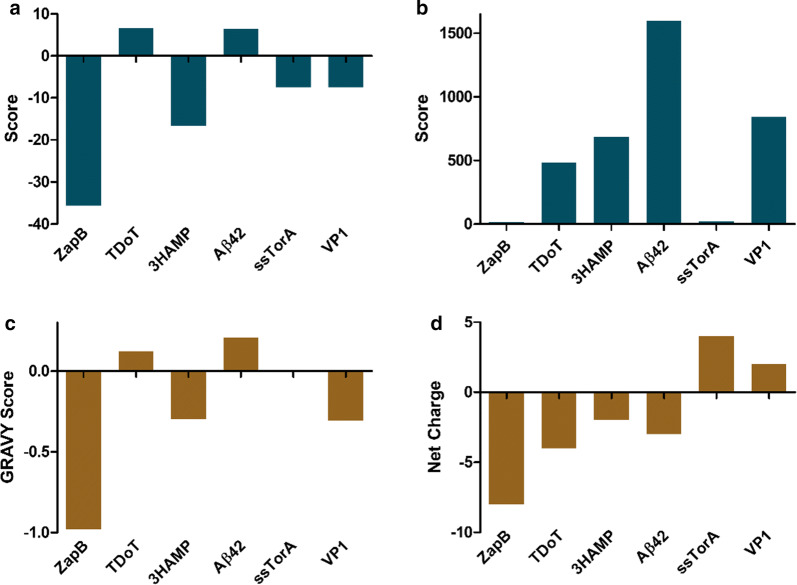
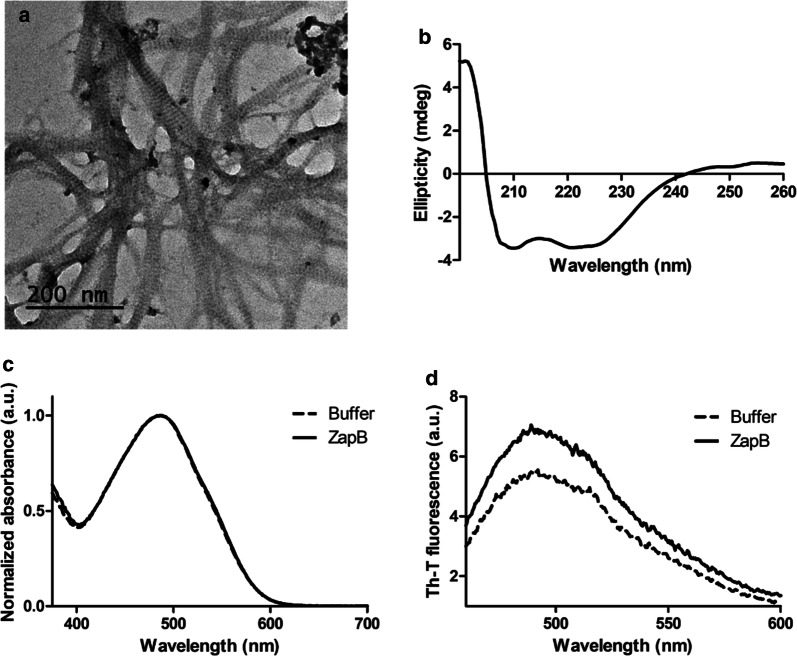
In order to offer an alternative to the classical amyloid-like IBs, here we develop functional IBs exploiting the coiled-coil fold. An in silico analysis of coiled-coil and aggregation propensities, net charge, and hydropathicity of different potential tags identified the natural homo-dimeric and anti-parallel coiled-coil ZapB bacterial protein as an optimal candidate to form assemblies in which the native state of the fused protein is preserved. The protein itself forms supramolecular fibrillar networks exhibiting only α-helix secondary structure. This non-amyloid self-assembly propensity allows generating innocuous IBs in which the recombinant protein of interest remains folded and functional, as demonstrated using two different fluorescent proteins.
Here, we present a proof of concept for the use of a natural coiled-coil domain as a versatile tool for the production of functional IBs in bacteria. This α-helix-based strategy excludes any potential toxicity drawback that might arise from the amyloid nature of β-sheet-based IBs and renders highly active and homogeneous submicrometric particles.
在细菌中重组蛋白的表达常常导致细胞内不溶性蛋白沉淀的形成,这是生产可溶性和活性产物的主要瓶颈。然而,近年来,这些细菌蛋白聚集体,通常被称为包涵体(IBs),已被证明是生物技术和生物医学应用中稳定和有活性的蛋白质的来源。这些功能性 IBs 的形成通常是通过将易于聚集的肽或蛋白质融合到目标蛋白上来促进的,导致形成类似淀粉样的纳米结构,其中功能蛋白被嵌入。
为了提供一种替代经典的类似淀粉样的 IBs 的方法,我们在这里利用卷曲螺旋折叠来开发功能性 IBs。对卷曲螺旋和聚集倾向、净电荷和不同潜在标签的疏水性的计算机分析,确定了天然同源二聚体和反平行卷曲螺旋 ZapB 细菌蛋白作为一个最佳候选物,可形成保留融合蛋白天然状态的组装体。该蛋白质本身形成超分子纤维状网络,仅显示α-螺旋二级结构。这种非淀粉样的自组装倾向允许生成无害的 IBs,其中感兴趣的重组蛋白仍然折叠和有功能,这在两种不同的荧光蛋白中得到了证明。
在这里,我们提出了一个概念验证,即使用天然卷曲螺旋结构域作为在细菌中生产功能性 IBs 的通用工具。这种基于α-螺旋的策略排除了β-折叠 IBs 的淀粉样性质可能带来的任何潜在毒性问题,并产生了高度活性和均匀的亚微米颗粒。