College of Optometry, University of Houston, 4901 Calhoun Rd, Houston, TX, 77204-2020, USA.
Department of Biomedical Engineering, University of Houston, 3517 Cullen Blvd, Houston, TX, 77204-5060, USA.
Sci Rep. 2020 Jun 2;10(1):8942. doi: 10.1038/s41598-020-65645-2.
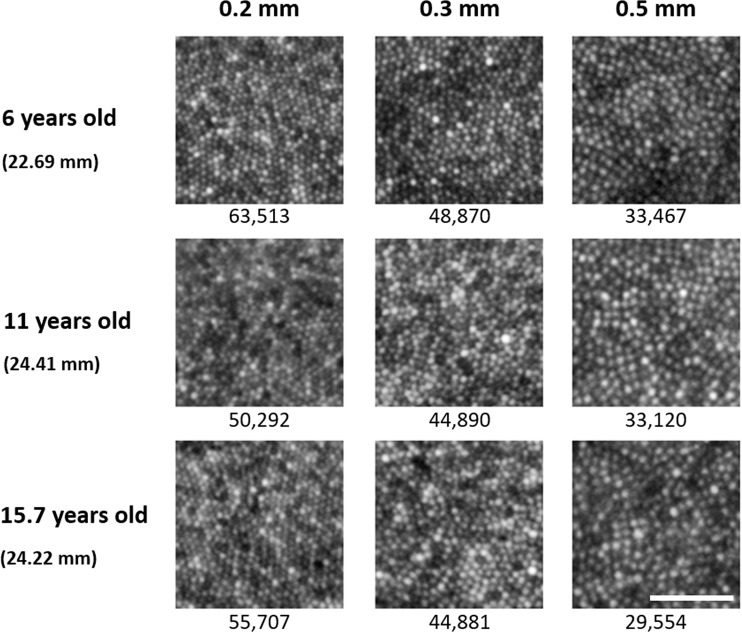
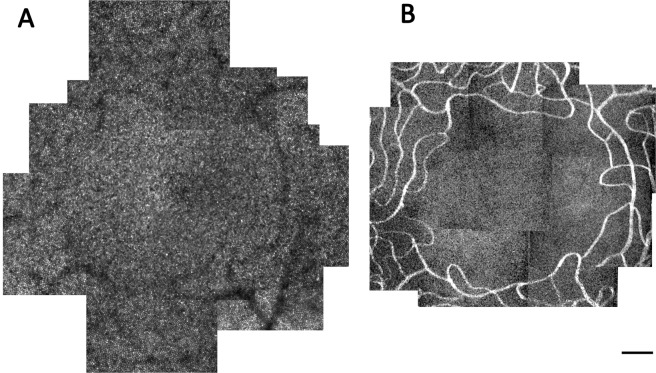
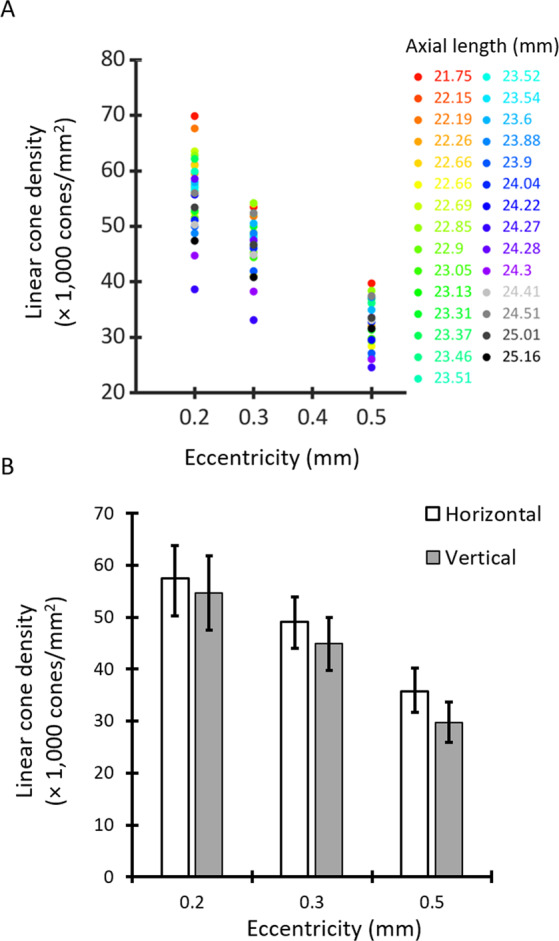
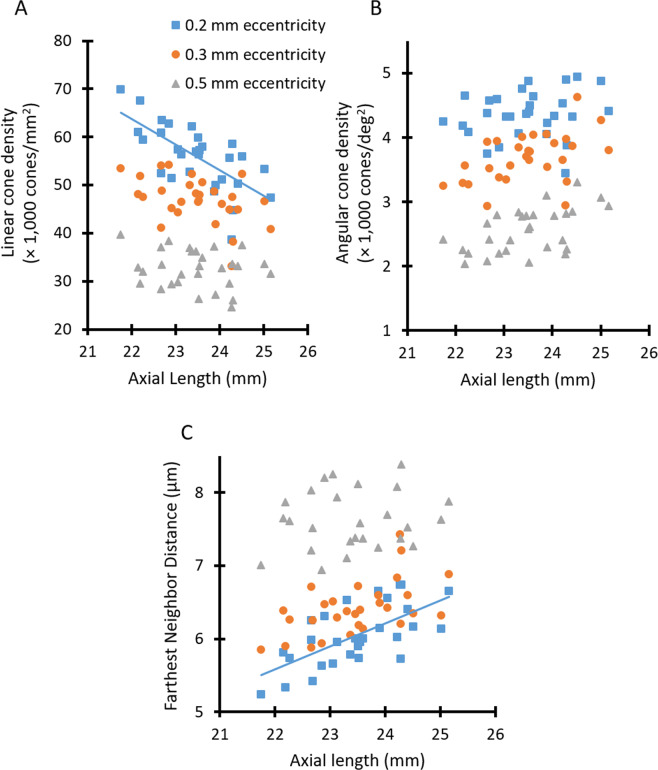
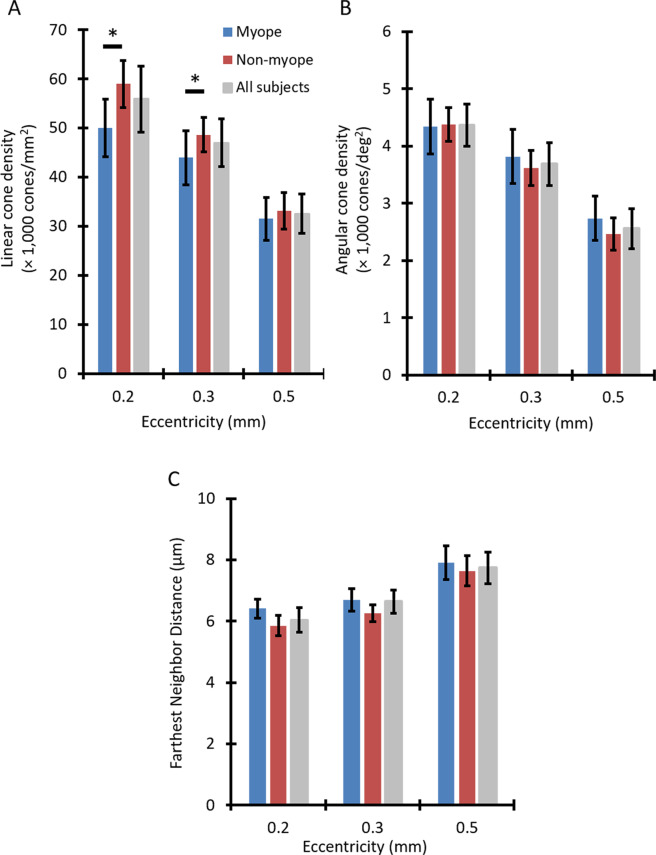
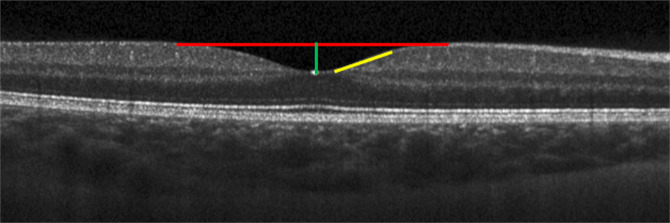
The fovea undergoes significant developmental changes from birth into adolescence. However, there is limited data examining cone photoreceptor density, foveal pit shape, and foveal avascular zone (FAZ) size in children. The purpose of this study was to determine whether overall foveal structure differs as a function of age and refractive status in children. Forty-eight healthy children (ages 5.8 to 15.8 years) underwent optical coherence tomography imaging to quantify foveal point thickness and foveal pit diameter, depth, and slope. Adaptive optics scanning laser ophthalmoscope (AOSLO) images of foveal capillaries and cone photoreceptors were acquired in a subset of children to quantify FAZ metrics and cone densities at 0.2, 0.3, and 0.5 mm eccentricities. Results show that foveal pit and FAZ metrics were not related to age, axial length, or refractive status. However, linear cone density was lower in myopic versus non-myopic children at eccentricities of 0.2 mm (mean ± SD = 50,022 ± 5,878 cones/mm vs 58,989 ± 4,822 cones/mm, P < 0.001) and 0.3 mm (43,944 ± 5,547 cones/mm vs 48,622 ± 3,538 cones/mm, P < 0.001). These results suggest FAZ and foveal pit metrics do not systematically differ with age in children, while myopic eyes have decreased linear cone density near the foveal center. Significance Statement: The development of the fovea begins prior to birth and continues through the early teenage years until it reaches adult-like properties. Although the majority of changes during childhood are related to the maturation and migration of cone photoreceptors, in vivo data describing cone packing in children is limited. We assessed overall foveal structure in children as young as 5.8 years old by quantifying cone density and spacing, foveal avascular zone size, and foveal pit morphometry to investigate potential structural differences as a function of age and refractive status. While foveal avascular zone and foveal pit metrics did not significantly differ with age, results indicate that myopic children have lower linear cone densities close to the foveal center compared to non-myopic children.
黄斑从出生到青春期经历了显著的发育变化。然而,目前关于儿童的锥体细胞密度、黄斑中心凹形态和黄斑无血管区(FAZ)大小的数据有限。本研究的目的是确定儿童的整体黄斑结构是否随年龄和屈光状态的不同而不同。48 名健康儿童(年龄 5.8 至 15.8 岁)接受光学相干断层扫描成像,以量化黄斑中心凹点厚度和黄斑中心凹直径、深度和斜率。在一部分儿童中,使用自适应光学扫描激光检眼镜(AOSLO)获取黄斑毛细血管和锥体细胞图像,以量化 FAZ 指标和 0.2、0.3 和 0.5mm 偏心处的锥体细胞密度。结果表明,黄斑中心凹形态和 FAZ 指标与年龄、眼轴长度或屈光状态无关。然而,在 0.2mm(平均±SD=50022±5878 个/毫米与 58989±4822 个/毫米,P<0.001)和 0.3mm(43944±5547 个/毫米与 48622±3538 个/毫米,P<0.001)偏心处,近视儿童的线性锥体细胞密度低于非近视儿童。这些结果表明,FAZ 和黄斑中心凹形态在儿童中不会随年龄系统地变化,而近视眼在黄斑中心附近的线性锥体细胞密度降低。
黄斑的发育始于出生前,并持续到青少年早期,直到达到成人样特征。虽然儿童时期的大多数变化与锥体细胞的成熟和迁移有关,但描述儿童锥体细胞排列的数据有限。我们通过量化锥体细胞密度和间距、FAZ 大小以及黄斑中心凹形态测量值,评估了年龄在 5.8 岁以下的儿童的整体黄斑结构,以研究年龄和屈光状态对其潜在结构的影响。虽然 FAZ 和黄斑中心凹形态指标与年龄无显著差异,但结果表明,与非近视儿童相比,近视儿童在黄斑中心附近的线性锥体细胞密度较低。