Department of Anatomy, Radboud University Medical Center, Donders Institute for Brain Cognition and Behaviour, Nijmegen, The Netherlands.
Department of Clinical Genomics, Mayo Clinic, Rochester, MN, 55905, USA.
Transl Psychiatry. 2020 Jun 1;10(1):176. doi: 10.1038/s41398-020-0858-y.
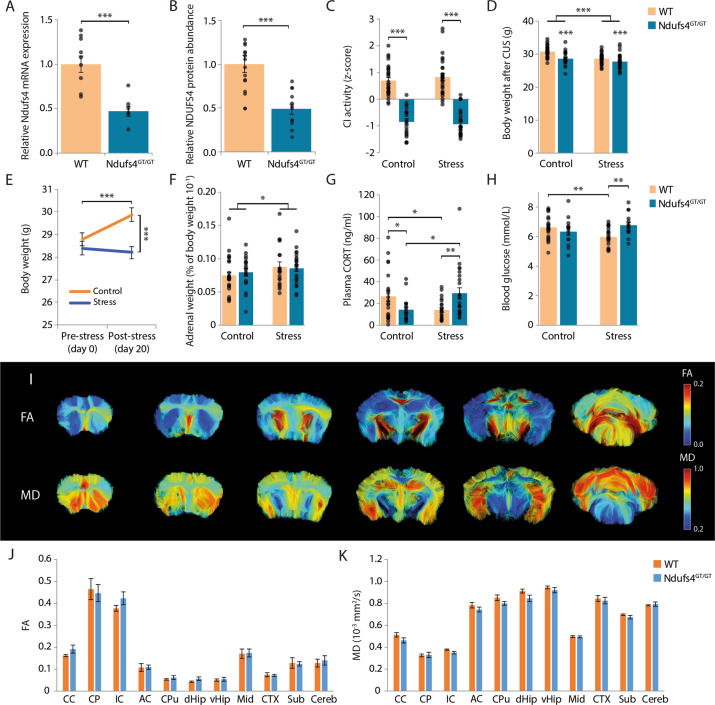
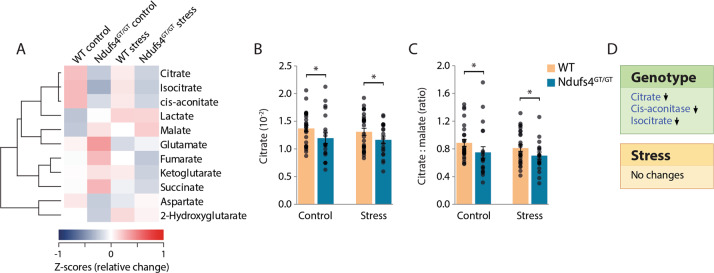
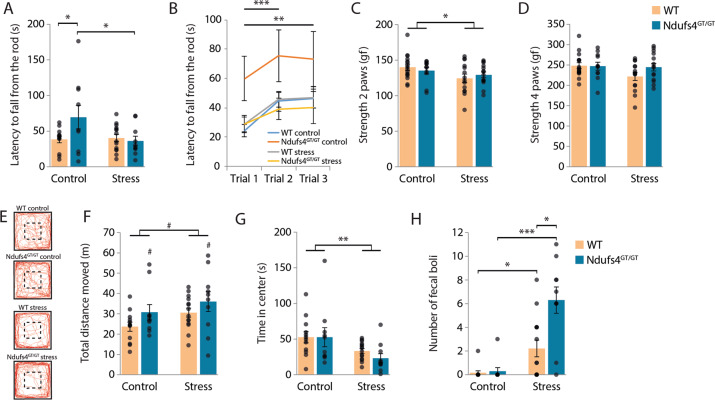
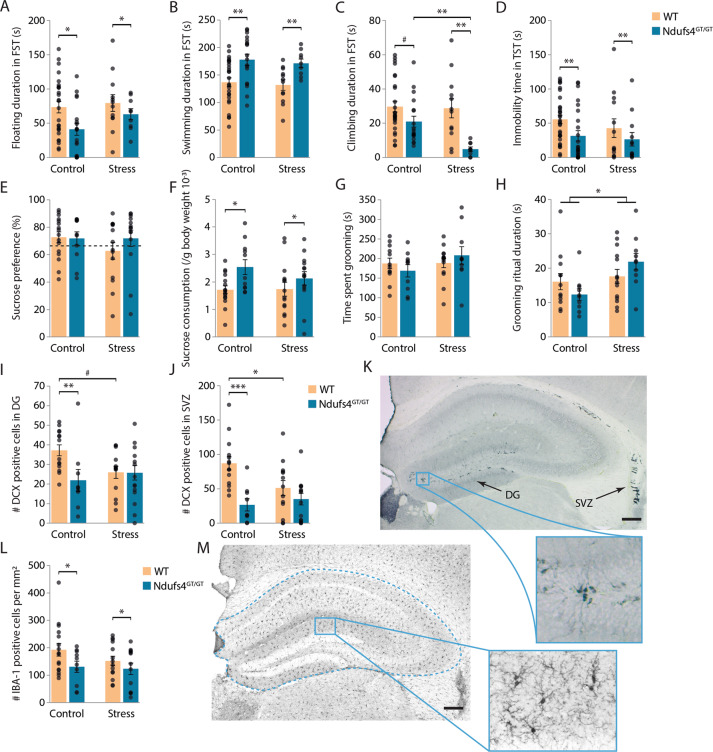
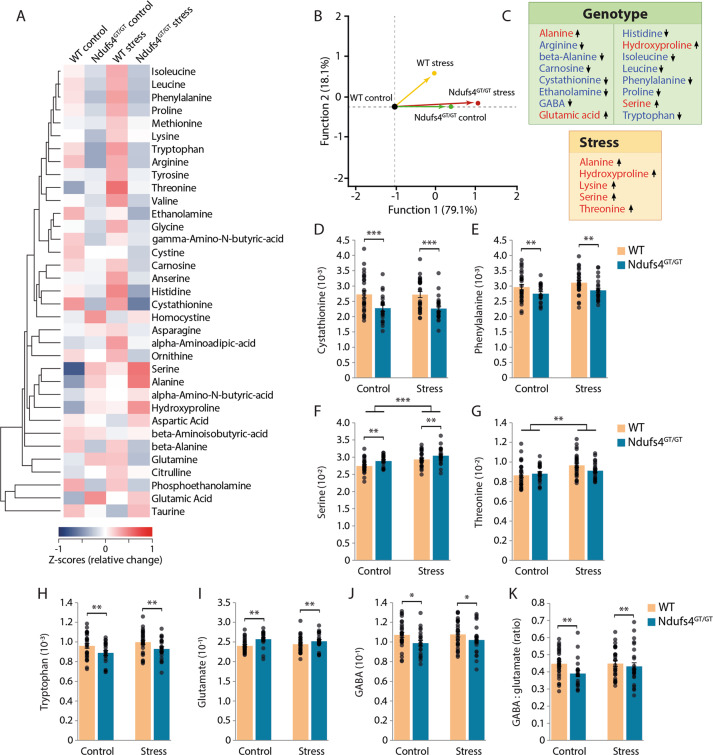
Mitochondria play a critical role in bioenergetics, enabling stress adaptation, and therefore, are central in biological stress responses and stress-related complex psychopathologies. To investigate the effect of mitochondrial dysfunction on the stress response and the impact on various biological domains linked to the pathobiology of depression, a novel mouse model was created. These mice harbor a gene trap in the first intron of the Ndufs4 gene (Ndufs4 mice), encoding the NDUFS4 protein, a structural component of complex I (CI), the first enzyme of the mitochondrial electron transport chain. We performed a comprehensive behavioral screening with a broad range of behavioral, physiological, and endocrine markers, high-resolution ex vivo brain imaging, brain immunohistochemistry, and multi-platform targeted mass spectrometry-based metabolomics. Ndufs4 mice presented with a 25% reduction of CI activity in the hippocampus, resulting in a relatively mild phenotype of reduced body weight, increased physical activity, decreased neurogenesis and neuroinflammation compared to WT littermates. Brain metabolite profiling revealed characteristic biosignatures discriminating Ndufs4 from WT mice. Specifically, we observed a reversed TCA cycle flux and rewiring of amino acid metabolism in the prefrontal cortex. Next, exposing mice to chronic variable stress (a model for depression-like behavior), we found that Ndufs4 mice showed altered stress response and coping strategies with a robust stress-associated reprogramming of amino acid metabolism. Our data suggest that impaired mitochondrial CI function is a candidate driver for altered stress reactivity and stress-induced brain metabolic reprogramming. These changes result in unique phenomic and metabolomic signatures distinguishing groups based on their mitochondrial genotype.
线粒体在生物能量学中发挥着关键作用,使机体能够适应应激,因此在生物应激反应和与应激相关的复杂精神病理学中起着核心作用。为了研究线粒体功能障碍对应激反应的影响及其对与抑郁症病理生理学相关的各种生物学领域的影响,我们创建了一种新型小鼠模型。这些小鼠在编码复合体 I(CI)第一酶的 Ndufs4 基因的第一个内含子中携带基因陷阱(Ndufs4 小鼠),该基因编码 NDUFS4 蛋白,是 CI 的结构组成部分。我们使用广泛的行为、生理和内分泌标记物、高分辨率离体脑成像、脑免疫组织化学和基于多平台靶向质谱的代谢组学进行了全面的行为筛选。Ndufs4 小鼠的 CI 活性在海马体中降低了 25%,导致与 WT 同窝仔相比,体重减轻、体力活动增加、神经发生和神经炎症减少的相对温和表型。大脑代谢物分析揭示了区分 Ndufs4 与 WT 小鼠的特征生物标志物。具体来说,我们观察到在额皮质中 TCA 循环通量和氨基酸代谢的重新布线发生逆转。接下来,让小鼠暴露于慢性可变应激(一种类似抑郁症的行为模型)中,我们发现 Ndufs4 小鼠表现出改变的应激反应和应对策略,以及与氨基酸代谢的强烈应激相关的重编程。我们的数据表明,受损的线粒体 CI 功能是改变应激反应和应激诱导的大脑代谢重编程的候选驱动因素。这些变化导致基于其线粒体基因型区分群体的独特表型和代谢组学特征。