Lo Jessica Hiu-Tung, U Kin Pong, Yiu Tszlam, Ong Michael Tim-Yun, Lee Wayne Yuk-Wai
Department of Orthopaedics & Traumatology, Faculty of Medicine, The Chinese University of Hong Kong, Prince of Wales Hospital, Shatin, Hong Kong, PR China.
Stem Cells and Regenerative Medicine Laboratory, Lui Che Woo Institute of Innovative Medicine, Li Ka Shing Institute of Health Sciences, The Chinese University of Hong Kong, Prince of Wales Hospital, Shatin, Hong Kong, PR China.
J Orthop Translat. 2020 Apr 30;23:38-52. doi: 10.1016/j.jot.2020.04.002. eCollection 2020 Jul.
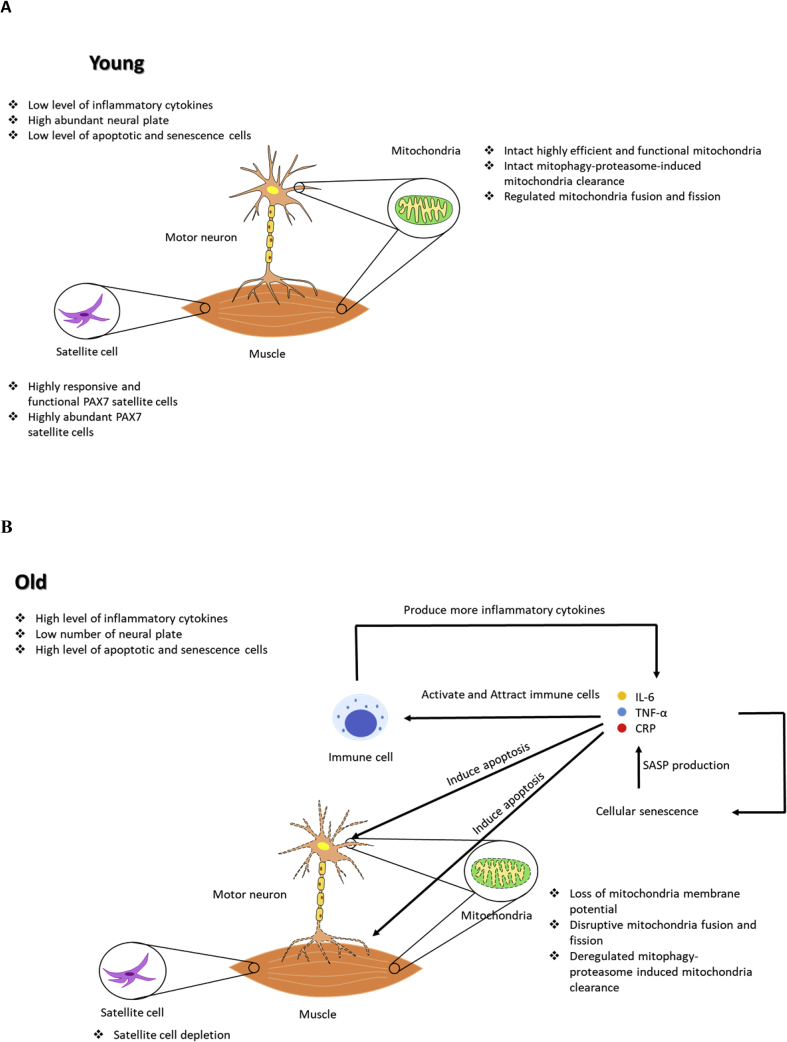
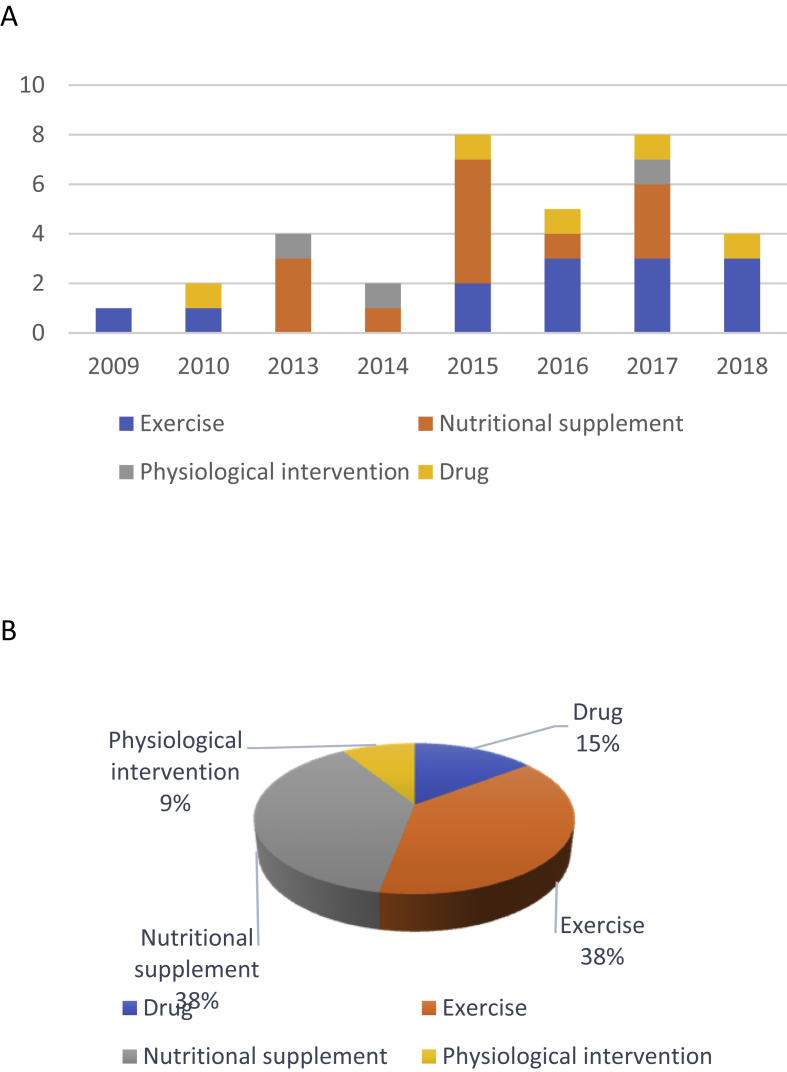
Sarcopenia is characterized by loss of muscle and reduction in muscle strength that contributes to higher mortality rate and increased incidence of fall and hospitalization in the elderly. Mitochondria dysfunction and age-associated inflammation in muscle are two of the main attributors to sarcopenia progression. Recent clinical trials on sarcopenia therapies such as physical exercise, nutraceutical, and pharmaceutical interventions have revealed that exercise is the only effective strategy shown to alleviate sarcopenia. Unlike nutraceutical and pharmaceutical interventions that showed controversial results in sarcopenia alleviation, exercise was found to restore mitochondria homeostasis and dampen inflammatory responses via a complex exchange of myokines and osteokines signalling between muscle and bone. However, as exercise have limited benefit to immobile patients, the use of stem cells and their secretome are being suggested to be novel therapeutics that can be catered to a larger patient population owing to their mitochondria restoration effects and immune modulatory abilities. As such, we reviewed the potential pros and cons associated with various stem cell types/secretome in sarcopenia treatment and the regulatory and production barriers that need to be overcome to translate such novel therapeutic agents into bedside application. This review summarizes the causes underlying sarcopenia from the perspective of mitochondria dysfunction and age-associated inflammation, and the progress of clinical trials for the treatment of sarcopenia. We also propose therapeutic potential of stem cell therapy and bioactive secretome for sarcopenia.
肌肉减少症的特征是肌肉流失和肌肉力量下降,这导致老年人死亡率升高、跌倒和住院发生率增加。肌肉中的线粒体功能障碍和与年龄相关的炎症是肌肉减少症进展的两个主要因素。最近关于肌肉减少症治疗的临床试验,如体育锻炼、营养保健品和药物干预,表明运动是唯一被证明能缓解肌肉减少症的有效策略。与在缓解肌肉减少症方面结果存在争议的营养保健品和药物干预不同,运动被发现可通过肌肉与骨骼之间肌动蛋白和骨动蛋白信号的复杂交换来恢复线粒体稳态并抑制炎症反应。然而,由于运动对行动不便的患者益处有限,因此有人建议使用干细胞及其分泌组作为新型疗法,因其具有线粒体恢复作用和免疫调节能力,可为更多患者群体提供治疗。因此,我们综述了肌肉减少症治疗中与各种干细胞类型/分泌组相关的潜在利弊,以及将此类新型治疗药物转化为临床应用需要克服的监管和生产障碍。 本综述从线粒体功能障碍和与年龄相关的炎症角度总结了肌肉减少症的潜在原因,以及肌肉减少症治疗的临床试验进展。我们还提出了干细胞疗法和生物活性分泌组对肌肉减少症的治疗潜力。