Xin Xiaoru, Lu Yanan, Xie Sijie, Chen Yingjie, Jiang Xiaoxue, Song Shuting, Wang Liyan, Pu Hu, Gui Xin, Li Tianming, Xu Jie, Li Jiao, Jia Song, Lu Dongdong
Shanghai Putuo District People's Hospital, School of Life Science and Technology, Tongji University, Shanghai 200092, China.
School of Medicine, Tongji University, Shanghai 200092, China.
Mol Ther Oncolytics. 2020 May 8;17:471-483. doi: 10.1016/j.omto.2020.05.002. eCollection 2020 Jun 26.
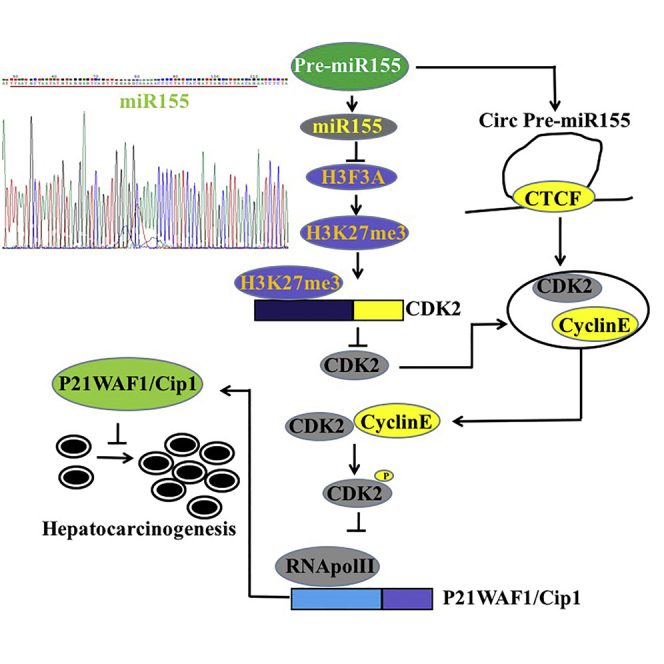
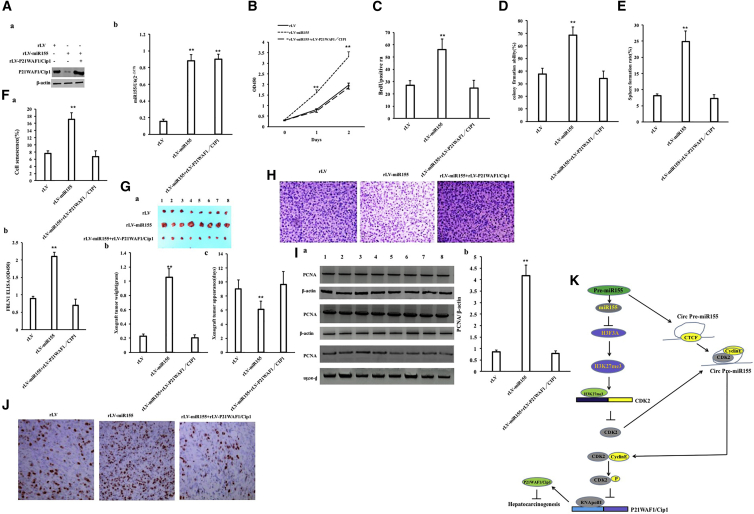
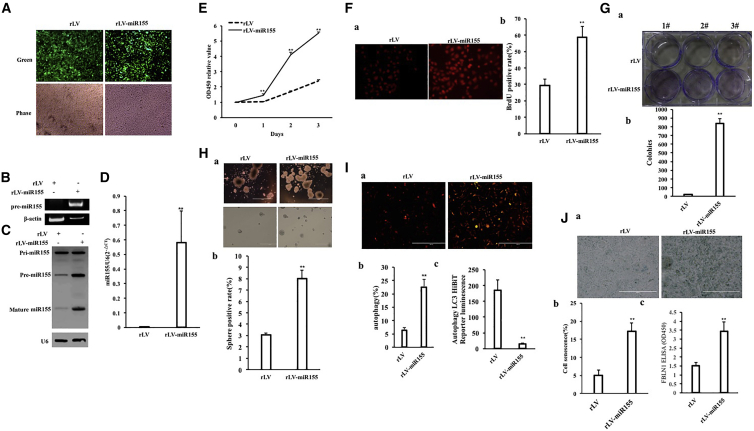
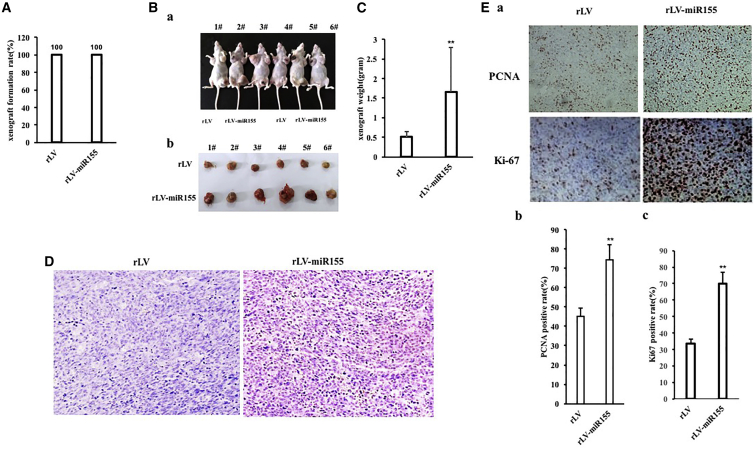
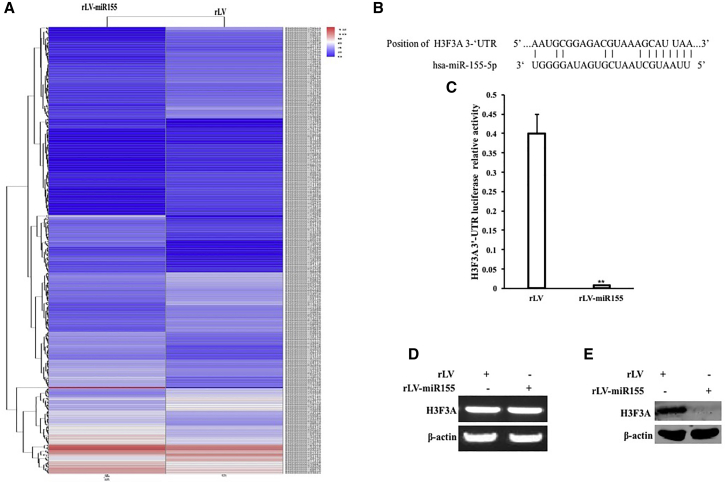
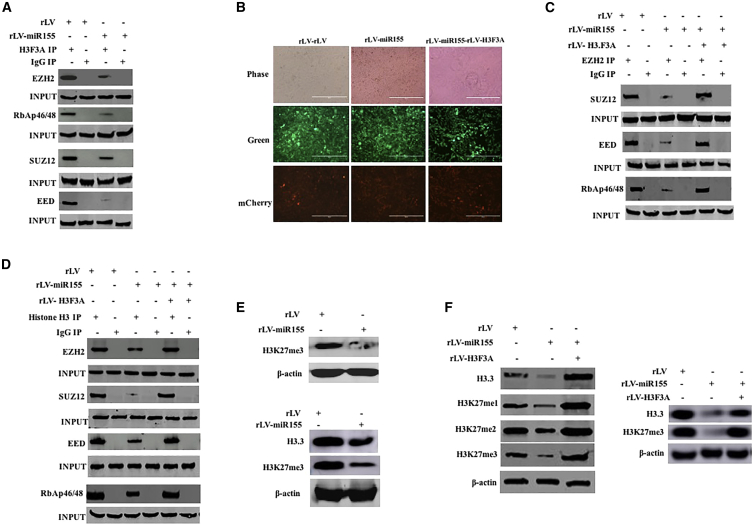
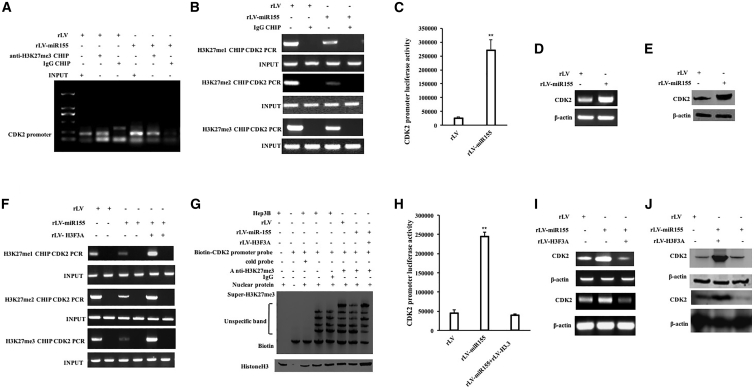
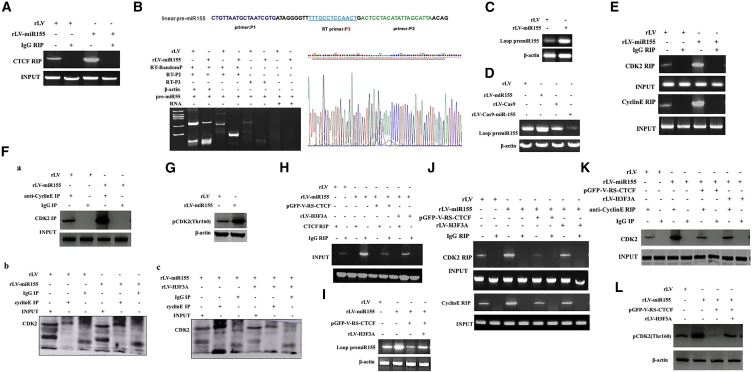
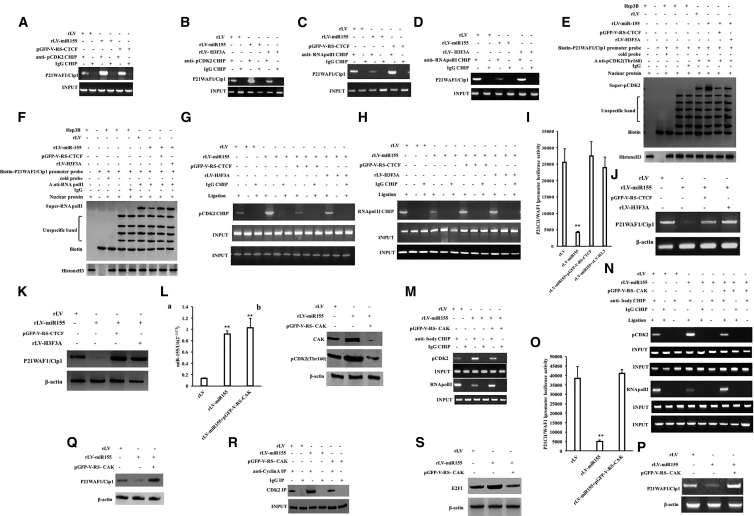
miR-155 is associated with the promotion of tumorigenesis. Herein, we indicate that abnormal miR-155 was negatively correlated with the expression of P21WAF1/Cip1. Our results suggest that miR-155 alters the transcriptome and inhibits the expression of H3F3A in liver cancer cells. Therefore, miR-155 inhibits the methylation modification of histone H3 on the 27 lysine. Notably, on the one hand, miR-155-dependent CTCF loops cause the CDK2 interacting with cyclin E in liver cancer cells; on the other hand, miR-155 promotes the phosphorylation modification of CDK2 by inhibiting H3F3A. Subsequently, miR-155 competitively blocks the binding of RNA polymerase II (RNA Pol II) to the P21WAF1/CIP1 promoter by increasing the phosphorylation of CDK2, inhibiting the transcription and translation of P21WAF1/CIP1. Strikingly, excessive P21WAF1/CIP1 abolishes the cancerous function of miR-155. In conclusion, miR-155 can play a positive role in the development of liver cancer and influence a series of gene expression through epigenetic regulation.
miR-155与肿瘤发生的促进相关。在此,我们指出异常的miR-155与P21WAF1/Cip1的表达呈负相关。我们的结果表明,miR-155改变转录组并抑制肝癌细胞中H3F3A的表达。因此,miR-155抑制组蛋白H3第27位赖氨酸上的甲基化修饰。值得注意的是,一方面,依赖miR-155的CTCF环导致CDK2在肝癌细胞中与细胞周期蛋白E相互作用;另一方面,miR-155通过抑制H3F3A促进CDK2的磷酸化修饰。随后,miR-155通过增加CDK2的磷酸化竞争性地阻断RNA聚合酶II(RNA Pol II)与P21WAF1/CIP1启动子的结合,抑制P21WAF1/CIP1的转录和翻译。令人惊讶的是,过量的P21WAF1/CIP1消除了miR-155的致癌功能。总之,miR-155在肝癌发展中可发挥积极作用,并通过表观遗传调控影响一系列基因表达。