a State Key Laboratory of Oncology in South China, Collaborative Innovation Center of Cancer Medicine , Sun Yat-sen University Cancer Center , Guangzhou , P.R. China.
b Key Laboratory of Medical Reprogramming Technology, Shenzhen Second People's Hospital , First Affiliated Hospital of Shenzhen University , Shenzhen , P.R. China.
Epigenetics. 2019 May;14(5):494-503. doi: 10.1080/15592294.2019.1600388. Epub 2019 Apr 5.
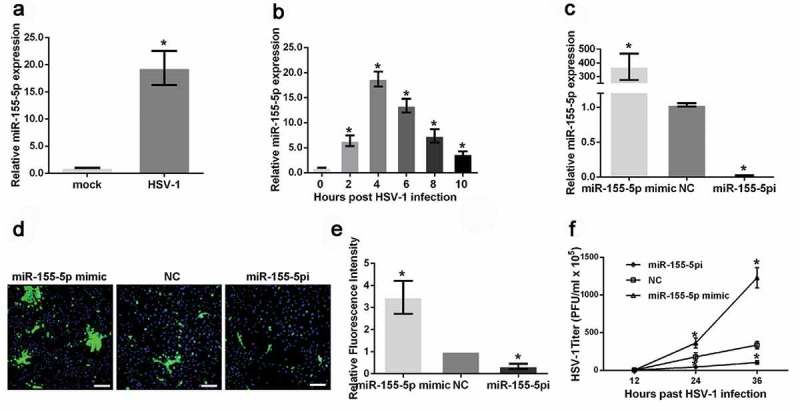
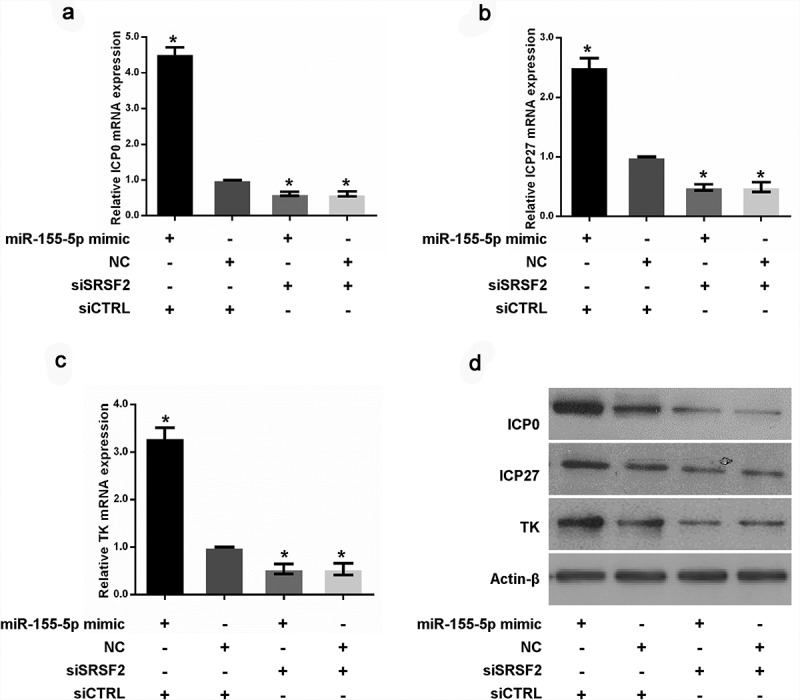
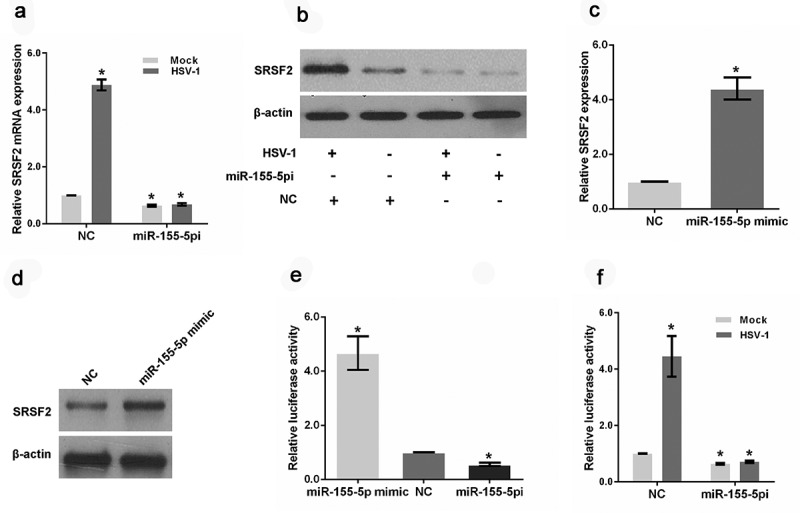
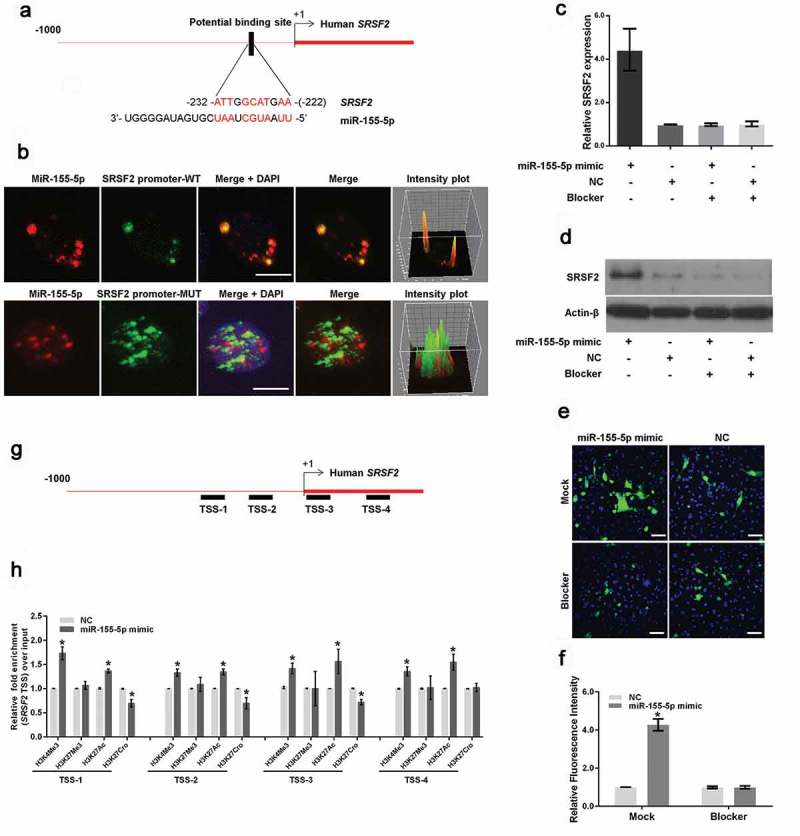
A previous study reported that miR-155-5p knockout mice were more resistant to herpes simplex virus type I (HSV-1) infection. However, the exact underlying molecular mechanism remains to be elucidated. Here, we demonstrated that HSV-1 infection upregulates miR-155-5p expression. By binding to the promoter of serine/arginine-rich splicing factor 2 (SRSF2), which is an important transcriptional activator of HSV-1 genes that was previously reported by our group, and altering the histone modification located near the transcription start site (TSS) of the SRSF2 gene, miR-155-5p promotes the transcription of the SRSF2 gene, ultimately increasing viral replication and viral gene expression. Our results provide insight for an understanding of the roles and molecular mechanism of miR-155-5p in HSV-1 replication and the epigenetic control of SRSF2 gene expression.
先前的一项研究表明,miR-155-5p 敲除小鼠对单纯疱疹病毒 I 型(HSV-1)感染的抵抗力更强。然而,确切的潜在分子机制仍有待阐明。在这里,我们证明了 HSV-1 感染会上调 miR-155-5p 的表达。miR-155-5p 通过与丝氨酸/精氨酸丰富剪接因子 2(SRSF2)的启动子结合,从而促进 SRSF2 基因的转录,SRSF2 是我们之前报道的 HSV-1 基因的重要转录激活因子。miR-155-5p 改变了位于 SRSF2 基因转录起始位点(TSS)附近的组蛋白修饰,进而增强了病毒的复制和病毒基因的表达。我们的研究结果为理解 miR-155-5p 在 HSV-1 复制中的作用和分子机制以及 SRSF2 基因表达的表观遗传调控提供了新的认识。