Department of Community Medicine, Sree Balaji Medical College and Hospital, Chennai, Tamil Nadu, India.
Department of Community Medicine, Bangalore Medical College and Research Institute, Bengaluru, Karnataka, India.
J Prev Med Hyg. 2020 Apr 2;61(1):E92-E97. doi: 10.15167/2421-4248/jpmh2020.61.1.1191. eCollection 2020 Mar.
India, one of the economic powerhouses of the world, is lacking in health development.Moreover, it is facing 'Triple burden of disease'. Indians have one of highest proportion of out-of-pocket (OOP) health expenses. Salient reasons are poor quality public health care, costly private care and lack of health insurance. This has led to catastrophic health expenditure (CHE). Another contributor to this CHE is the chronic illness, which require long-term follow-up. It is estimated that catastrophic health expenditure impoverishes 3.3% of Indians every year. This study was undertaken with an aim to estimate the prevalence of catastrophic health expenditure and its associated factors.
A longitudinal study with one-year follow-up period was conducted among 350 households of an urban area in Bangalore city. Simple random sampling method was used to select the study sample. Data collection done using pre-tested, semi-structured questionnaire by interview method.
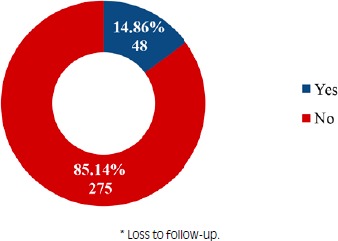
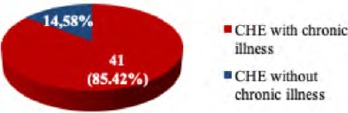
Chronic illness mean health expenditure was 1155.67 INR (56.09% of the direct cost was spent on drugs). In acute illness, mean health expenditure was 567.45 INR (59.54% of the direct cost was spent on drugs). Fourty eight (14.86%) of the households experienced CHE in the one year Statistically significant association was found between socio-economic status and catastrophic health expenditure. Eighty-five 42% of the households who experienced CHE had a member with chronic illness in it.
Reducing the financial burden of high health care expenses is possible by improving the government health care system, free quality regular supply of medications to chronic disease patients and to improve the beneficiaries under insurance schemes.
印度是世界经济强国之一,但在卫生发展方面却存在不足。此外,印度还面临着“三重疾病负担”。印度人的自费医疗支出比例是世界上最高的之一。突出的原因是公共医疗服务质量差、私人医疗费用高以及缺乏医疗保险。这导致了灾难性的医疗支出。导致这种灾难性医疗支出的另一个原因是慢性病,这些疾病需要长期的后续治疗。据估计,每年有 3.3%的印度人因灾难性医疗支出而陷入贫困。本研究旨在评估灾难性医疗支出的流行程度及其相关因素。
在班加罗尔市的一个城区进行了一项为期一年的纵向研究,对 350 户家庭进行了随访。采用简单随机抽样法选取研究样本。使用经过预测试的半结构式问卷,通过访谈法收集数据。
慢性病的平均医疗支出为 1155.67 卢比(直接费用的 56.09%用于药物)。在急性病中,平均医疗支出为 567.45 卢比(直接费用的 59.54%用于药物)。有 48 户(14.86%)家庭在一年内经历了灾难性医疗支出。社会经济地位与灾难性医疗支出之间存在统计学显著关联。在经历了灾难性医疗支出的家庭中,有 85.42%的家庭中有慢性病患者。
通过改善政府医疗保健系统、免费向慢性病患者提供定期优质药物供应以及扩大保险计划的受益人群,可以减轻高昂医疗费用的财务负担。