Department of Neurobiology, Harvard Medical School, Boston, United States.
Elife. 2020 Jun 3;9:e58359. doi: 10.7554/eLife.58359.
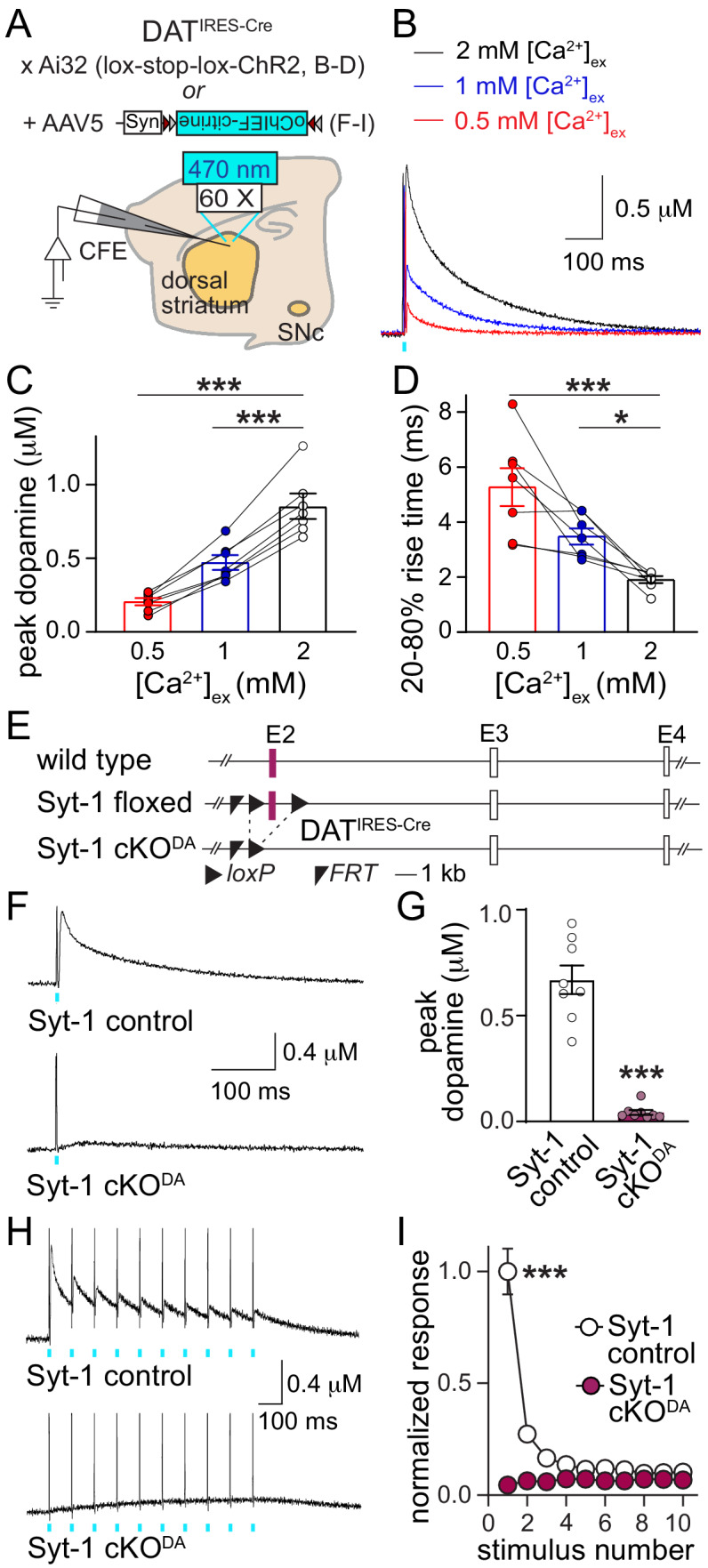
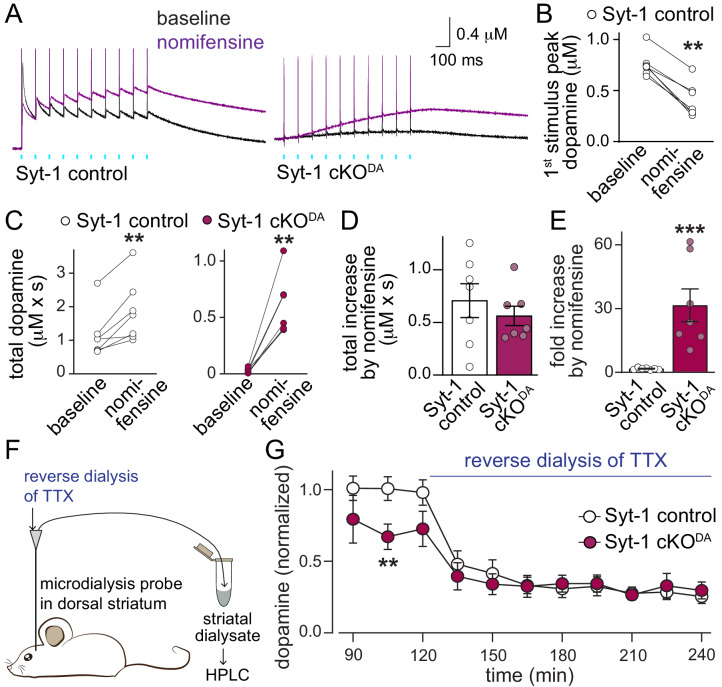
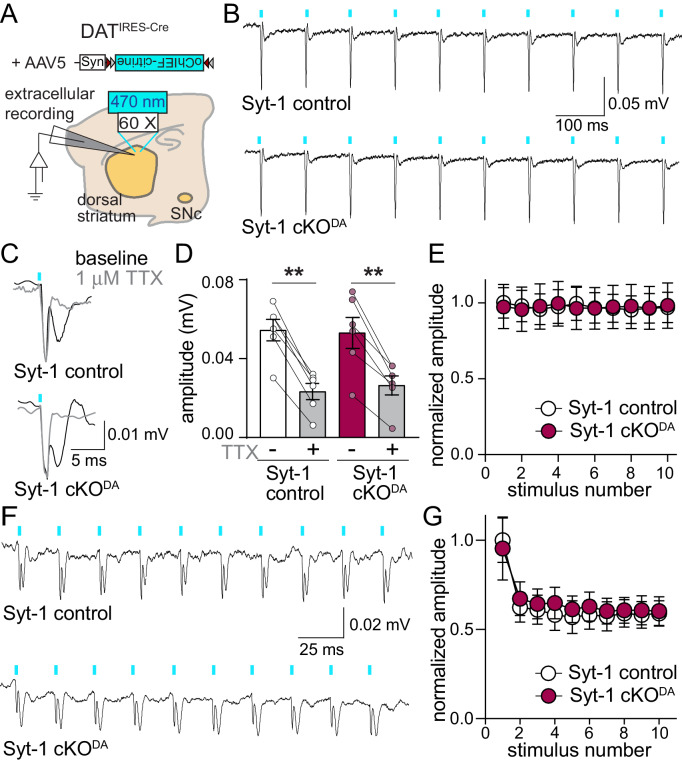
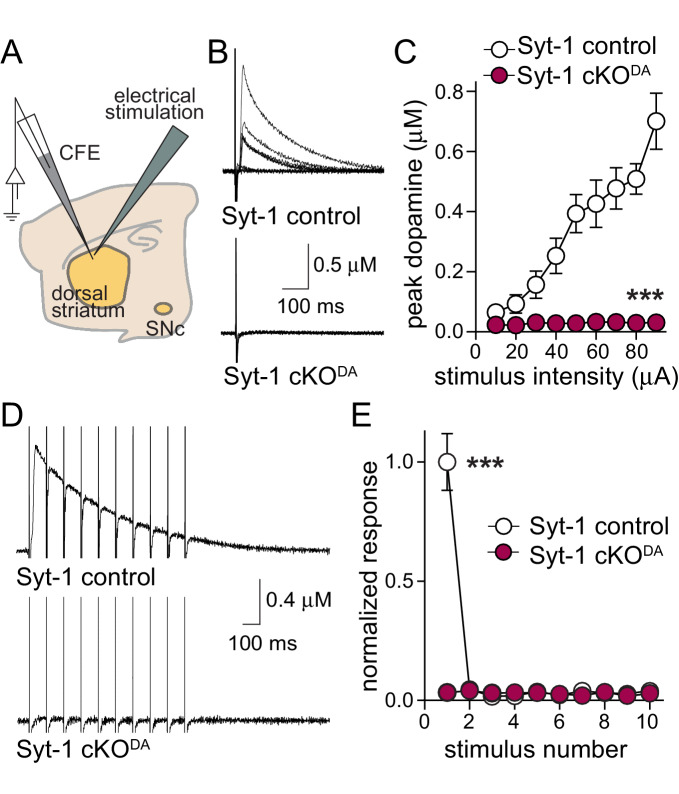
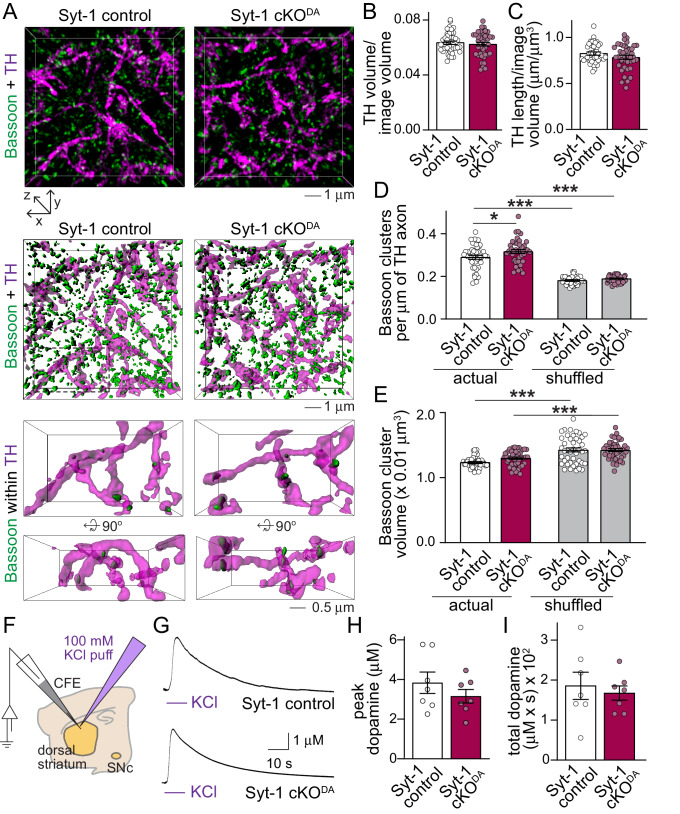
Dopamine powerfully controls neural circuits through neuromodulation. In the vertebrate striatum, dopamine adjusts cellular functions to regulate behaviors across broad time scales, but how the dopamine secretory system is built to support fast and slow neuromodulation is not known. Here, we set out to identify Ca-triggering mechanisms for dopamine release. We find that synchronous dopamine secretion is abolished in acute brain slices of conditional knockout mice in which Synaptotagmin-1 is removed from dopamine neurons. This indicates that Synaptotagmin-1 is the Ca sensor for fast dopamine release. Remarkably, dopamine release induced by strong depolarization and asynchronous release during stimulus trains are unaffected by Synaptotagmin-1 knockout. Microdialysis further reveals that these modes and action potential-independent release provide significant amounts of extracellular dopamine in vivo. We propose that the molecular machinery for dopamine secretion has evolved to support fast and slow signaling modes, with fast release requiring the Ca sensor Synaptotagmin-1.
多巴胺通过神经调质强有力地控制神经回路。在脊椎动物纹状体中,多巴胺调节细胞功能,以在广泛的时间尺度上调节行为,但多巴胺分泌系统如何构建以支持快速和慢速神经调质尚不清楚。在这里,我们着手确定多巴胺释放的 Ca 触发机制。我们发现,在条件性敲除小鼠的急性脑片中,Synaptotagmin-1 从多巴胺神经元中去除,同步多巴胺分泌被消除。这表明 Synaptotagmin-1 是快速多巴胺释放的 Ca 传感器。值得注意的是,强去极化诱导的多巴胺释放和刺激列车期间的异步释放不受 Synaptotagmin-1 敲除的影响。微透析进一步表明,这些模式和动作电位独立的释放提供了大量的细胞外多巴胺在体内。我们提出,多巴胺分泌的分子机制已经进化到支持快速和慢速信号模式,快速释放需要 Ca 传感器 Synaptotagmin-1。