Division of General Surgery, Department of Surgery, Linkou Chang Gung Memorial Hospital, Taoyuan, Taiwan.
Graduate Institute of Clinical Medical Sciences, Chang Gung University, Taoyuan, Taiwan.
World J Surg Oncol. 2020 Jun 3;18(1):121. doi: 10.1186/s12957-020-01885-w.
Hepatocellular carcinoma (HCC) is the most common primary malignancy of the liver with a dismal prognosis. Vascular invasion, among others, is the most robust indicator of postoperative recurrence and overall survival after liver resection for HCC. Few studies to date have attempted to search for effective markers to predict vascular invasion before the operation. The current study would examine the plasma metabolic profiling via H-NMR of HCC patients undergoing liver resection and aim to search for potential biomarkers in the early detection of HCC with normal alpha-fetoprotein (AFP) and the diagnosis of vascular invasion preoperatively.
HCC patients scheduled to receive liver resections for their HCC were recruited and divided into two separate groups, investigation cohort and validation cohort. Their preoperative blood samples were collected and subjected to a comprehensive metabolomic profiling using H-nuclear magnetic resonance spectroscopy (NMR).
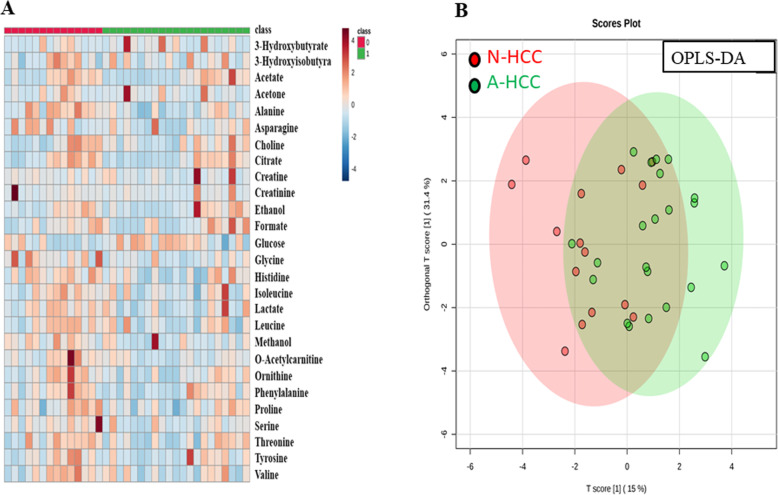
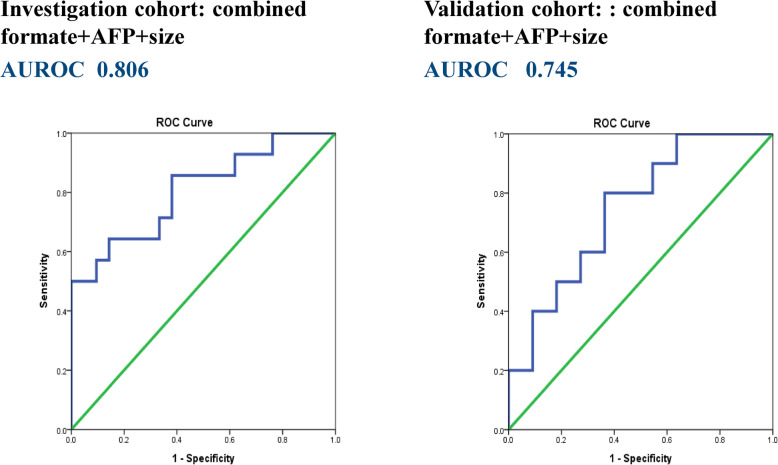
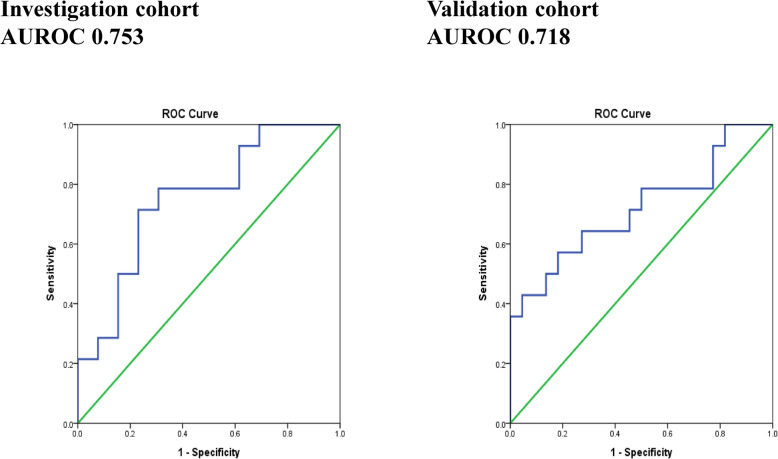
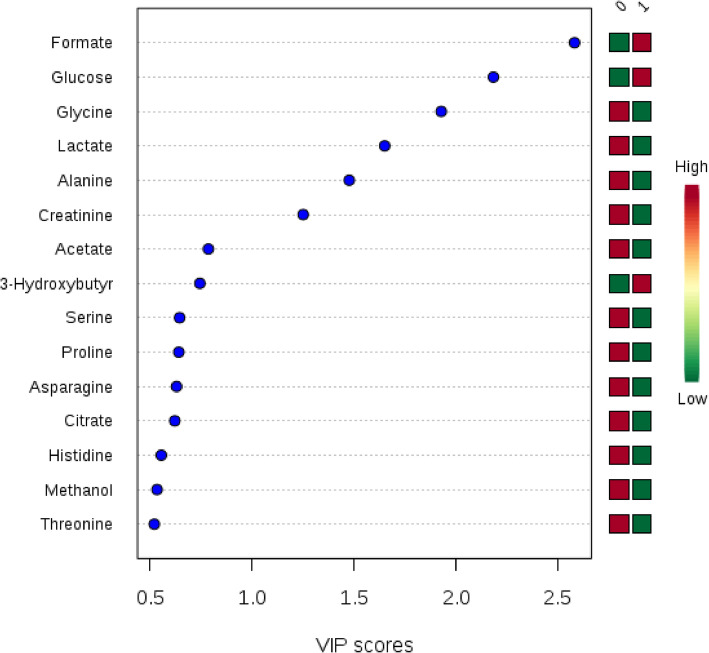
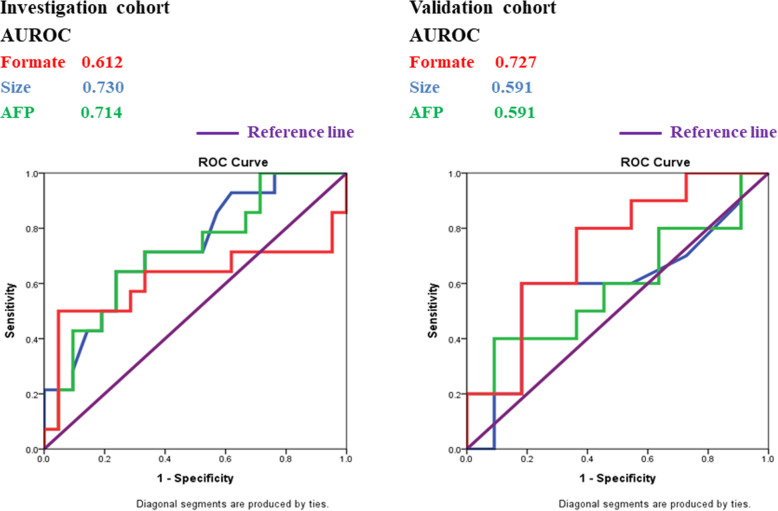
There were 35 HCC patients in the investigation group and 22 patients in the validation group. Chronic hepatitis B remained the most common etiology of HCC, followed by chronic HCV infection. The two study cohorts were essentially comparable in terms of major clinicopathological variables. After H-nuclear NMR analysis, we found in the investigation cohort that HCC with normal alpha-fetoprotein (AFP < 15 ng/mL) had significantly higher serum level of O-acetylcarnitine than those with higher AFP (AFP ≥ 15 ng/mL, P = 0.025). In addition, HCC with microscopic vascular invasion (VI) had significantly higher preoperative serum level of formate than HCC without microscopic VI (P = 0.023). These findings were similar in the validation cohort.
A comprehensive metabolomic profiling of HCC demonstrated that serum metabolites may be utilized to assist the early diagnosis of AFP-negative HCC patients and recognition of microvascular invasion in order to facilitate preoperative surgical planning and postoperative follow-up. Further, larger scale prospective studies are warranted to consolidate our findings.
肝细胞癌(HCC)是肝脏最常见的原发性恶性肿瘤,预后较差。血管侵犯是 HCC 患者肝切除术后复发和总生存的最有力指标之一。迄今为止,很少有研究试图寻找有效的标志物来预测手术前的血管侵犯。本研究通过对接受肝切除术的 HCC 患者的血浆代谢组学进行 H-NMR 分析,旨在寻找术前 AFP 正常的 HCC 早期检测和血管侵犯诊断的潜在生物标志物。
招募计划接受肝切除术治疗 HCC 的 HCC 患者,并将其分为两个独立的组,即研究组和验证组。收集他们的术前血样,并使用 H 核磁共振波谱(NMR)进行全面代谢组学分析。
研究组有 35 例 HCC 患者,验证组有 22 例。慢性乙型肝炎仍然是 HCC 的最常见病因,其次是慢性丙型肝炎感染。两个研究队列在主要临床病理变量方面基本相似。经过 H 核 NMR 分析,我们在研究组中发现,甲胎蛋白(AFP < 15ng/ml)正常的 HCC 患者血清 O-乙酰肉碱水平明显高于 AFP 较高的 HCC 患者(AFP ≥ 15ng/ml,P = 0.025)。此外,有微血管侵犯(VI)的 HCC 患者术前血清中甲酸盐水平明显高于无微血管 VI 的 HCC 患者(P = 0.023)。在验证组中也发现了类似的结果。
对 HCC 的全面代谢组学分析表明,血清代谢物可用于辅助 AFP 阴性 HCC 患者的早期诊断和微血管侵犯的识别,以促进术前手术计划和术后随访。此外,需要进行更大规模的前瞻性研究来证实我们的发现。