Huang Katherine, Thomas Natalie, Gooley Paul R, Armstrong Christopher W
Department of Biochemistry and Pharmacology, Bio21 Molecular Science and Biotechnology Institute, University of Melbourne, Parkville, VIC 3010, Australia.
Metabolites. 2022 Oct 12;12(10):963. doi: 10.3390/metabo12100963.
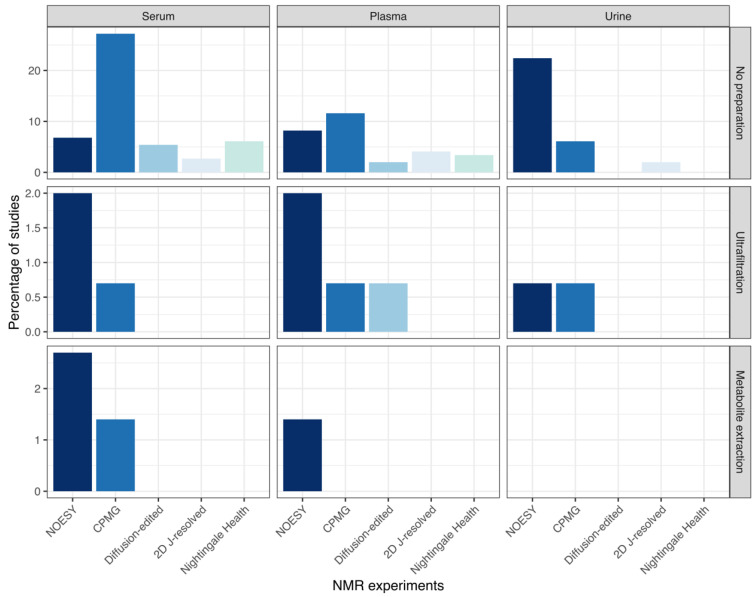
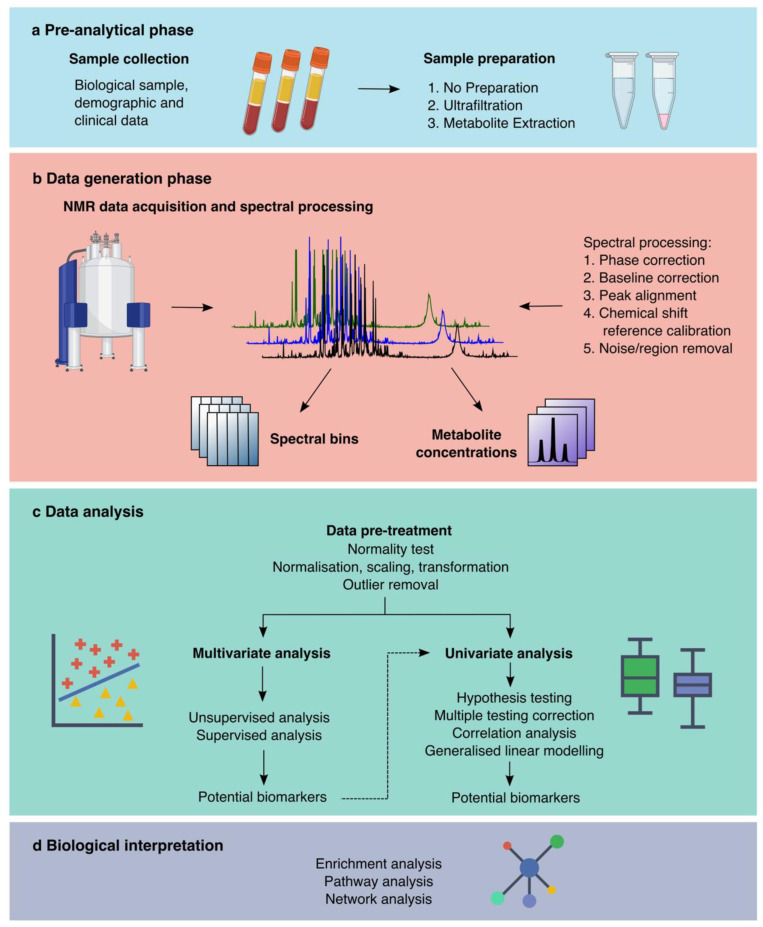
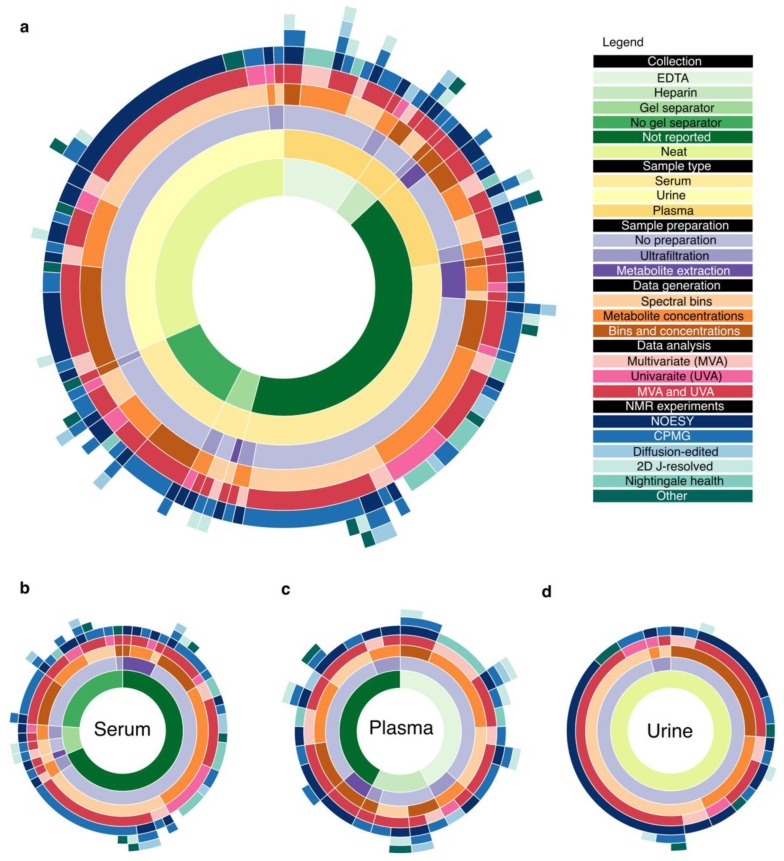
Nuclear magnetic resonance (NMR) spectroscopy is one of the principal analytical techniques for metabolomics. It has the advantages of minimal sample preparation and high reproducibility, making it an ideal technique for generating large amounts of metabolomics data for biobanks and large-scale studies. Metabolomics is a popular "omics" technology and has established itself as a comprehensive exploratory biomarker tool; however, it has yet to reach its collaborative potential in data collation due to the lack of standardisation of the metabolomics workflow seen across small-scale studies. This systematic review compiles the different NMR metabolomics methods used for serum, plasma, and urine studies, from sample collection to data analysis, that were most popularly employed over a two-year period in 2019 and 2020. It also outlines how these methods influence the raw data and the downstream interpretations, and the importance of reporting for reproducibility and result validation. This review can act as a valuable summary of NMR metabolomic workflows that are actively used in human biofluid research and will help guide the workflow choice for future research.
核磁共振(NMR)光谱法是代谢组学的主要分析技术之一。它具有样品制备最少和重现性高的优点,使其成为为生物样本库和大规模研究生成大量代谢组学数据的理想技术。代谢组学是一种流行的“组学”技术,已成为一种全面的探索性生物标志物工具;然而,由于小规模研究中代谢组学工作流程缺乏标准化,它在数据整理方面尚未发挥其协作潜力。本系统综述汇编了2019年和2020年两年间最常用的用于血清、血浆和尿液研究的不同NMR代谢组学方法,从样本采集到数据分析。它还概述了这些方法如何影响原始数据和下游解释,以及报告对于重现性和结果验证的重要性。本综述可作为人类生物流体研究中积极使用的NMR代谢组学工作流程的宝贵总结,并将有助于指导未来研究的工作流程选择。