Nanjing University of Chinese Medicine, No.138 Xianlin Road, Nanjing, 210046, China.
The First Affiliated Hospital of Dali University, No. 32 Jiashibo Road, Dali, 671000, Yunnan Province, China.
Trials. 2020 Jun 3;21(1):465. doi: 10.1186/s13063-020-04435-7.
Osteoporosis is becoming more prevalent in aging societies worldwide, and the economic burden attributable to osteoporotic fractures is substantial. The medications presently available to treat osteoporosis have side effects. Acupuncture is widely used for treating osteoporotic postmenopausal women because it is non-invasive and has fewer side effects, but the powerful clinical evidence for its efficacy remains insufficient. Our study intends to explore the effect of overall adjustment acupuncture (OA) in the treatment of postmenopausal osteoporosis (PMOP).
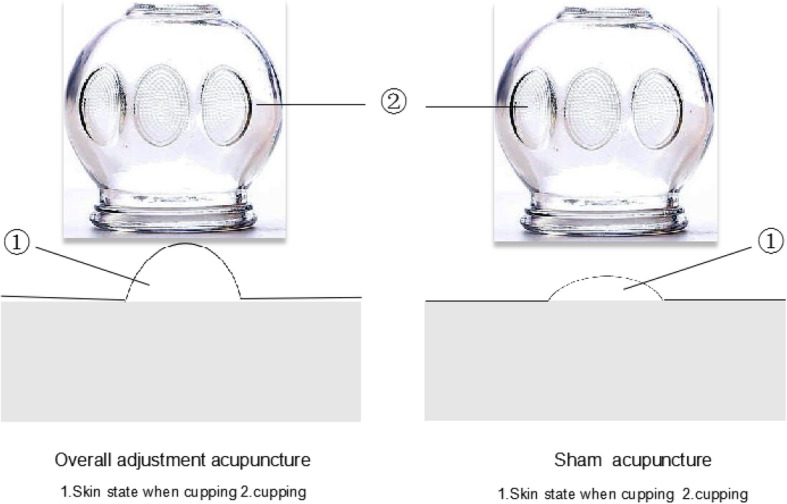
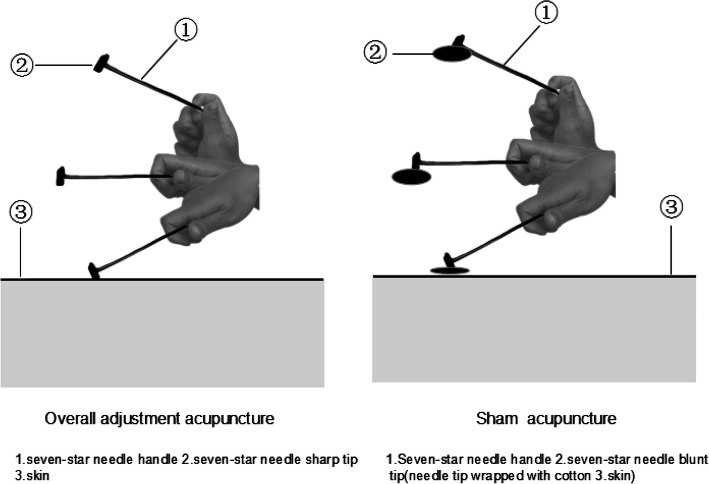
METHODS/DESIGN: This study is a randomized, sham-controlled, patient- and assessor-blinded trial and aims to evaluate the effect of OA in women with PMOP. We will recruit 104 women aged 45-70 years with a diagnosis of PMOP. Participants will be randomly allocated in a 1:1 ratio to the OA group and the sham acupuncture (SA) group. Both groups will receive real herbal medicine treatment as a basic treatment twice a day for 3 months, the OA group receives real acupuncture treatment and the SA group receives placebo acupuncture treatment (non-penetrating, sham skin-needle therapy, sham cupping). All patients will receive acupuncture treatment twice per week for 3 months. The primary outcome is bone mineral density (BMD) and the secondary outcomes include estradiol (E2), follicle-stimulating hormone (FSH), bone gla protein (BGP), bone alkaline phosphatase (BALP), total antioxidant capacity (TAC), advanced oxidation protein products (AOPP), PPARγ, β-catenin, FoxO3a levels, visual analog pain scale score (VAS), Traditional Chinese medicine (TCM) syndrome scores and quality of daily life score (QOL). Outcome measures will be collected at baseline, middle of the treatment (1.5 months), the end of treatment (3 months). The present protocol followed the SPIRIT guidelines and fulfills the SPIRIT Checklist.
This study will be conducted to compare the efficacy of OA versus SA. This trial should help to evaluate whether OA can effectively prevent and treat PMOP by improving the estrogen levels of postmenopausal women. The mechanism is to improve the imbalance of osteogenic differentiation and lipogenesis of bone-marrow cells under oxidative stress.
Chinese Clinical Trial Registry, ID: ChiCTR1800017581. Registered on 5 August 2018. URL: http://www.chictr.org.cn.
骨质疏松症在全球老龄化社会中变得越来越普遍,骨质疏松性骨折造成的经济负担相当大。目前可用的治疗骨质疏松症的药物有副作用。针灸因其非侵入性和副作用较少而被广泛用于治疗绝经后骨质疏松症妇女,但它的疗效的有力临床证据仍然不足。我们的研究旨在探讨整体调整针灸(OA)治疗绝经后骨质疏松症(PMOP)的效果。
方法/设计:这是一项随机、假对照、患者和评估者盲法试验,旨在评估 OA 对 PMOP 妇女的影响。我们将招募 104 名年龄在 45-70 岁之间、诊断为 PMOP 的女性。参与者将以 1:1 的比例随机分配到 OA 组和假针灸(SA)组。两组均接受每日两次的真实草药治疗,为期 3 个月,OA 组接受真实针灸治疗,SA 组接受安慰剂针灸治疗(非穿透性、假皮肤针疗法、假拔罐)。所有患者将接受每周两次的针灸治疗,为期 3 个月。主要结局是骨密度(BMD),次要结局包括雌二醇(E2)、卵泡刺激素(FSH)、骨钙蛋白(BGP)、骨碱性磷酸酶(BALP)、总抗氧化能力(TAC)、高级氧化蛋白产物(AOPP)、过氧化物酶体增殖物激活受体γ(PPARγ)、β-连环蛋白、叉头框蛋白 3a(FoxO3a)水平、视觉模拟疼痛量表评分(VAS)、中医(TCM)证候评分和生活质量评分(QOL)。在基线、治疗中期(1.5 个月)和治疗结束时(3 个月)收集结果测量值。本方案遵循 SPIRIT 指南,并满足 SPIRIT 清单。
本研究将比较 OA 与 SA 的疗效。这项试验应该有助于评估 OA 是否可以通过提高绝经后妇女的雌激素水平来有效预防和治疗 PMOP。其机制是改善氧化应激下骨髓细胞成骨分化和脂生成的失衡。
中国临床试验注册中心,ID:ChiCTR1800017581。注册于 2018 年 8 月 5 日。网址:http://www.chictr.org.cn。