Division of Cardiology, Columbia University Irving Medical Center, New York, New York.
Division of Cardiology, Department of Medicine, Perelman School of Medicine at the University of Pennsylvania, Philadelphia, Pennsylvania.
JACC Heart Fail. 2020 Aug;8(8):681-691. doi: 10.1016/j.jchf.2020.05.006. Epub 2020 Jun 3.
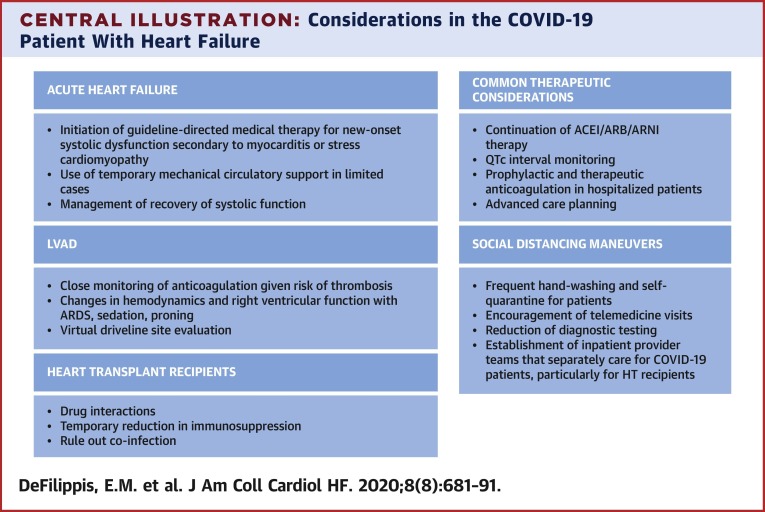
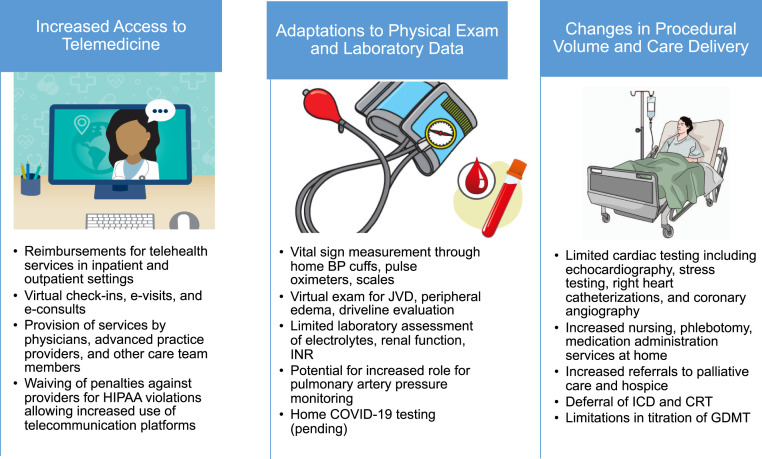
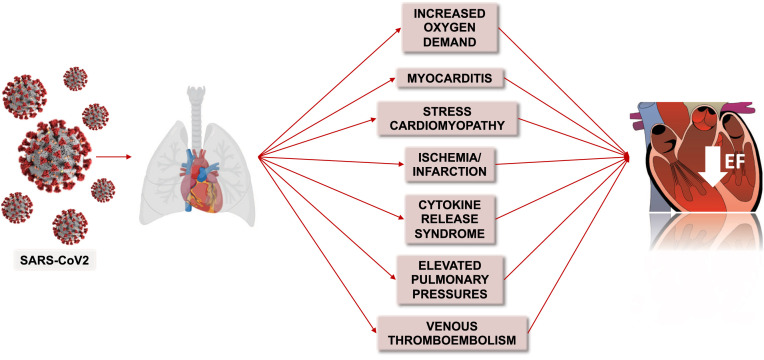
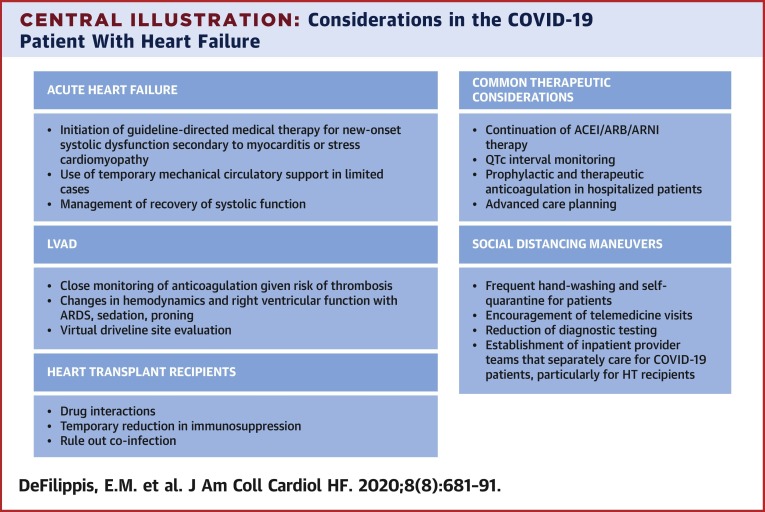
The coronavirus-2019 (COVID-19) infection pandemic has affected the care of patients with heart failure (HF) who have contracted COVID-19 as well as those without COVID-19 who have been impacted by the restructuring of health care delivery. Patients with HF and other cardiovascular comorbidities are at risk for severe disease and complications of infection. Similarly, COVID-19 has been demonstrated to cause myocarditis and may be implicated in new-onset cardiomyopathy. During this pandemic, special considerations are needed for patients with advanced HF, including those supported by durable left ventricular assist devices (LVADs) and heart transplant recipients. The purpose of this review is to summarize emerging data regarding the development of HF secondary to COVID-19 infection in patients with advanced HF and the implications of the pandemic for care of uninfected patients with HF.
2019 年冠状病毒病(COVID-19)感染大流行不仅影响了合并 COVID-19 的心力衰竭(HF)患者的治疗,也影响了因医疗服务重构而受到影响的未感染 COVID-19 的 HF 患者的治疗。HF 患者和其他心血管合并症患者存在罹患严重疾病和感染并发症的风险。同样,COVID-19 已被证实可引起心肌炎,并且可能与新发心肌病有关。在大流行期间,需要对晚期 HF 患者给予特殊考虑,包括那些接受耐用性左心室辅助装置(LVAD)和心脏移植受者支持的患者。本文综述了有关 COVID-19 感染后晚期 HF 患者发生 HF 的新数据,以及大流行对未感染 HF 患者治疗的影响。