van der Vaart Aniek, Godfrey Molly, Portegijs Vincent, van den Heuvel Sander
Developmental Biology, Department of Biology, Faculty of Sciences, Utrecht University, Padualaan 8, 3584 CH Utrecht, Netherlands.
Sci Adv. 2020 May 20;6(21):eaay3823. doi: 10.1126/sciadv.aay3823. eCollection 2020 May.
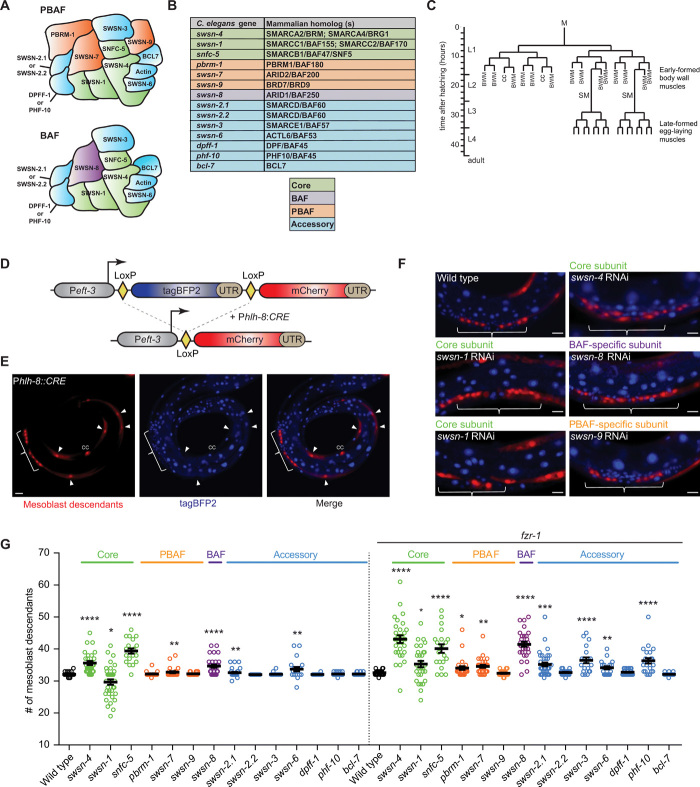
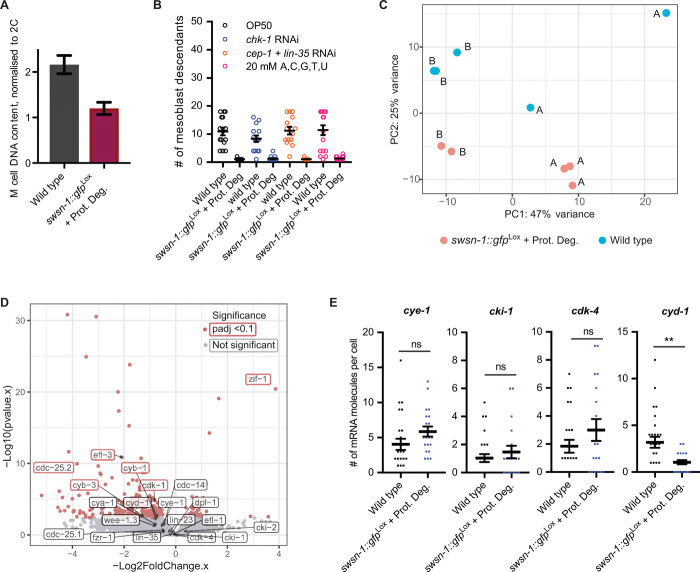
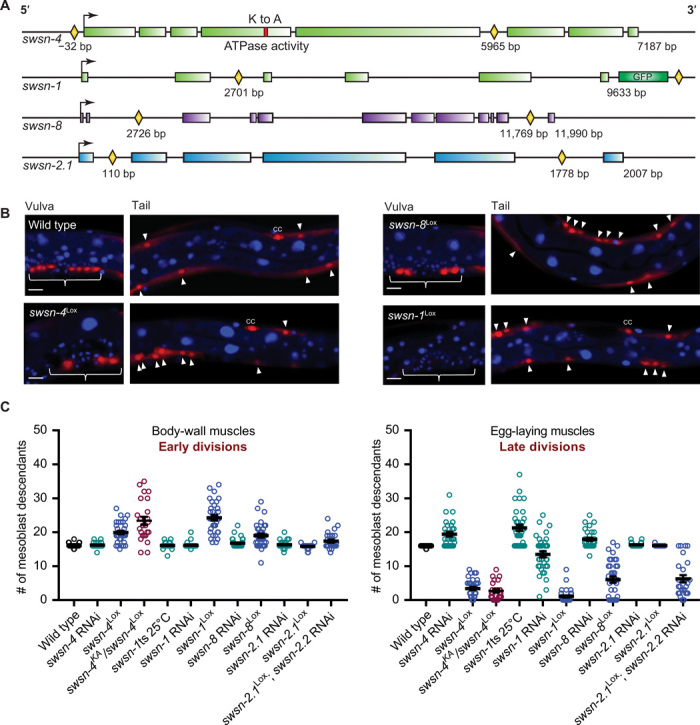
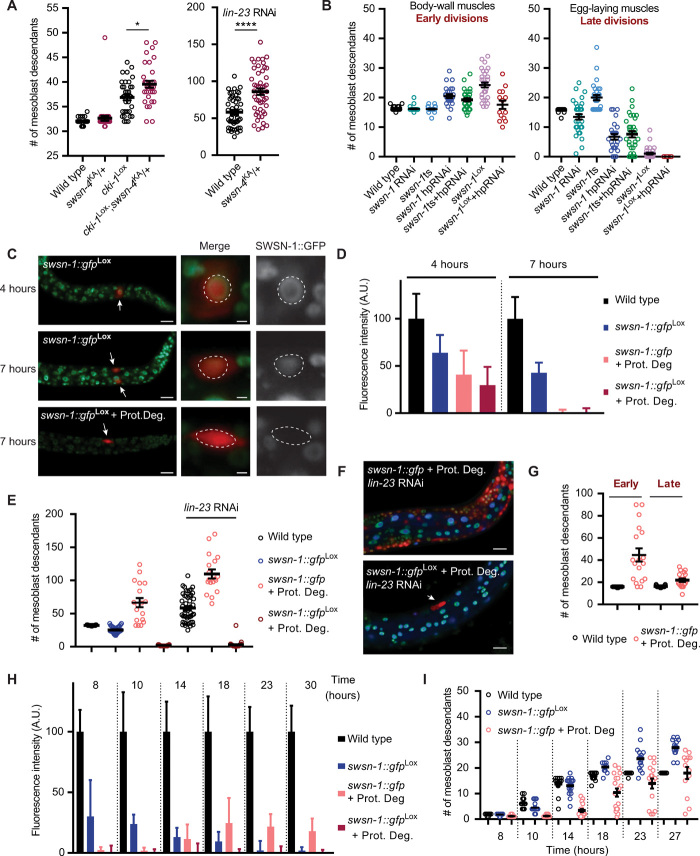
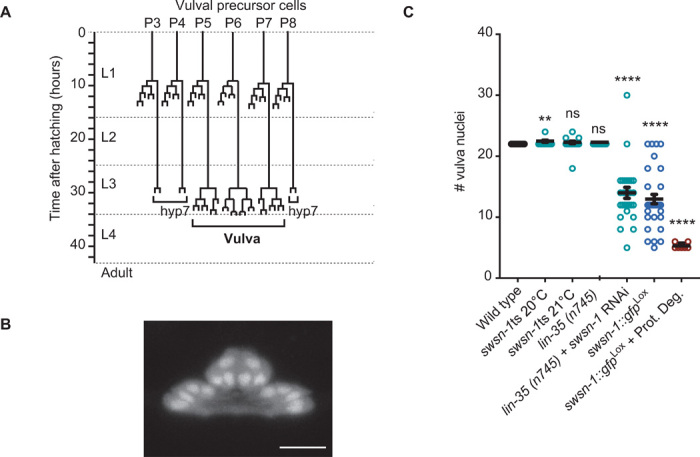
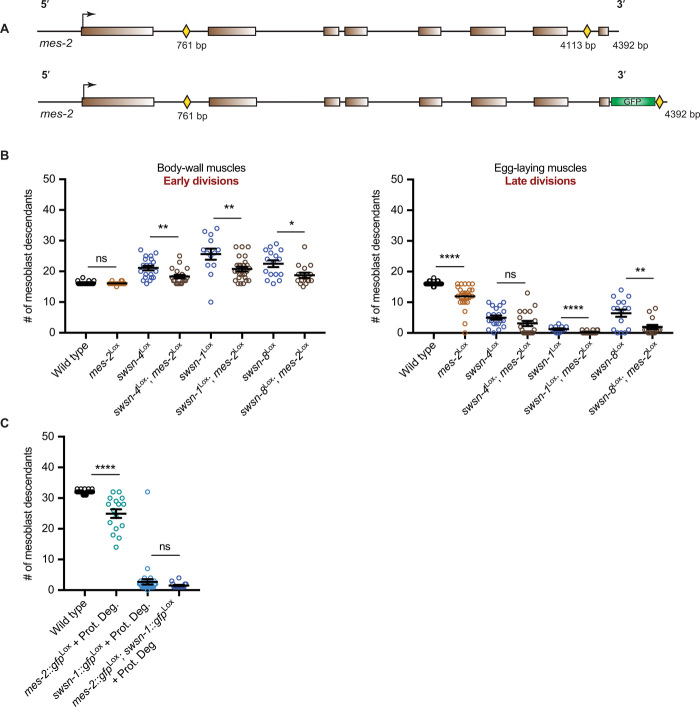
SWI/SNF (switch/sucrose nonfermenting) complexes regulate transcription through chromatin remodeling and opposing gene silencing by Polycomb group (PcG) proteins. Genes encoding SWI/SNF components are critical for normal development and frequently mutated in human cancer. We characterized the in vivo contributions of SWI/SNF and PcG complexes to proliferation-differentiation decisions, making use of the reproducible development of the nematode RNA interference, lineage-specific gene knockout, and targeted degradation of SWI/SNF BAF components induced either overproliferation or acute proliferation arrest of precursor cells, depending on residual protein levels. Our data show that a high SWI/SNF BAF dosage is needed to arrest cell division during differentiation and to oppose PcG-mediated repression. In contrast, a low SWI/SNF protein level is necessary to sustain cell proliferation and hyperplasia, even when PcG repression is blocked. These observations show that incomplete inactivation of SWI/SNF components can eliminate a tumor-suppressor activity while maintaining an essential transcription regulatory function.
SWI/SNF(开关/蔗糖非发酵)复合物通过染色质重塑来调节转录,并对抗多梳蛋白家族(PcG)蛋白介导的基因沉默。编码SWI/SNF组分的基因对于正常发育至关重要,且在人类癌症中经常发生突变。我们利用线虫RNA干扰、谱系特异性基因敲除以及靶向降解SWI/SNF BAF组分所带来的可重复性发育,研究了SWI/SNF和PcG复合物在增殖-分化决定中的体内作用,结果发现这会导致前体细胞过度增殖或急性增殖停滞,具体取决于残余蛋白水平。我们的数据表明,在分化过程中阻止细胞分裂并对抗PcG介导的抑制作用需要高剂量的SWI/SNF BAF。相反,即使PcG抑制被阻断,维持细胞增殖和增生也需要低水平的SWI/SNF蛋白。这些观察结果表明,SWI/SNF组分的不完全失活可以消除肿瘤抑制活性,同时维持基本的转录调节功能。