Department of Pharmacology and Center for Biomedical Neuroscience, University of Texas Health Science Center, San Antonio, TX, United States of America.
Population Health Program, Texas Biomedical Research Institute, San Antonio, TX, United States of America.
PLoS One. 2020 Jun 4;15(6):e0232200. doi: 10.1371/journal.pone.0232200. eCollection 2020.
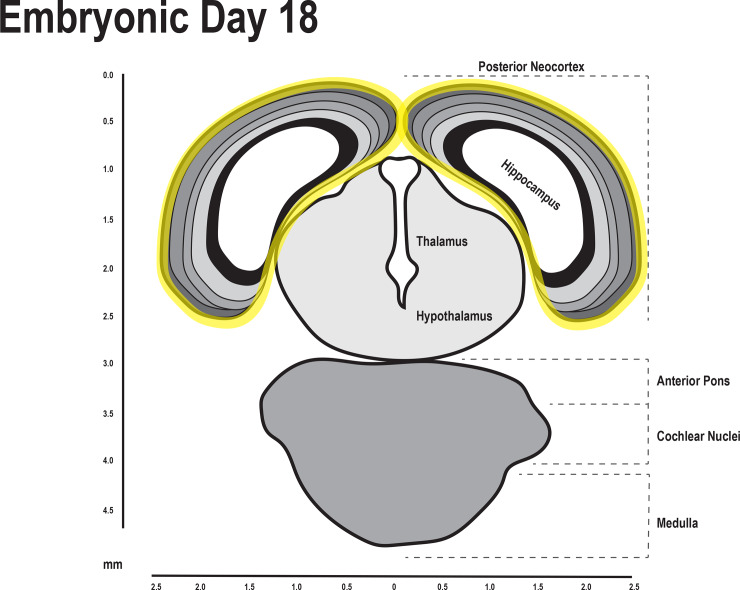
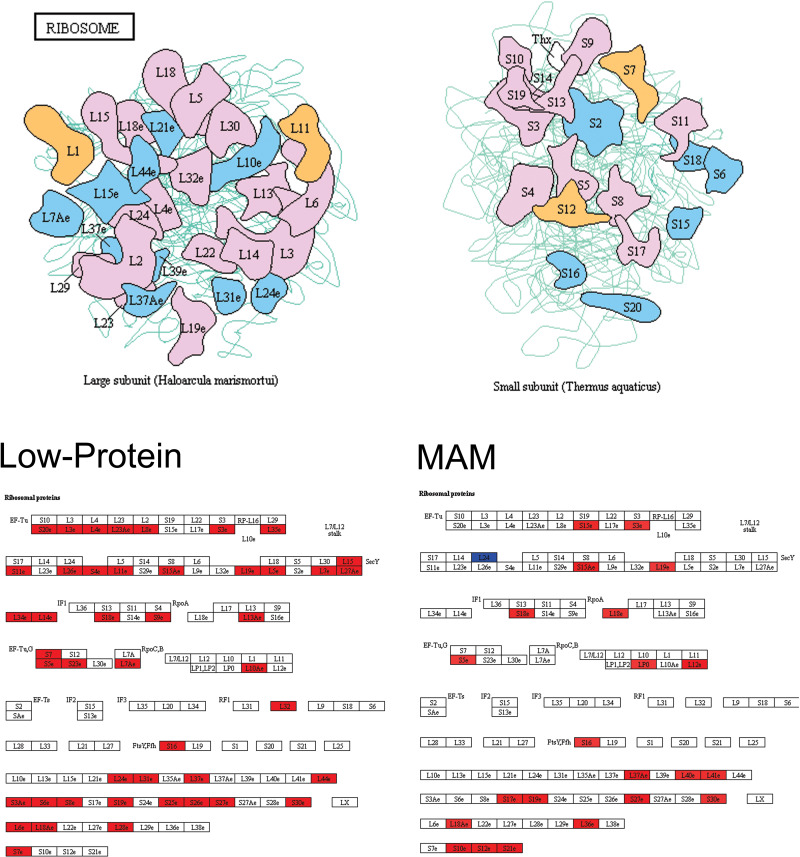
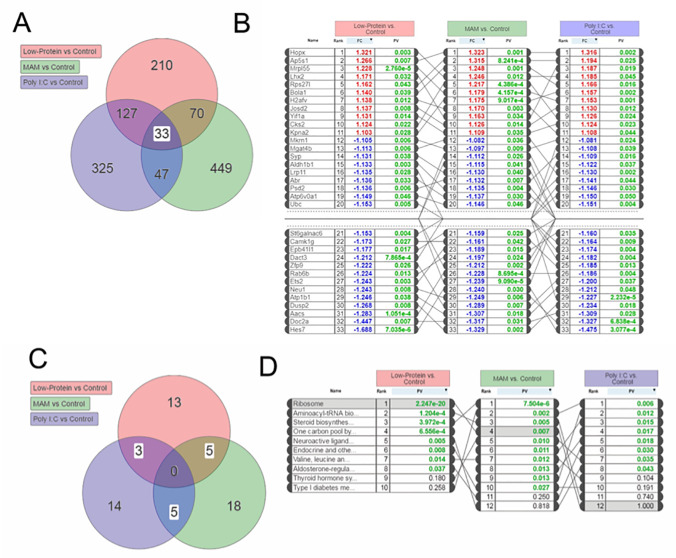
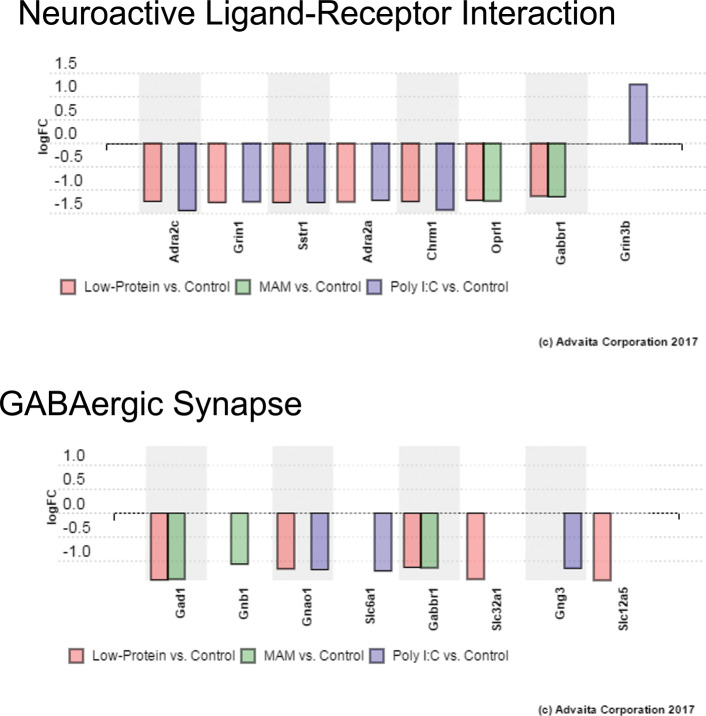
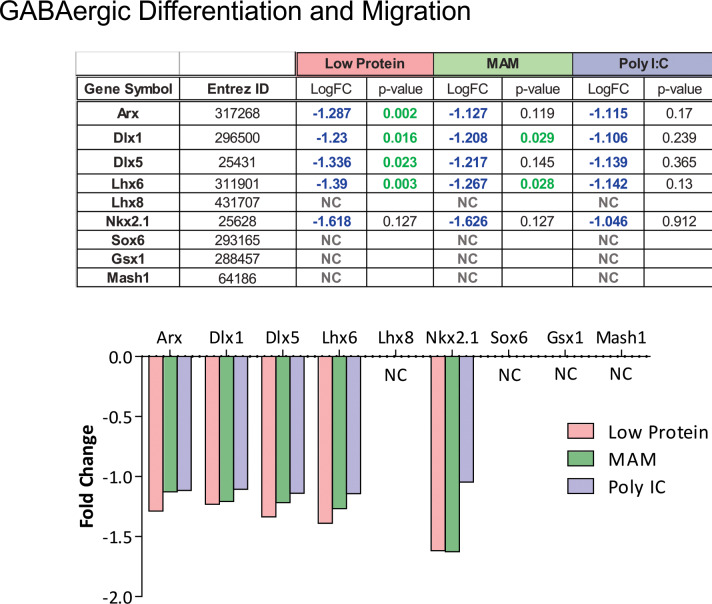
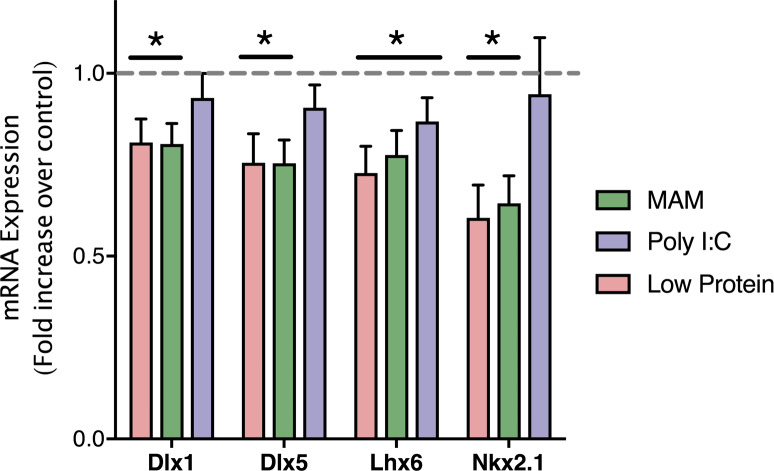
Schizophrenia is a debilitating disorder affecting just under 1% of the population. While the symptoms of this disorder do not appear until late adolescence, pathological alterations likely occur earlier, during development in utero. While there is an increasing literature examining transcriptome alterations in patients, it is not possible to examine the changes in gene expression that occur during development in humans that will develop schizophrenia. Here we utilize three distinct rodent developmental disruption models of schizophrenia to examine potential overlapping alterations in the transcriptome, with a specific focus on markers of interneuron development. Specifically, we administered either methylazoxymethanol acetate (MAM), Polyinosinic:polycytidylic acid (Poly I:C), or chronic protein malnutrition, on GD 17 and examined mRNA expression in the developing hippocampus of the offspring 18 hours later. Here, we report alterations in gene expression that may contribute to the pathophysiology of schizophrenia, including significant alterations in interneuron development and ribosome function.
精神分裂症是一种使人衰弱的疾病,影响着不到 1%的人口。虽然这种疾病的症状直到青春期后期才会出现,但病理改变可能更早,在子宫内发育过程中就已经发生。虽然有越来越多的文献研究患者的转录组改变,但无法研究在人类发育过程中发生的、将发展为精神分裂症的基因表达变化。在这里,我们利用三种不同的精神分裂症啮齿动物发育干扰模型,来研究转录组中可能存在的重叠改变,并特别关注中间神经元发育的标志物。具体来说,我们在 GD 17 时给予甲基乙氧甲硝氰胺(MAM)、聚肌胞苷酸(Poly I:C)或慢性蛋白质营养不良,并在 18 小时后检查后代发育中的海马体的 mRNA 表达。在这里,我们报告了可能导致精神分裂症病理生理学的基因表达改变,包括中间神经元发育和核糖体功能的显著改变。