CIIMAR/CIMAR-Interdisciplinary Center of Marine and Environmental Research, University of Porto, Terminal de Cruzeiros do Porto, Avenida General Norton de Matos, 4450-238 Matosinhos, Portugal.
Institute of Biomedical Science Abel Salazar, University of Porto, R. Jorge de Viterbo Ferreira 228, 4050-313 Porto, Portugal.
Toxins (Basel). 2020 Jun 2;12(6):368. doi: 10.3390/toxins12060368.
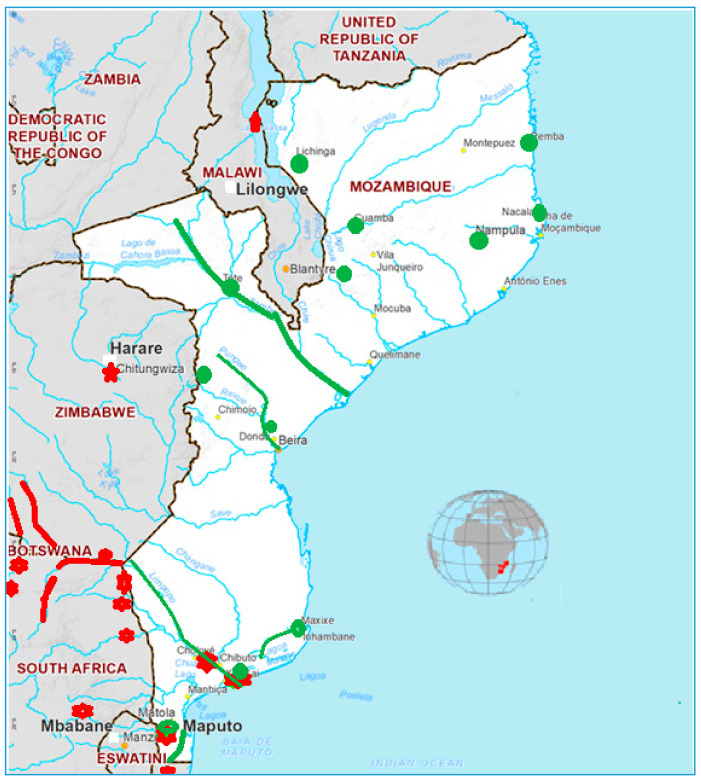
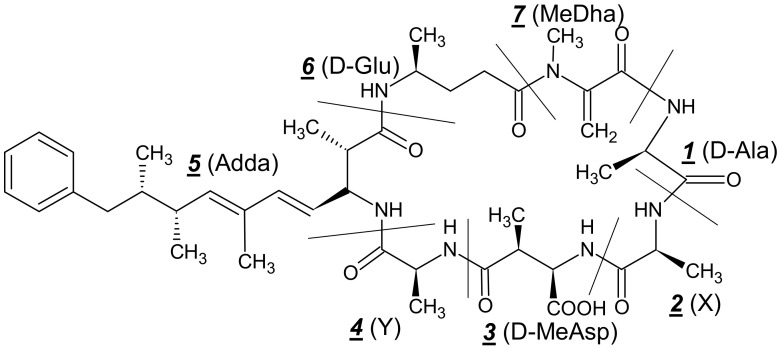
Microcystins (MCs) are cyanotoxins produced mainly by freshwater cyanobacteria, which constitute a threat to public health due to their negative effects on humans, such as gastroenteritis and related diseases, including death. In Mozambique, where only 50% of the people have access to safe drinking water, this hepatotoxin is not monitored, and consequently, the population may be exposed to MCs. The few studies done in Maputo and Gaza provinces indicated the occurrence of MC-LR, -YR, and -RR at a concentration ranging from 6.83 to 7.78 µg·L, which are very high, around 7 times above than the maximum limit (1 µg·L) recommended by WHO. The potential MCs-producing in the studied sites are mainly species. These data from Mozambique and from surrounding countries (South Africa, Lesotho, Botswana, Malawi, Zambia, and Tanzania) evidence the need to implement an operational monitoring program of MCs in order to reduce or avoid the possible cases of intoxications since the drinking water quality control tests recommended by the Ministry of Health do not include an MC test. To date, no data of water poisoning episodes recorded were associated with MCs presence in the water. However, this might be underestimated due to a lack of monitoring facilities and/or a lack of public health staff trained for recognizing symptoms of MCs intoxication since the presence of high MCs concentration was reported in Maputo and Gaza provinces.
微囊藻毒素(MCs)主要由淡水蓝藻产生,由于其对人类的负面影响,如肠胃炎和相关疾病,包括死亡,对公共健康构成威胁。在莫桑比克,只有 50%的人能够获得安全饮用水,这种肝毒素没有得到监测,因此,民众可能会接触到 MCs。在马普托省和加扎省进行的少数研究表明,MC-LR、-YR 和 -RR 的浓度范围为 6.83 至 7.78 µg·L,非常高,大约是世界卫生组织(WHO)建议的最高限量(1 µg·L)的 7 倍。在研究地点,可能产生 MCs 的主要是 物种。来自莫桑比克和周边国家(南非、莱索托、博茨瓦纳、马拉维、赞比亚和坦桑尼亚)的数据表明,有必要实施一项微囊藻毒素的操作监测计划,以减少或避免可能的中毒病例,因为卫生部推荐的饮用水质量控制测试不包括 MC 测试。迄今为止,与水中存在 MCs 相关的水中毒事件数据没有被记录下来。然而,由于缺乏监测设施和/或缺乏经过培训识别 MC 中毒症状的公共卫生工作人员,这可能被低估了,因为在马普托省和加扎省报告了高浓度 MCs 的存在。