Department of Earth Sciences, University of Southern California, Los Angeles, California, United States of America.
Department of Earth and Planetary Sciences, Washington University in St. Louis, St. Louis, Missouri, United States of America.
PLoS One. 2020 Jun 5;15(6):e0234175. doi: 10.1371/journal.pone.0234175. eCollection 2020.
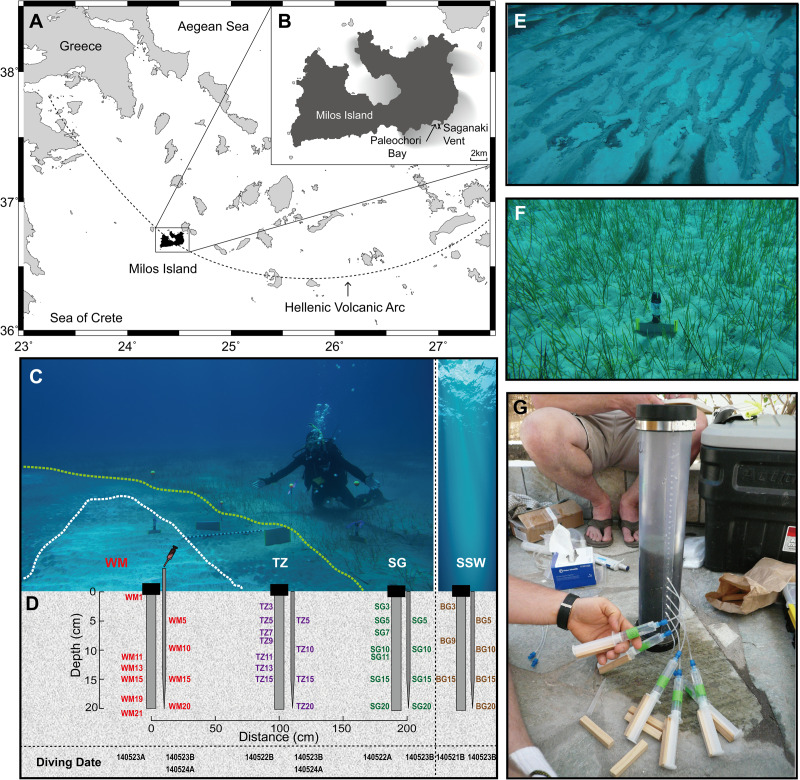
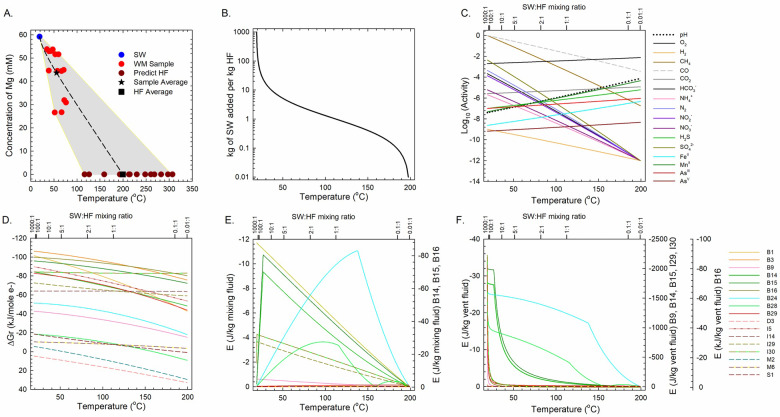
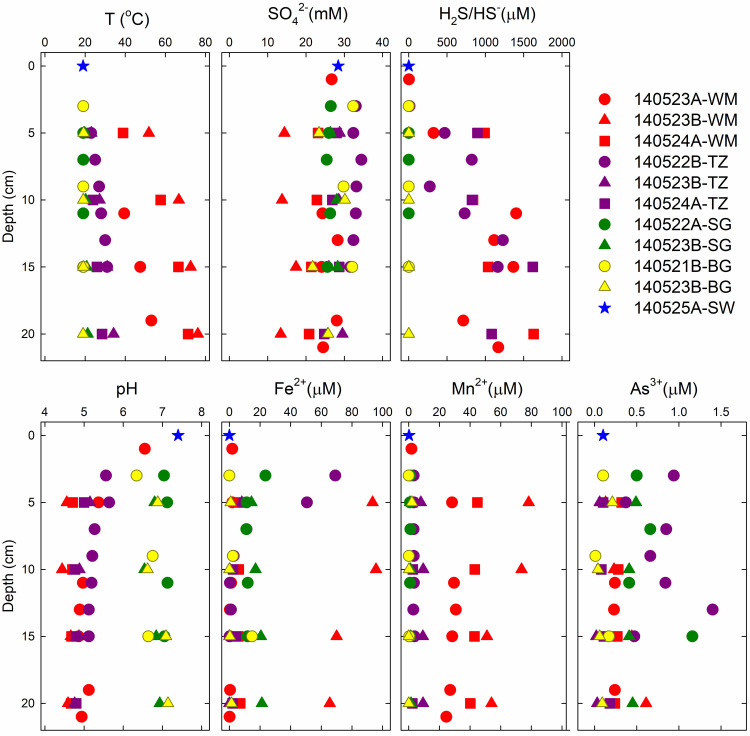
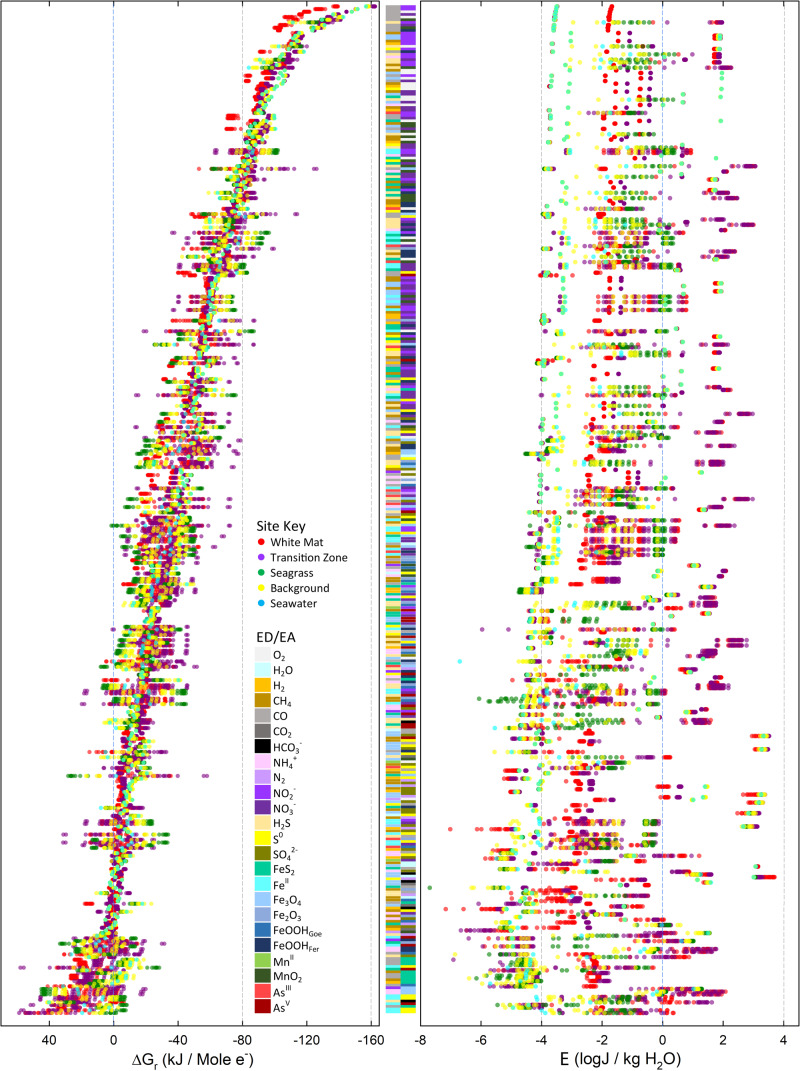
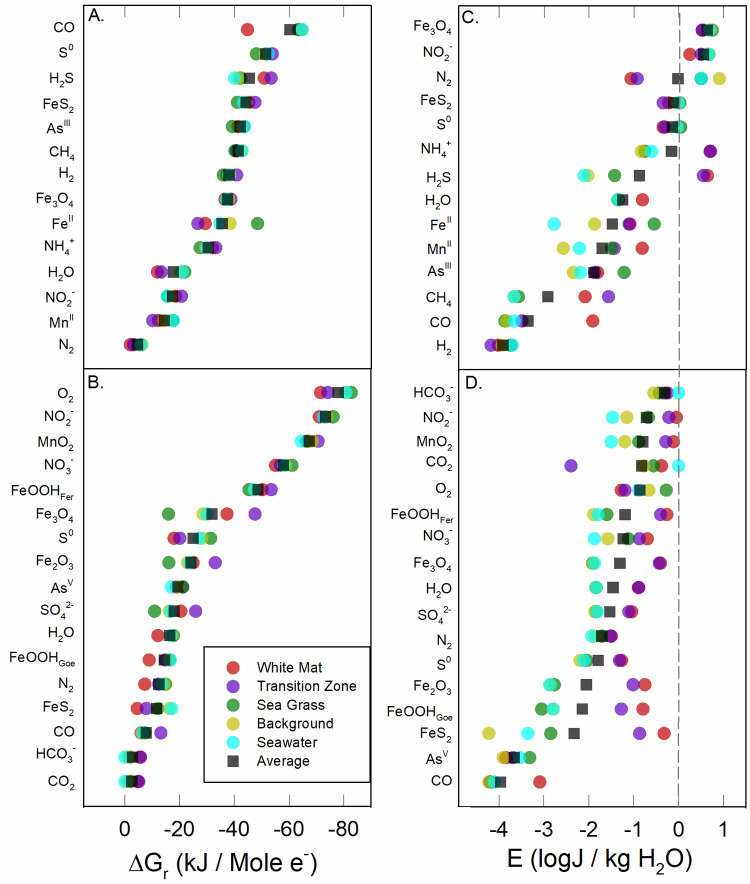
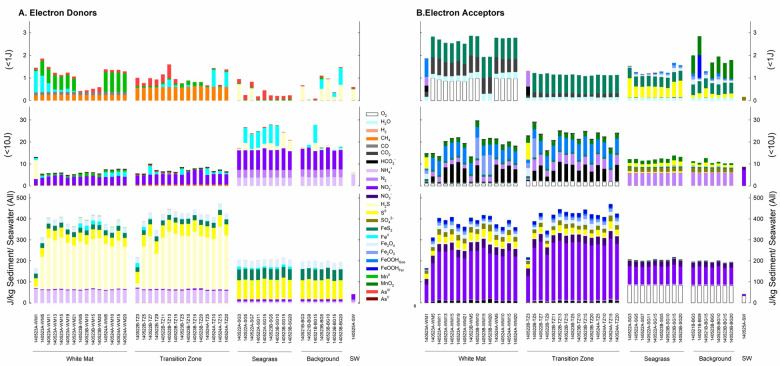
Shallow-sea hydrothermal systems, like their deep-sea and terrestrial counterparts, can serve as relatively accessible portals into the microbial ecology of subsurface environments. In this study, we determined the chemical composition of 47 sediment porewater samples along a transect from a diffuse shallow-sea hydrothermal vent to a non-thermal background area in Paleochori Bay, Milos Island, Greece. These geochemical data were combined with thermodynamic calculations to quantify potential sources of energy that may support in situ chemolithotrophy. The Gibbs energies (ΔGr) of 730 redox reactions involving 23 inorganic H-, O-, C-, N-, S-, Fe-, Mn-, and As-bearing compounds were calculated. Of these reactions, 379 were exergonic at one or more sampling locations. The greatest energy yields were from anaerobic CO oxidation with NO2- (-136 to -162 kJ/mol e-), followed by reactions in which the electron acceptor/donor pairs were O2/CO, NO3-/CO, and NO2-/H2S. When expressed as energy densities (where the concentration of the limiting reactant is taken into account), a different set of redox reactions are the most exergonic: in sediments affected by hydrothermal input, sulfide oxidation with a range of electron acceptors or nitrite reduction with different electron donors provide 85245 J per kg of sediment, whereas in sediments less affected or unaffected by hydrothermal input, various S0 oxidation reactions and aerobic respiration reactions with several different electron donors are most energy-yielding (8095 J per kg of sediment). A model that considers seawater mixing with hydrothermal fluids revealed that there is up to ~50 times more energy available for microorganisms that can use S0 or H2S as electron donors and NO2- or O2 as electron acceptors compared to other reactions. In addition to revealing likely metabolic pathways in the near-surface and subsurface mixing zones, thermodynamic calculations like these can help guide novel microbial cultivation efforts to isolate new species.
浅海热液系统与深海和陆地热液系统类似,可作为进入地下环境微生物生态的相对容易接近的门户。在这项研究中,我们沿着从弥漫浅海热液喷口到希腊米洛斯岛 Paleochori 湾非热背景区域的一条横切线上确定了 47 个沉积物孔隙水样的化学成分。这些地球化学数据与热力学计算相结合,以量化可能支持原地化学生物的能量来源。涉及 23 种无机 H、O、C、N、S、Fe、Mn 和 As 化合物的 730 个氧化还原反应的吉布斯自由能 (ΔGr) 被计算出来。在这些反应中,有 379 个在一个或多个采样点是放能的。最大的能量产量来自于与 NO2-(-136 至-162 kJ/mol e-)的厌氧 CO 氧化,其次是电子受体/供体对为 O2/CO、NO3-/CO 和 NO2-/H2S 的反应。当以能量密度(考虑到限制反应物的浓度)表示时,另一组氧化还原反应是最放能的:在受热液输入影响的沉积物中,一系列电子受体的硫化物氧化或不同电子供体的亚硝酸盐还原提供 85245 J 每千克沉积物,而在受热液输入影响较小或不受影响的沉积物中,各种 S0 氧化反应和多种不同电子供体的好氧呼吸反应是产能量最大的(8095 J 每千克沉积物)。考虑到海水与热液混合的模型表明,与其他反应相比,可将 S0 或 H2S 作为电子供体,将 NO2-或 O2 作为电子受体的微生物可获得高达~50 倍的能量。除了揭示近表面和地下混合区可能的代谢途径外,此类热力学计算还可以帮助指导新的微生物培养工作,以分离新的物种。