Department of Biochemistry and Microbiology, Rutgers University New Brunswick, NJ, USA ; Institute of Marine and Coastal Sciences, Rutgers University New Brunswick, NJ, USA ; Institute for Marine Science - ISMAR, National Research Council of Italy - CNR Ancona, Italy.
Front Microbiol. 2013 Jul 8;4:184. doi: 10.3389/fmicb.2013.00184. eCollection 2013.
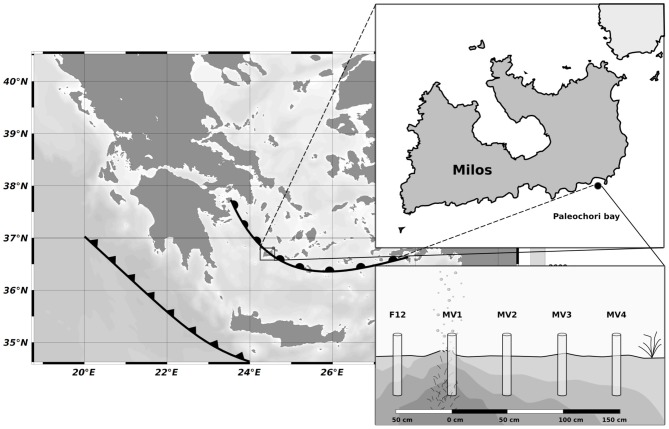
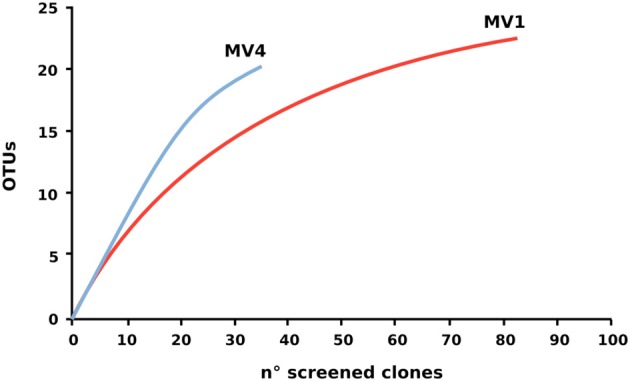
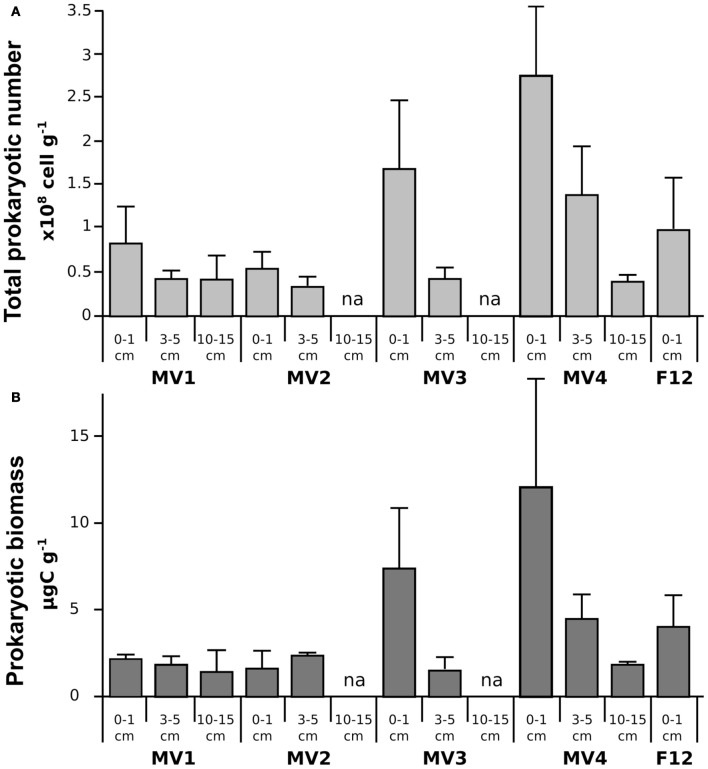
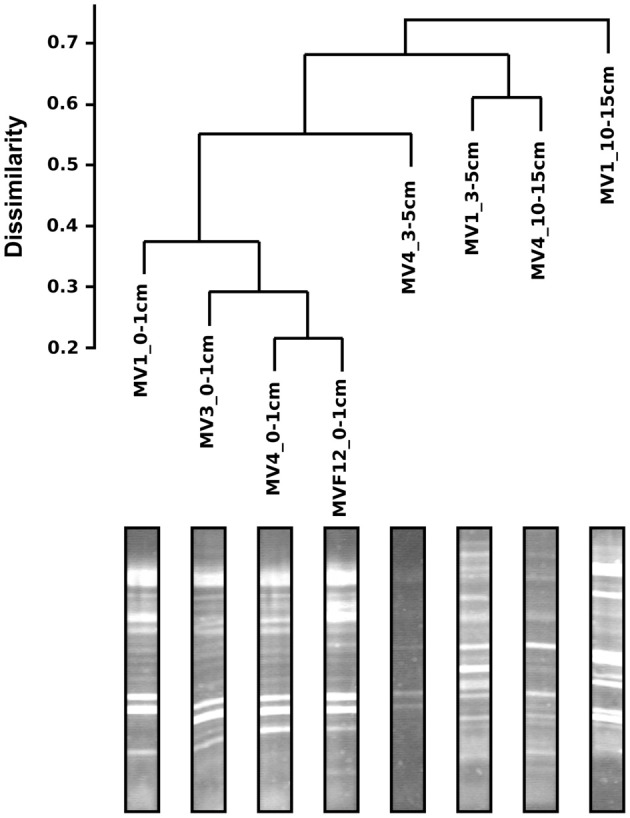
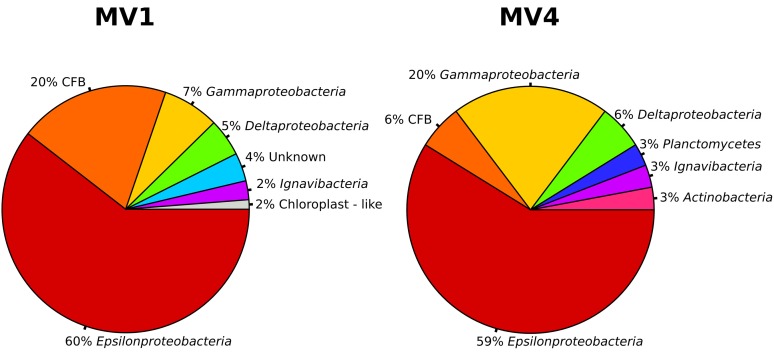
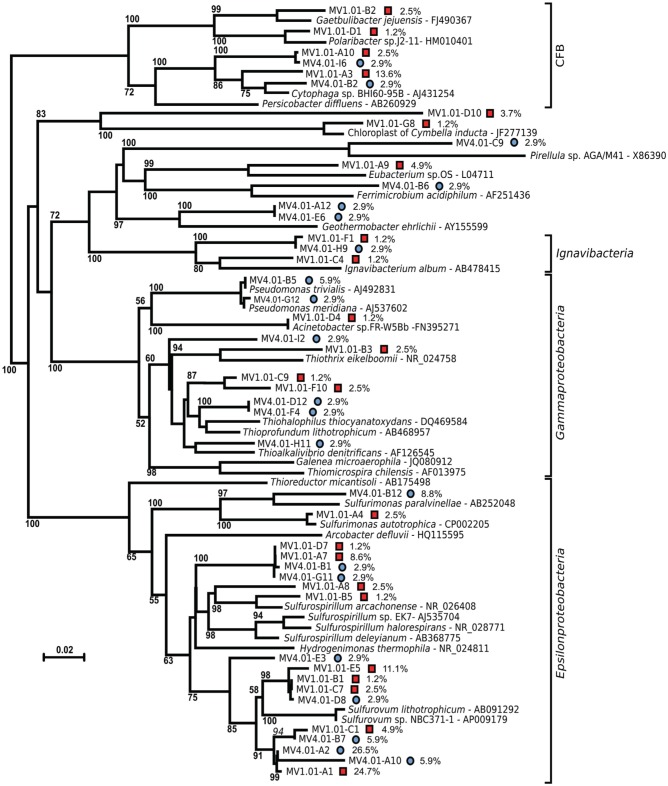
Studies of shallow-water hydrothermal vents have been lagging behind their deep-sea counterparts. Hence, the importance of these systems and their contribution to the local and regional diversity and biogeochemistry is unclear. This study analyzes the bacterial community along a transect at the shallow-water hydrothermal vent system of Milos island, Greece. The abundance and biomass of the prokaryotic community is comparable to areas not affected by hydrothermal activity and was, on average, 1.34 × 10(8) cells g(-1). The abundance, biomass and diversity of the prokaryotic community increased with the distance from the center of the vent and appeared to be controlled by the temperature gradient rather than the trophic conditions. The retrieved 16S rRNA gene fragments matched sequences from a variety of geothermal environments, although the average similarity was low (94%), revealing previously undiscovered taxa. Epsilonproteobacteria constituted the majority of the population along the transect, with an average contribution to the total diversity of 60%. The larger cluster of 16S rRNA gene sequences was related to chemolithoautotrophic Sulfurovum spp., an Epsilonproteobacterium so far detected only at deep-sea hydrothermal vents. The presence of previously unknown lineages of Epsilonproteobacteria could be related to the abundance of organic matter in these systems, which may support alternative metabolic strategies to chemolithoautotrophy. The relative contribution of Gammaproteobacteria to the Milos microbial community increased along the transect as the distance from the center of the vent increased. Further attempts to isolate key species from these ecosystems will be critical to shed light on their evolution and ecology.
对浅海热液喷口的研究一直落后于深海热液喷口。因此,这些系统的重要性及其对当地和区域多样性和生物地球化学的贡献尚不清楚。本研究分析了希腊米洛斯岛浅海热液喷口系统的横断面上的细菌群落。原核生物群落的丰度和生物量与不受热液活动影响的区域相当,平均为 1.34×10(8)个细胞/g。原核生物群落的丰度、生物量和多样性随着与喷口中心的距离增加而增加,似乎受温度梯度控制,而不是受营养条件控制。所获得的 16S rRNA 基因片段与各种地热环境的序列相匹配,尽管平均相似度较低(94%),揭示了以前未发现的分类群。沿横断面上的优势种群是 ε 变形菌门,其对总多样性的平均贡献为 60%。更大的 16S rRNA 基因序列簇与化能自养的 Sulfurovum spp.有关,这是一种 ε 变形菌门,迄今为止只在深海热液喷口检测到。这些系统中有机质的丰度可能与以前未知的 ε 变形菌门的类群有关,这些类群可能支持化能自养以外的替代代谢策略。随着与喷口中心距离的增加,γ 变形菌门对米洛斯微生物群落的相对贡献沿横断面增加。进一步尝试从这些生态系统中分离关键物种对于揭示它们的进化和生态将至关重要。