Department of Microbiology and Plant Biology, University of Oklahoma, Norman, OK, 73019, USA.
Institute for Environmental Genomics, University of Oklahoma, Norman, OK, 73019, USA.
Microbiome. 2020 Jun 5;8(1):84. doi: 10.1186/s40168-020-00838-5.
In a warmer world, microbial decomposition of previously frozen organic carbon (C) is one of the most likely positive climate feedbacks of permafrost regions to the atmosphere. However, mechanistic understanding of microbial mediation on chemically recalcitrant C instability is limited; thus, it is crucial to identify and evaluate active decomposers of chemically recalcitrant C, which is essential for predicting C-cycle feedbacks and their relative strength of influence on climate change. Using stable isotope probing of the active layer of Arctic tundra soils after depleting soil labile C through a 975-day laboratory incubation, the identity of microbial decomposers of lignin and, their responses to warming were revealed.
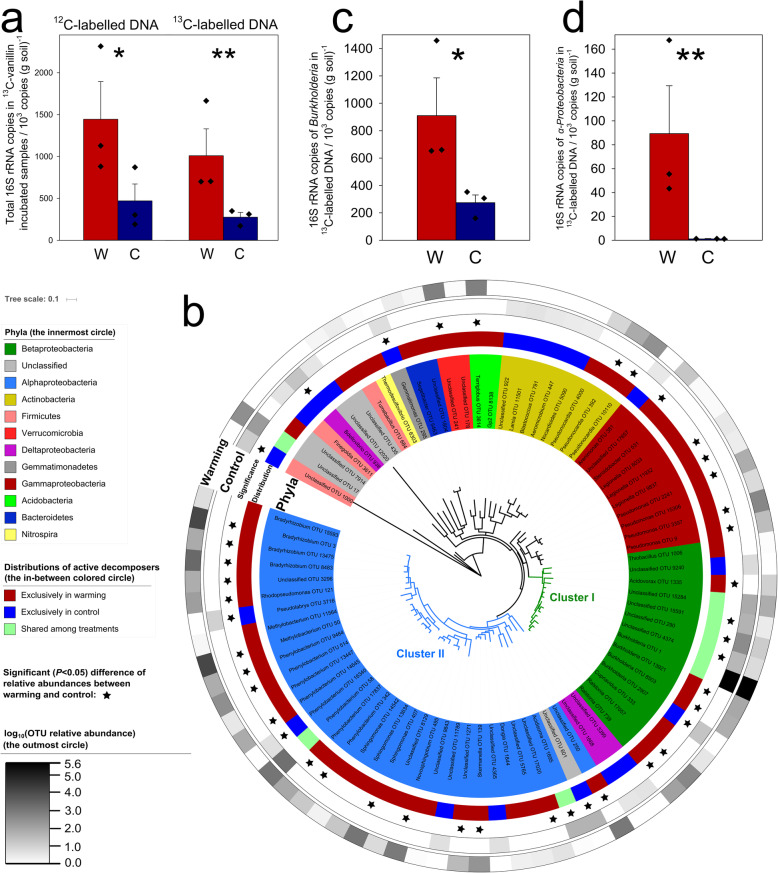
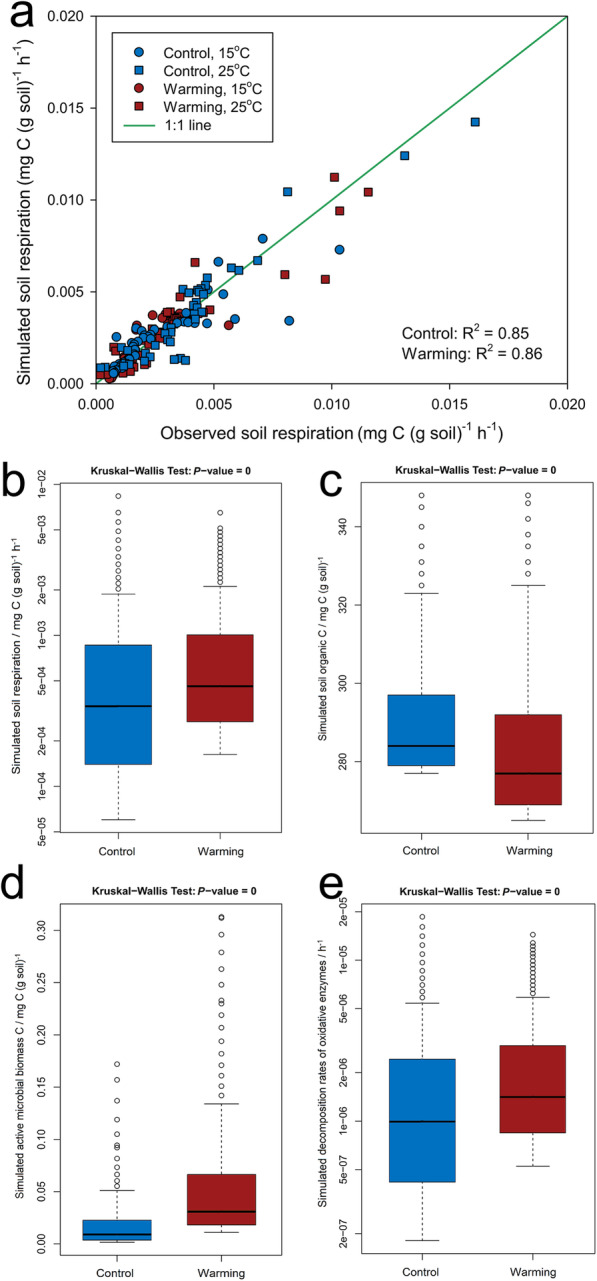
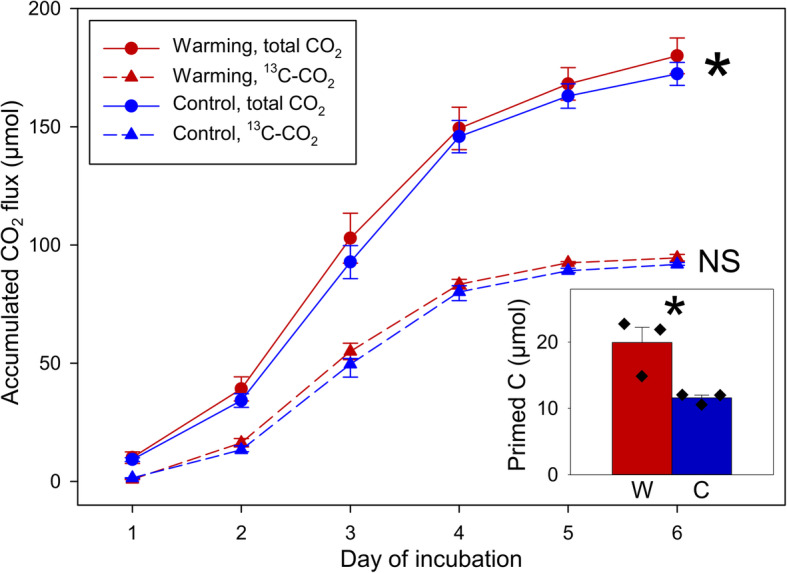
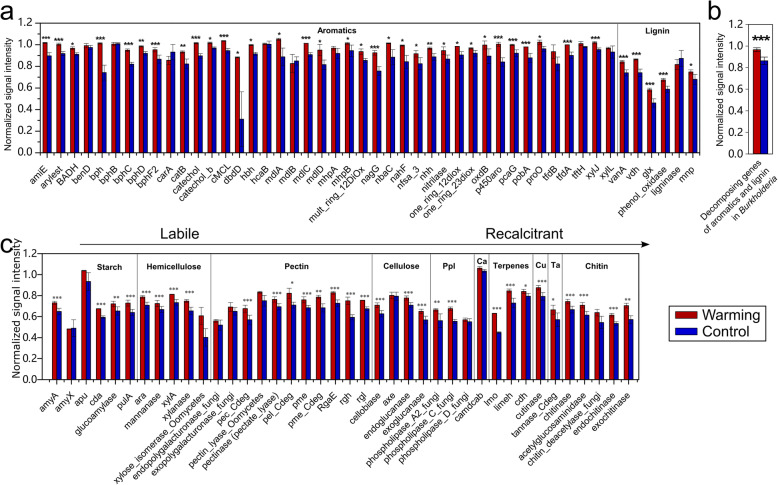
The β-Proteobacteria genus Burkholderia accounted for 95.1% of total abundance of potential lignin decomposers. Consistently, Burkholderia isolated from our tundra soils could grow with lignin as the sole C source. A 2.2 °C increase of warming considerably increased total abundance and functional capacities of all potential lignin decomposers. In addition to Burkholderia, α-Proteobacteria capable of lignin decomposition (e.g. Bradyrhizobium and Methylobacterium genera) were stimulated by warming by 82-fold. Those community changes collectively doubled the priming effect, i.e., decomposition of existing C after fresh C input to soil. Consequently, warming aggravates soil C instability, as verified by microbially enabled climate-C modeling.
Our findings are alarming, which demonstrate that accelerated C decomposition under warming conditions will make tundra soils a larger biospheric C source than anticipated. Video Abstract.
在全球变暖的情况下,先前冻结的有机碳(C)的微生物分解是永久冻土区对大气的最有可能的积极气候反馈之一。然而,对于微生物介导的化学稳定性较差的 C 不稳定性的机制理解有限;因此,确定和评估化学稳定性较差的 C 的活性分解者至关重要,这对于预测 C 循环反馈及其对气候变化的相对影响强度是必不可少的。通过在实验室培养 975 天后耗尽土壤易位 C,对北极苔原土壤活动层进行稳定同位素探测,揭示了微生物分解木质素的活性及其对变暖的响应。
β-变形菌属伯克霍尔德菌占潜在木质素分解菌总丰度的 95.1%。一致地,从我们的苔原土壤中分离出的伯克霍尔德菌可以木质素作为唯一的 C 源生长。升温 2.2°C 显著增加了所有潜在木质素分解菌的总丰度和功能能力。除了伯克霍尔德菌外,能够分解木质素的α-变形菌(如布氏杆菌属和甲基杆菌属)也被变暖刺激了 82 倍。这些群落变化共同使激发效应翻了一番,即新鲜 C 输入土壤后现有 C 的分解。因此,正如微生物驱动的气候-C 建模所验证的那样,变暖加剧了土壤 C 的不稳定性。
我们的发现令人震惊,这表明在变暖条件下加速的 C 分解将使苔原土壤成为比预期更大的生物圈 C 源。视频摘要。