School of Economics and Management, Dalian University of Technology, No. 2 Linggong Road, Ganjingzi District, Dalian City, Liaoning Province, 116024, China.
Biomedical Cybernetics Group, Biotechnology Center (BIOTEC), Center for Molecular and Cellular Bioengineering (CMCB), Center for Systems Biology Dresden (CSBD), Cluster of Excellence Physics of Life (PoL), Department of Physics, Technische Universität Dresden. Tatzberg 47/49, 01307, Dresden, Germany.
Nat Commun. 2020 Jun 5;11(1):2849. doi: 10.1038/s41467-020-16619-5.
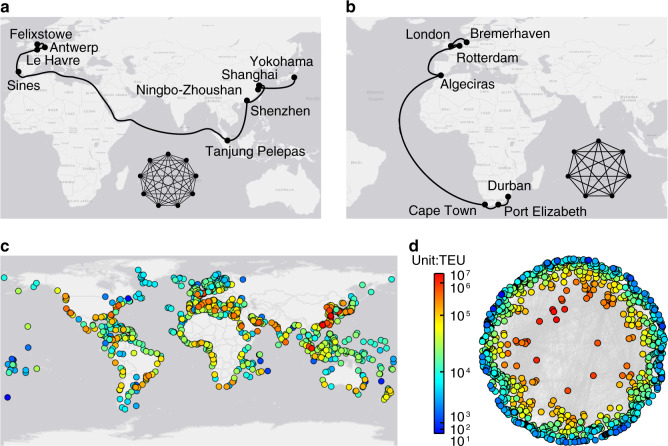
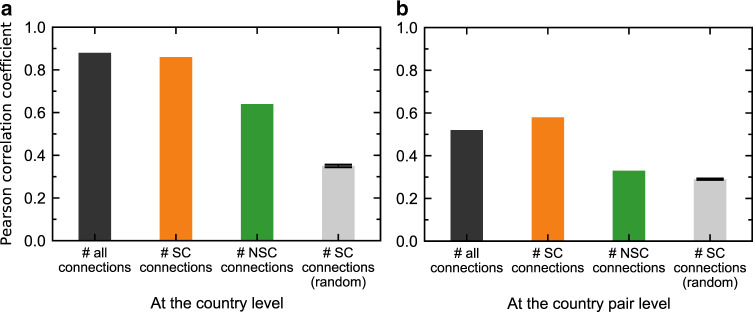
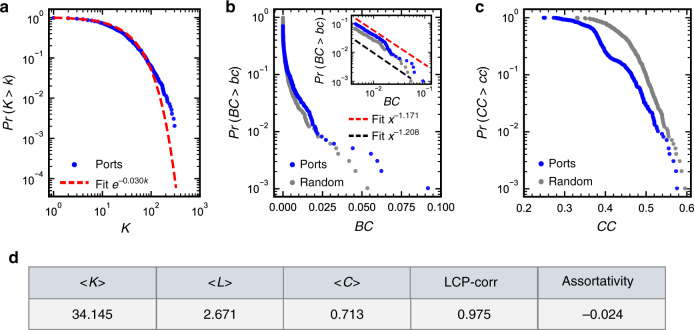
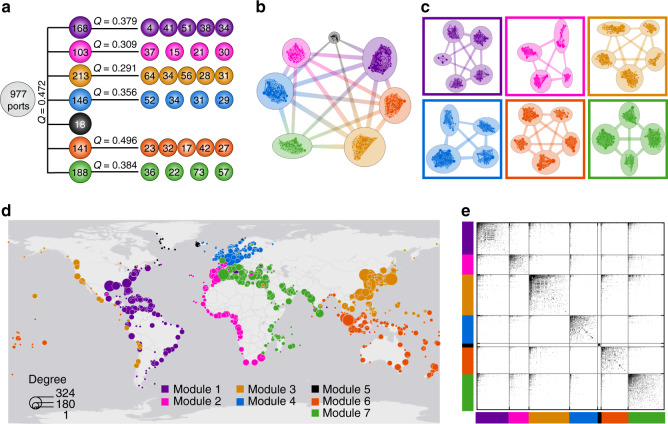
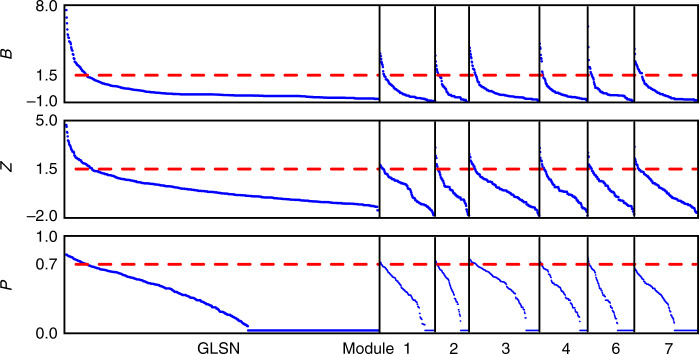
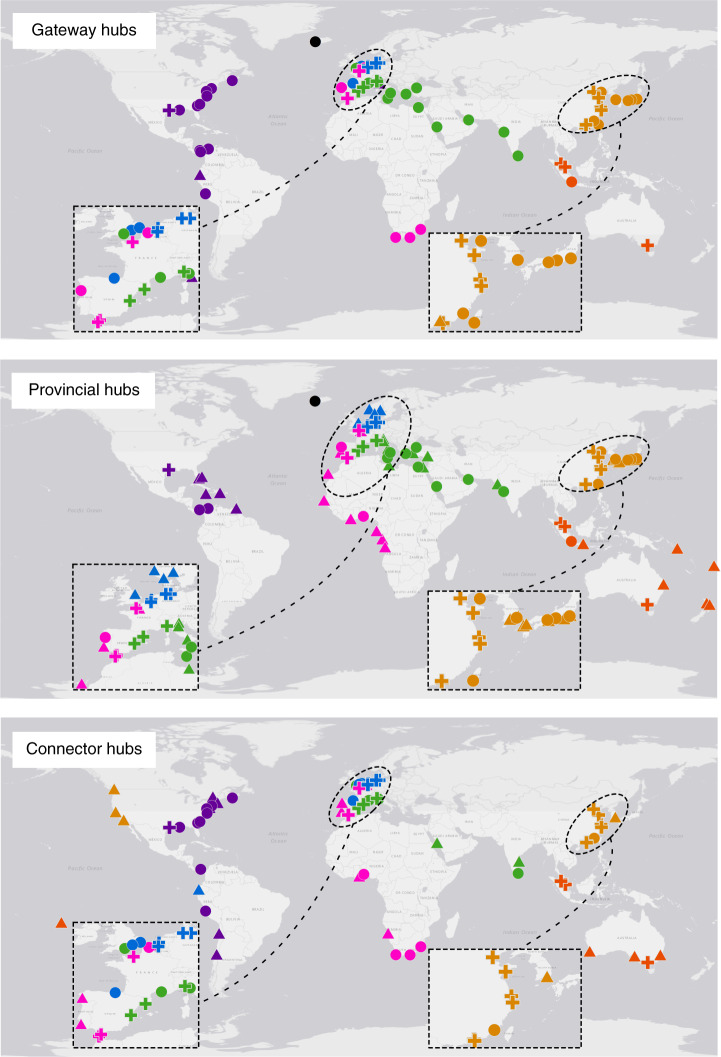
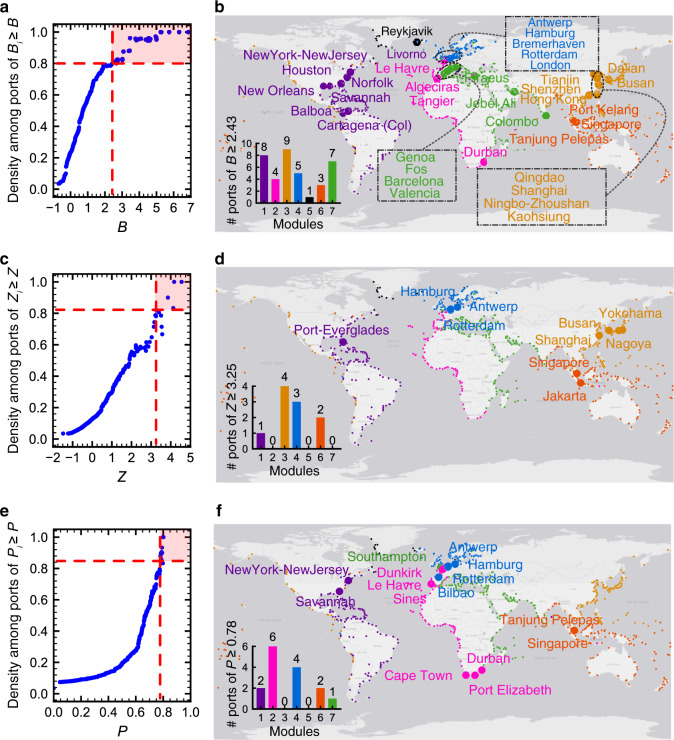
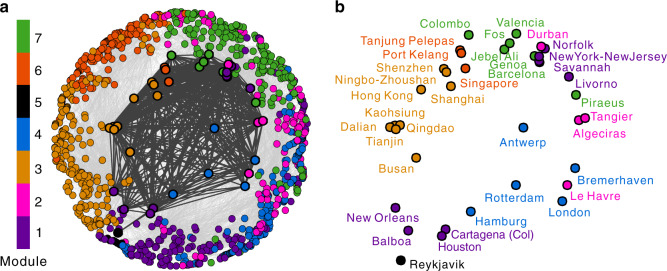
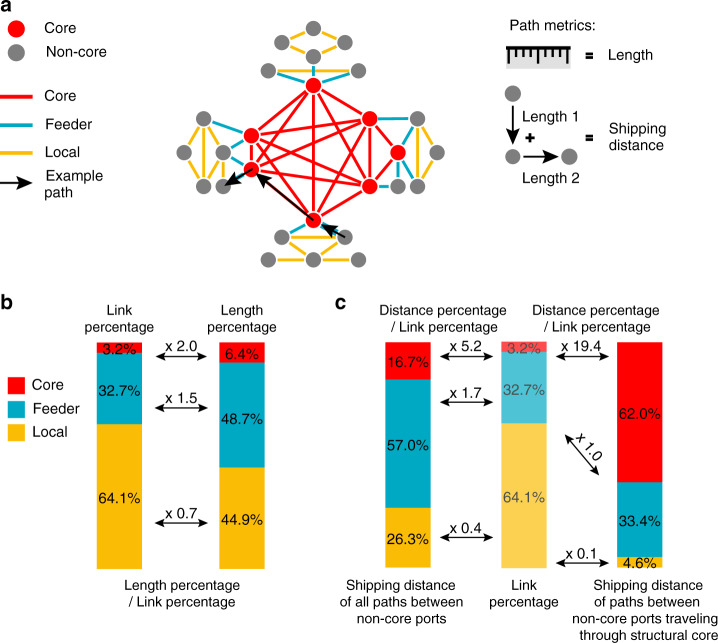
Around 80% of global trade by volume is transported by sea, and thus the maritime transportation system is fundamental to the world economy. To better exploit new international shipping routes, we need to understand the current ones and their complex systems association with international trade. We investigate the structure of the global liner shipping network (GLSN), finding it is an economic small-world network with a trade-off between high transportation efficiency and low wiring cost. To enhance understanding of this trade-off, we examine the modular segregation of the GLSN; we study provincial-, connector-hub ports and propose the definition of gateway-hub ports, using three respective structural measures. The gateway-hub structural-core organization seems a salient property of the GLSN, which proves importantly associated to network integration and function in realizing the cargo transportation of international trade. This finding offers new insights into the GLSN's structural organization complexity and its relevance to international trade.
全球约 80%的贸易量是通过海运运输的,因此海上运输系统对世界经济至关重要。为了更好地开发新的国际航运线路,我们需要了解当前的线路及其与国际贸易的复杂系统关联。我们研究了全球班轮运输网络(GLSN)的结构,发现它是一个经济的小世界网络,在高运输效率和低布线成本之间存在权衡。为了更好地理解这种权衡,我们检查了 GLSN 的模块化隔离;我们研究了省级、连接器枢纽港口,并使用三个相应的结构措施提出了门户枢纽港口的定义。门户枢纽的结构核心组织似乎是 GLSN 的一个显著特性,这证明了它与网络集成和实现国际贸易货物运输的功能有着重要的关联。这一发现为 GLSN 的结构组织复杂性及其与国际贸易的相关性提供了新的见解。