College of Staten Island, City University of New York, Staten Island, NY, USA.
The Graduate Center, City University of New York, New York, NY, USA.
J Autism Dev Disord. 2021 Feb;51(2):459-475. doi: 10.1007/s10803-020-04556-7.
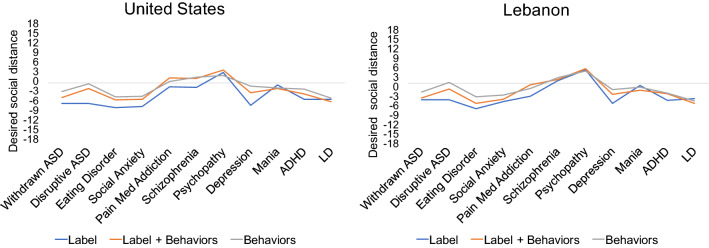
Little remains known about the degree to which autistic university students are stigmatized relative to students with other diagnoses. We conducted an online survey with students in New York City (n = 633) and Beirut (n = 274). Students with diagnoses that were perceived as dangerous (e.g., psychopathy) were more stigmatized than students with diagnoses that were perceived as less dangerous (e.g., autism). Disruptive autistic behaviors (described via vignettes) evoked more stigma than withdrawn behaviors. Perceived dangerousness predicted autism stigma. Greater acceptance of inequality, less openness, and lower cognitive empathy co-occurred with heightened stigma towards most conditions. Diagnostic labels were typically less stigmatized than behaviors. Findings suggest that interventions are needed to decrease stigma towards varied diagnoses in collegiate communities.
关于自闭症大学生相对于其他诊断的学生被污名化的程度,我们知之甚少。我们对纽约市(n=633)和贝鲁特(n=274)的学生进行了在线调查。被认为具有危险(例如,精神病态)的诊断的学生比被认为具有较不危险(例如,自闭症)的诊断的学生更受污名化。通过情景描述呈现的自闭症的行为障碍比退缩行为更易引发污名化。感知到的危险性预测了自闭症的污名化。对不平等的更大接受度、较少的开放性和较低的认知同理心与对大多数情况的污名化同时出现。诊断标签通常比行为的污名化程度低。研究结果表明,需要采取干预措施,以减少大学生群体对各种诊断的污名化。