Singh Esha, Redgrave Rachael E, Phillips Helen M, Arthur Helen M
Centre for Life, Biosciences Institute, Newcastle University, Newcastle, NE1 3BZ, UK.
Angiogenesis. 2020 Nov;23(4):559-566. doi: 10.1007/s10456-020-09731-z. Epub 2020 Jun 6.
Endoglin (ENG) forms a receptor complex with ALK1 in endothelial cells (ECs) to promote BMP9/10 signalling. Loss of function mutations in either ENG or ALK1 genes lead to the inherited vascular disorder hereditary haemorrhagic telangiectasia (HHT), characterised by arteriovenous malformations (AVMs). However, the vessel-specific role of ENG and ALK1 proteins in protecting against AVMs is unclear. For example, AVMs have been described to initiate in arterioles, whereas ENG is predominantly expressed in venous ECs. To investigate whether ENG has any arterial involvement in protecting against AVM formation, we specifically depleted the Eng gene in venous and capillary endothelium whilst maintaining arterial expression, and investigated how this affected the incidence and location of AVMs in comparison with pan-endothelial Eng knockdown.
Using the mouse neonatal retinal model of angiogenesis, we first established the earliest time point at which Apj-Cre-ERT2 activity was present in venous and capillary ECs but absent from arterial ECs. We then compared the incidence of AVMs following pan-endothelial or venous/capillary-specific ENG knockout.
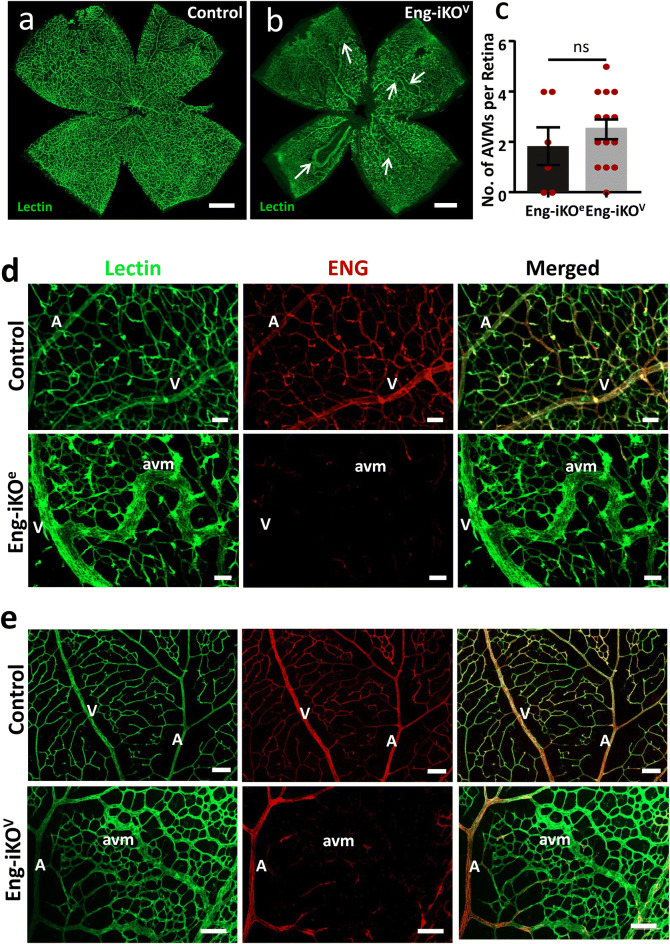
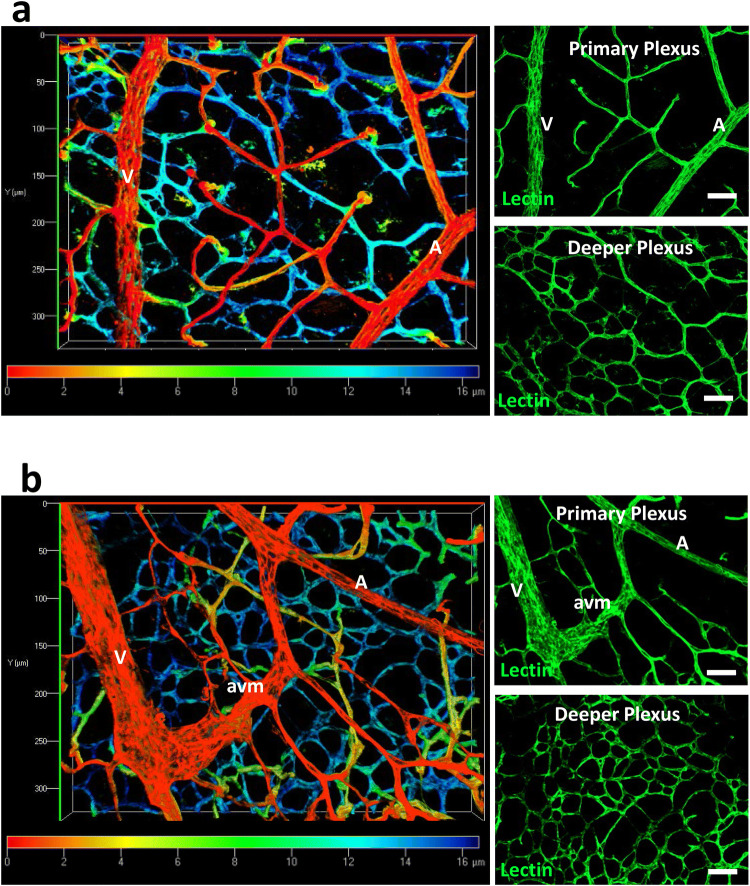
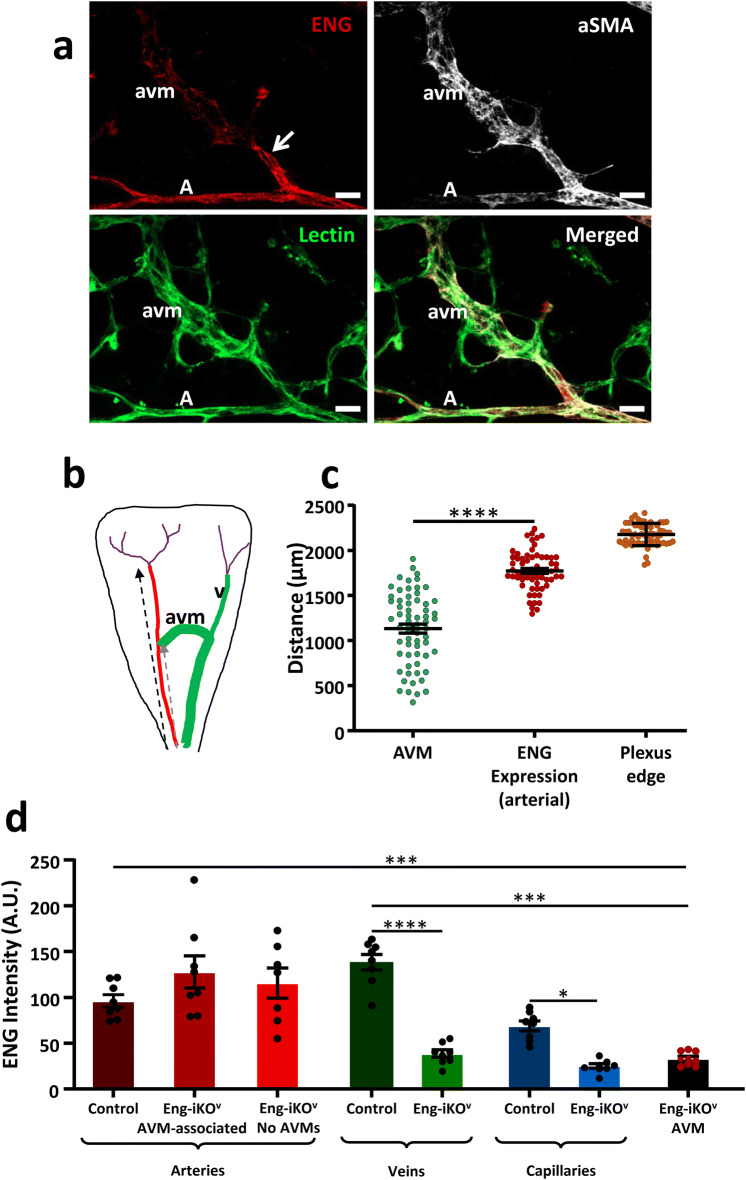
Activation of Apj-Cre-ERT2 with tamoxifen from postnatal day (P) 5 ensured preservation of arterial ENG protein expression. Specific loss of ENG expression in ECs of veins and capillaries led to retinal AVMs at a similar frequency to pan-endothelial loss of ENG. AVMs occurred in the proximal as well as the distal part of the retina consistent with a defect in vascular remodelling during maturation of the vasculature.
Expression of ENG is not required in arterial ECs to protect against AVM formation.
内皮糖蛋白(ENG)在内皮细胞(EC)中与激活素受体样激酶1(ALK1)形成受体复合物,以促进骨形态发生蛋白9/10(BMP9/10)信号传导。ENG或ALK1基因的功能丧失突变会导致遗传性血管疾病遗传性出血性毛细血管扩张症(HHT),其特征为动静脉畸形(AVM)。然而,ENG和ALK1蛋白在预防AVM方面的血管特异性作用尚不清楚。例如,已有报道称AVM起始于小动脉,而ENG主要在静脉EC中表达。为了研究ENG在预防AVM形成中是否涉及动脉,我们在维持动脉表达的同时,特异性地耗尽静脉和毛细血管内皮中的Eng基因,并研究这与全内皮Eng基因敲低相比如何影响AVM的发生率和位置。
利用小鼠新生视网膜血管生成模型,我们首先确定了Apj-Cre-ERT2活性出现在静脉和毛细血管EC中但不出现在动脉EC中的最早时间点。然后,我们比较了全内皮或静脉/毛细血管特异性ENG基因敲除后AVM的发生率。
从出生后第5天(P5)开始用他莫昔芬激活Apj-Cre-ERT2可确保动脉ENG蛋白表达得以保留。静脉和毛细血管EC中ENG表达的特异性缺失导致视网膜AVM的频率与全内皮ENG缺失相似。AVM发生在视网膜的近端和远端,这与血管成熟过程中血管重塑缺陷一致。
动脉EC中ENG的表达对于预防AVM形成并非必需。