Interdisciplinary Laboratory of Medical Investigation, Faculty of Medicine, Federal University of Minas Gerais (UFMG), Belo Horizonte, MG, Brazil.
Clin Sci (Lond). 2020 Jun 12;134(11):1259-1264. doi: 10.1042/CS20200492.
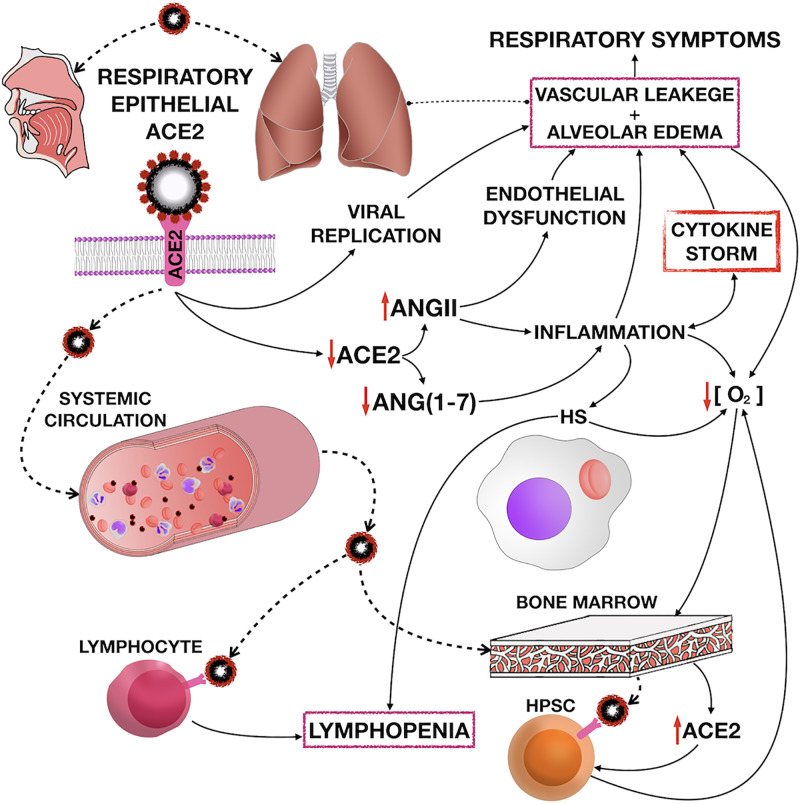
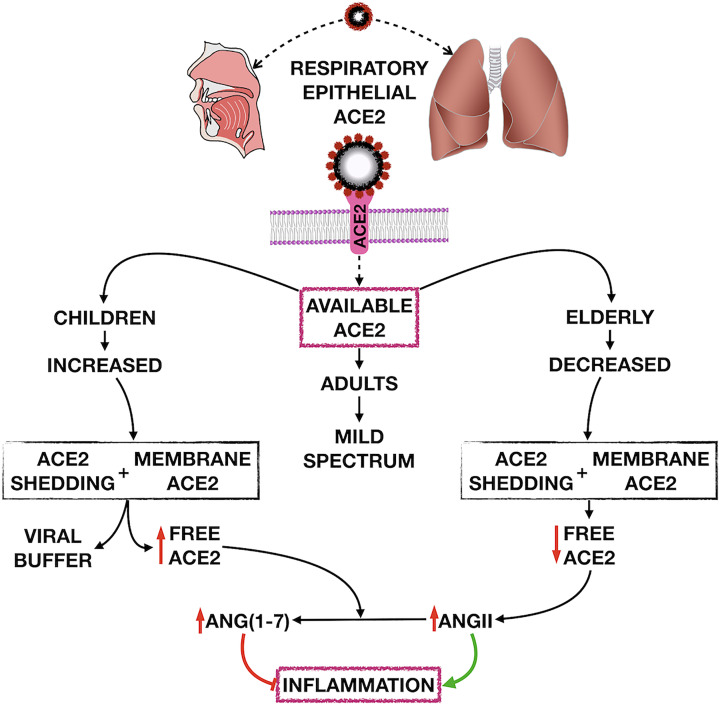
The emergency of SARS-CoV-2 in China started a novel challenge to the scientific community. As the virus turns pandemic, scientists try to map the cellular mechanisms and pathways of SARS-CoV-2 related to the pathogenesis of Coronavirus Disease 2019 (Covid-19). After transmembrane angiotensin-converting enzyme 2 (ACE2) has been found to be SARS-CoV-2 receptor, we hypothesized an immune-hematological mechanism for Covid-19 based on renin-angiotensin system (RAS) imbalance to explain clinical, laboratory and imaging findings on disease course. We believe that exaggerated activation of ACE/Angiotensin II (Ang II)/Angiotensin Type 1 (AT1) receptor RAS axis in line with reduction of ACE2/Angiotensin-(1-7)/Mas receptor may exert a pivotal role in the pathogenesis of Covid-19. In this perspective, we discuss potential mechanisms and evidence on this hypothesis.
新型冠状病毒在中国的爆发给科学界带来了新的挑战。随着病毒的流行,科学家们试图描绘与 2019 年冠状病毒病(Covid-19)发病机制相关的 SARS-CoV-2 的细胞机制和途径。在发现跨膜血管紧张素转换酶 2(ACE2)是 SARS-CoV-2 的受体后,我们基于肾素-血管紧张素系统(RAS)失衡假设了一种免疫血液学机制来解释疾病过程中的临床、实验室和影像学发现。我们认为,ACE/血管紧张素 II(Ang II)/血管紧张素 1 型(AT1)受体 RAS 轴的过度激活以及 ACE2/血管紧张素(1-7)/Mas 受体的减少可能在 Covid-19 的发病机制中发挥关键作用。在这篇观点文章中,我们讨论了这一假设的潜在机制和证据。