Department of Biomedical Sciences, Cedars-Sinai Medical Center, Los Angeles, CA 90048 USA.
Department of Pathology and Laboratory Medicine, Cedars-Sinai Medical Center, Davis Res. Bldg., Rm. 2014, 8700 Beverly Blvd, Los Angeles, CA 90048 USA.
Cell Mol Biol Lett. 2020 May 25;25:31. doi: 10.1186/s11658-020-00225-w. eCollection 2020.
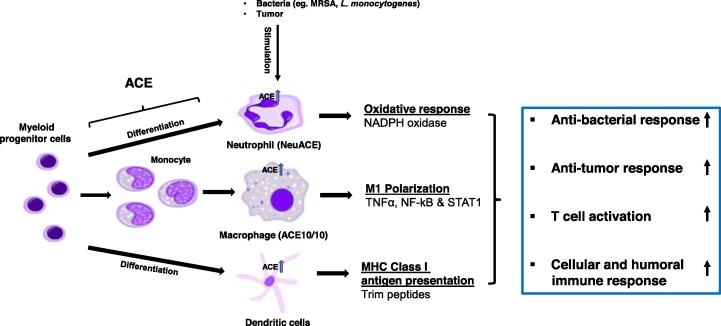
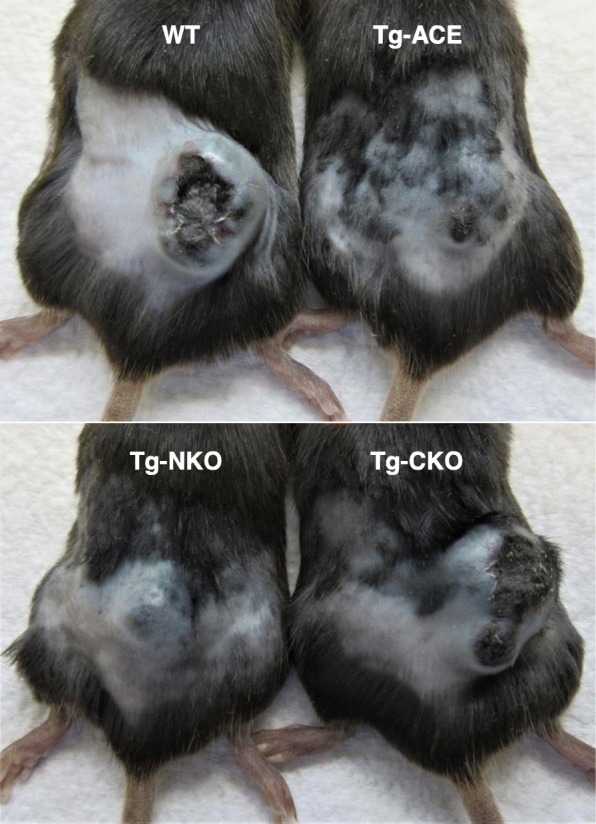
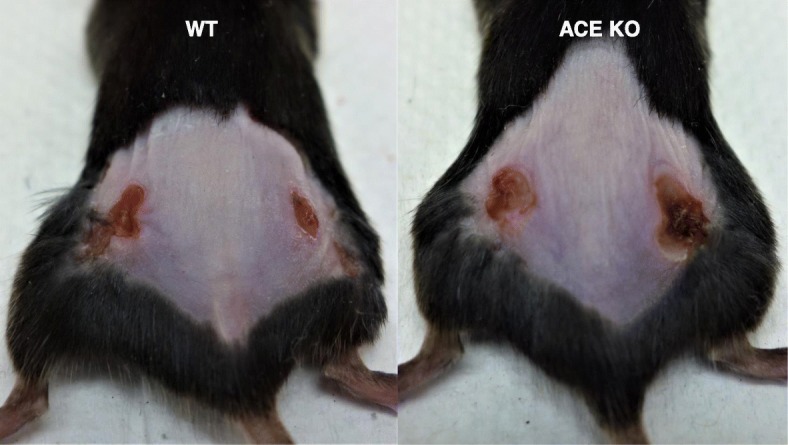
Angiotensin-converting enzyme (ACE), a dicarboxypeptidase, plays a major role in the regulation of blood pressure by cleaving angiotensin I into angiotensin II (Ang II), a potent vasoconstrictor. Because of its wide substrate specificity and tissue distribution, ACE affects many diverse biological processes. In inflammatory diseases, including granuloma, atherosclerosis, chronic kidney disease and bacterial infection, ACE expression gets upregulated in immune cells, especially in myeloid cells. With increasing evidences connecting ACE functions to the pathogenesis of these acquired diseases, it is suggested that ACE plays a vital role in immune functions. Recent studies with mouse models of bacterial infection and tumor suggest that ACE plays an important role in the immune responses of myeloid cells. Inhibition of ACE suppresses neutrophil immune response to bacterial infection. In contrast, ACE overexpression in myeloid cells strongly induced bacterial and tumor resistance in mice. A detailed biochemical understanding of how ACE activates myeloid cells and which ACE peptide(s) (substrate or product) mediate these effects could lead to the development of novel therapies for boosting immunity against a variety of stimuli, including bacterial infection and tumor.
血管紧张素转化酶(ACE)是一种二肽羧基肽酶,通过将血管紧张素 I 切割成血管紧张素 II(Ang II)来在调节血压方面发挥主要作用,血管紧张素 II 是一种强效的血管收缩剂。由于其广泛的底物特异性和组织分布,ACE 影响许多不同的生物学过程。在包括肉芽肿、动脉粥样硬化、慢性肾脏病和细菌感染在内的炎症性疾病中,ACE 在免疫细胞中,特别是在髓样细胞中表达上调。越来越多的证据将 ACE 功能与这些获得性疾病的发病机制联系起来,提示 ACE 在免疫功能中起着至关重要的作用。最近关于细菌感染和肿瘤的小鼠模型研究表明,ACE 在髓样细胞的免疫反应中起着重要作用。抑制 ACE 可抑制中性粒细胞对细菌感染的免疫反应。相比之下,髓样细胞中 ACE 的过表达强烈诱导小鼠对细菌和肿瘤的抵抗力。详细的生化理解 ACE 如何激活髓样细胞以及 ACE 肽(底物或产物)中的哪一种介导这些作用,可能会导致开发出针对各种刺激(包括细菌感染和肿瘤)的新型免疫增强疗法。