Westmead Applied Research Centre, Faculty of Medicine and Health, University of Sydney, Sydney 2006, Australia.
Department of General Practice, The University at Westmead Hospital, PO Box 154, Westmead 2145, Australia.
Int J Environ Res Public Health. 2020 Jun 8;17(11):4099. doi: 10.3390/ijerph17114099.
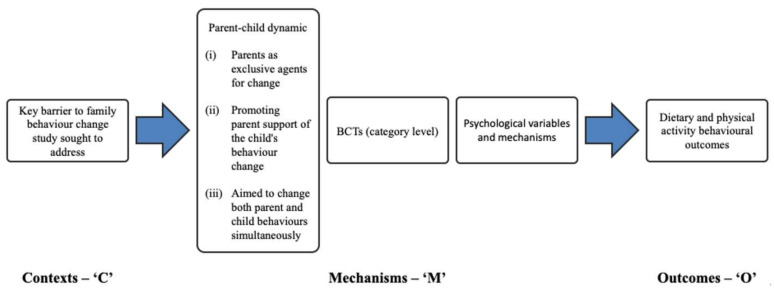
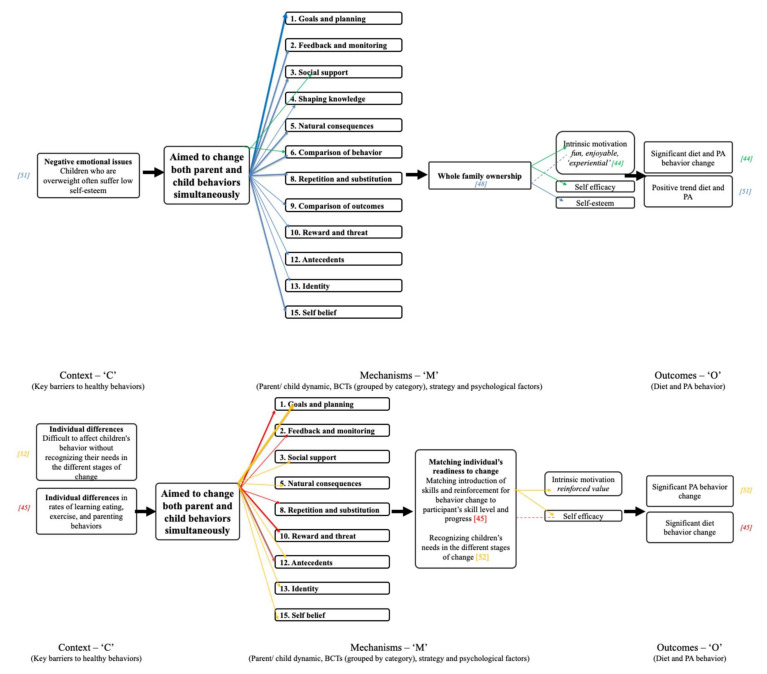
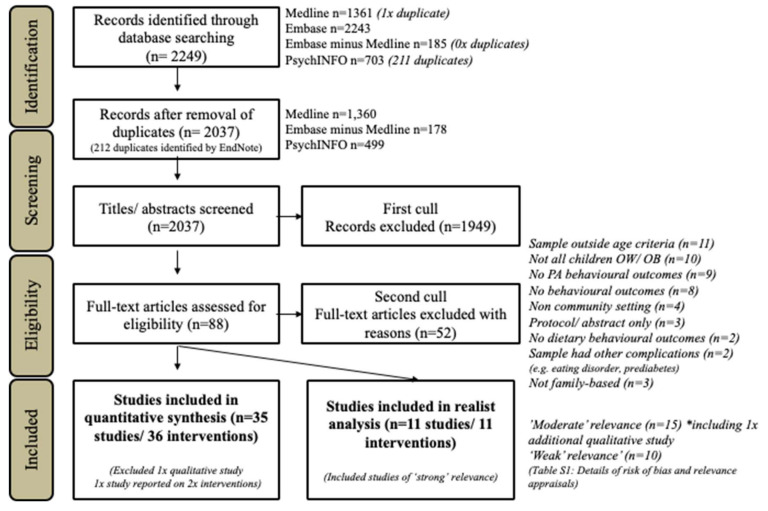
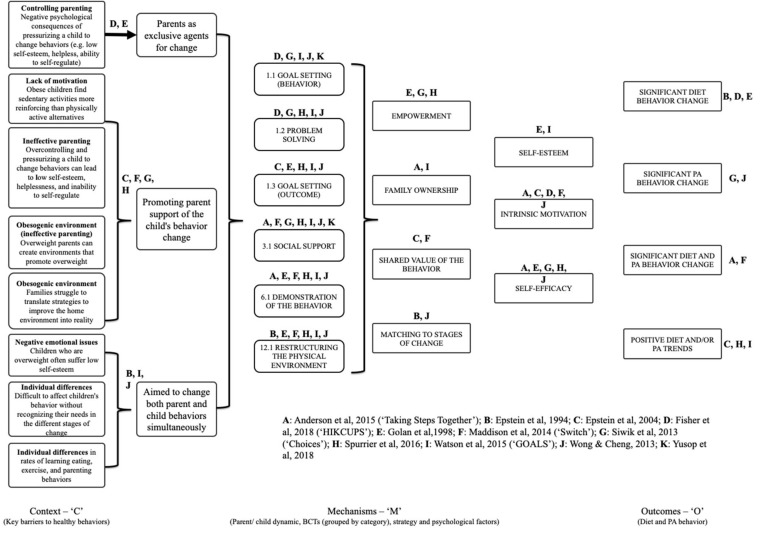
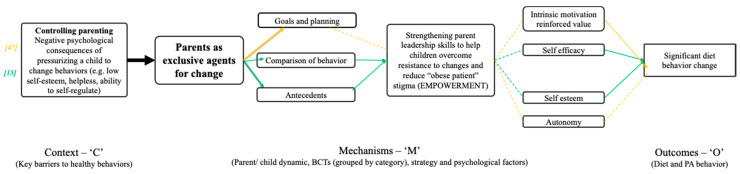
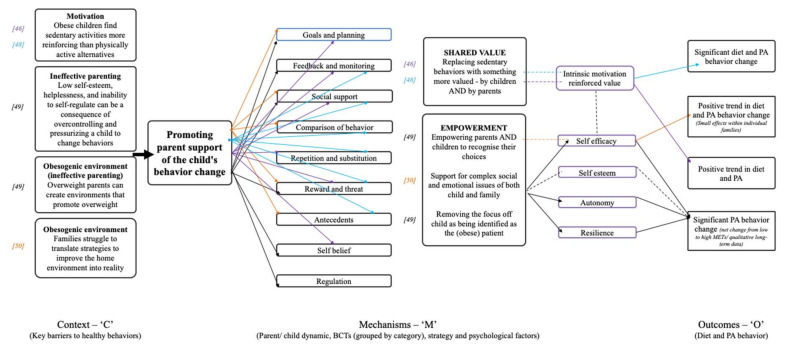
Effective treatment interventions for childhood obesity involve parents, are multicomponent and use behavior change strategies, but more information is needed on the mechanisms influencing behavioral outcomes and the type of parental involvement that is efficacious in behavioral treatment interventions with school-age children. This review aimed to understand key characteristics of programs that contribute to dietary and physical activity behavioral outcomes, and through which key mechanisms. This was a systematic review with narrative synthesis following PRISMA guidelines and realist analysis using RAMESES guidelines to explain outcome patterns and influence of parental involvement. Overall, the findings contribute to understanding the complex relationship between family barriers to behavior change, strategies employed in treatment interventions and behavioral outcomes. Implications for enhancing future policy and practice include involving parents in goal setting, motivational counselling, role modeling, and restructuring the physical environment to promote mutual empowerment of both parents and children, shared value and whole-family ownership in which intrinsic motivation and self-efficacy are implicit. These characteristics were associated with positive dietary and physical activity behavior change in children and may be useful considerations for the design and implementation of future theory-based treatment interventions to encourage habitual healthy diet and physical activity to reduce childhood obesity.
有效的儿童肥胖治疗干预措施涉及父母,是多方面的,并采用行为改变策略,但需要更多信息来了解影响行为结果的机制以及在针对学龄儿童的行为治疗干预中有效的父母参与类型。本综述旨在了解有助于饮食和身体活动行为结果的计划的关键特征,以及通过哪些关键机制。这是一项系统评价,采用 PRISMA 指南进行叙述性综合,以及使用 RAMESES 指南进行现实主义分析,以解释结果模式和父母参与的影响。总的来说,这些发现有助于理解行为改变的家庭障碍、治疗干预中采用的策略与行为结果之间的复杂关系。增强未来政策和实践的影响包括让父母参与目标设定、动机咨询、角色扮演以及重构物理环境,以促进父母和孩子之间的相互赋权、共同价值观和整个家庭的所有权,其中内在动机和自我效能感是隐含的。这些特征与儿童积极的饮食和身体活动行为改变相关,对于设计和实施未来基于理论的治疗干预措施以鼓励习惯性健康饮食和身体活动从而减少儿童肥胖可能是有用的考虑因素。