Age-related Inflammation and Degeneration Research Unit, Department of Clinical Chemistry, Faculty of Allied Health Sciences, Chulalongkorn University, Bangkok, Thailand.
SYstems Neuroscience of Autism and PSychiatric disorders (SYNAPS) Research Unit, Department of Clinical Chemistry, Faculty of Allied Health Sciences, Chulalongkorn University, Bangkok, Thailand.
Sci Rep. 2020 Jun 11;10(1):9487. doi: 10.1038/s41598-020-65229-0.
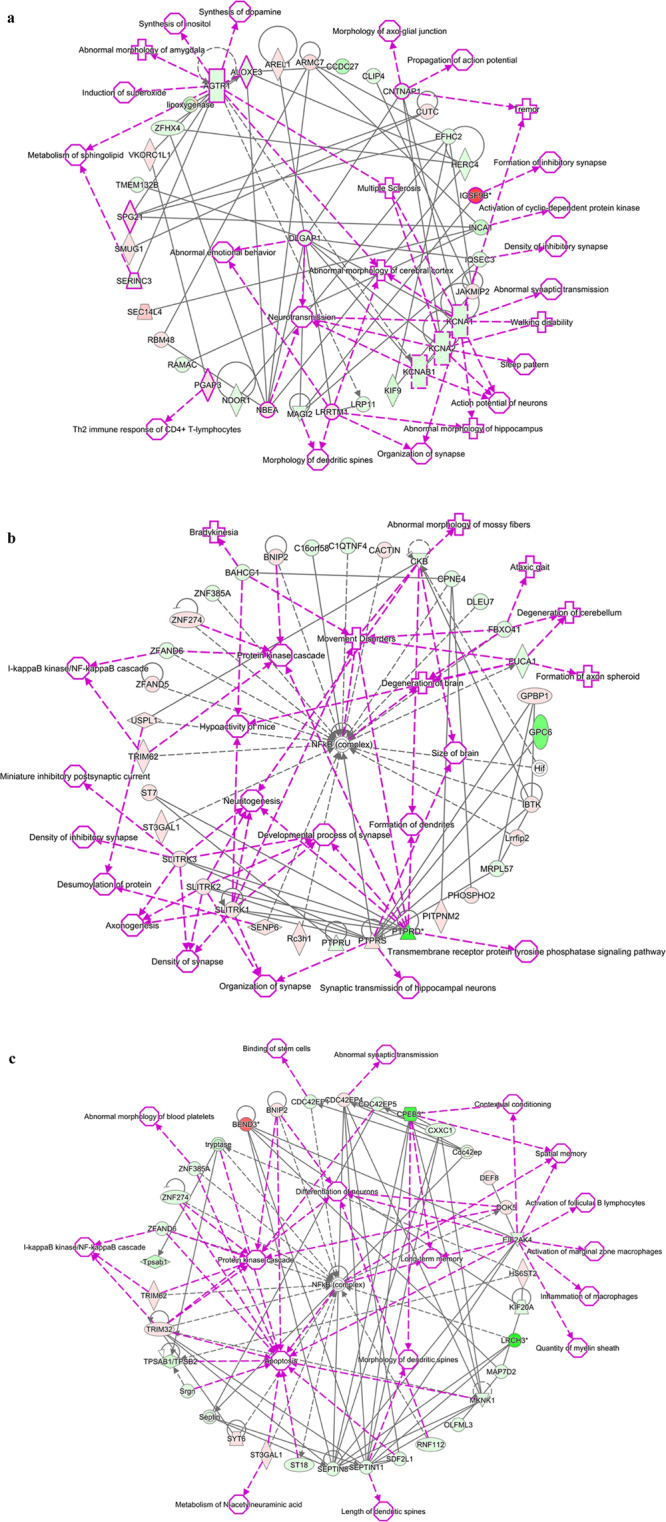
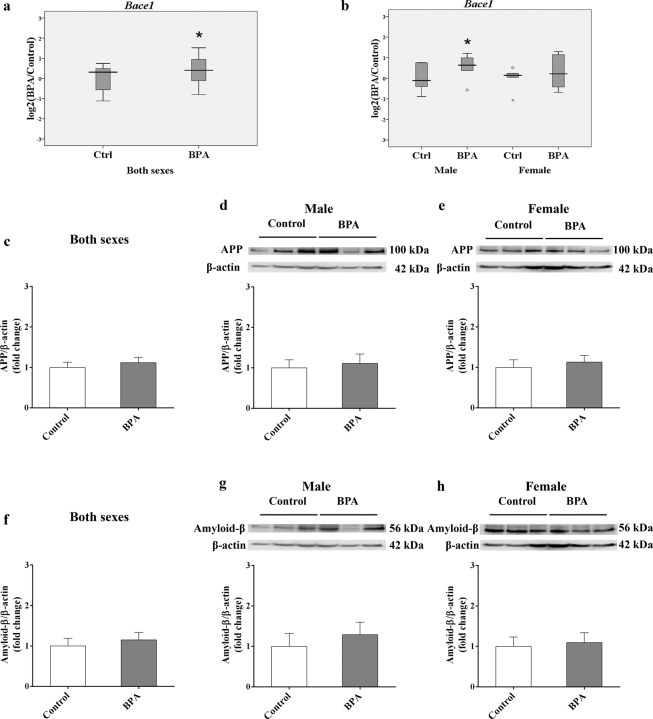
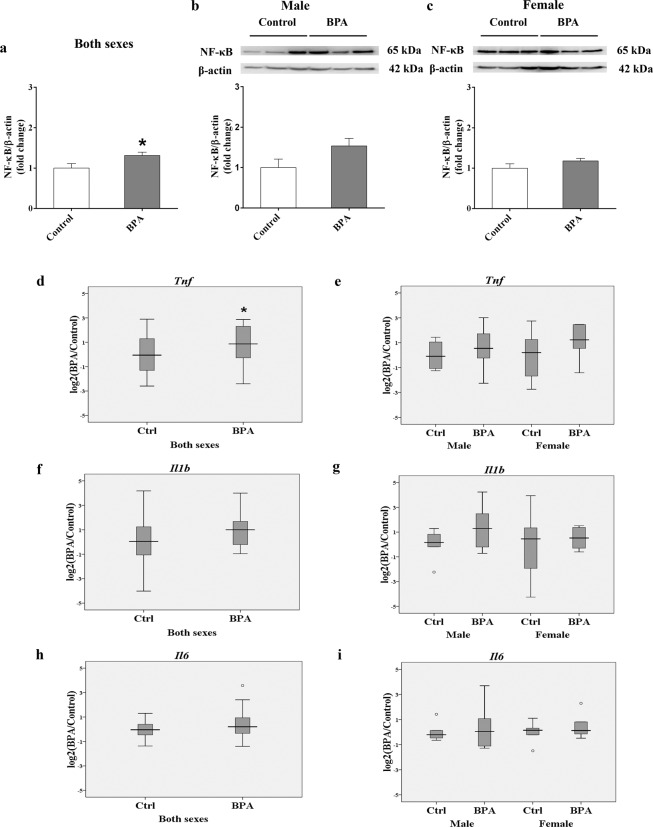
Our recent study revealed that prenatal exposure to bisphenol A (BPA) disrupted the transcriptome profiles of genes in the offspring hippocampus. In addition to genes linked to autism, several genes associated with Alzheimer's disease (AD) were found to be differentially expressed, although the association between BPA-responsive genes and AD-related genes has not been thoroughly investigated. Here, we demonstrated that in utero BPA exposure also disrupted the transcriptome profiles of genes associated with neuroinflammation and AD in the hippocampus. The level of NF-κB protein and its AD-related target gene Bace1 were significantly increased in the offspring hippocampus in a sex-dependent manner. Quantitative RT-PCR analysis also showed an increase in the expression of Tnf gene. Moreover, the reanalysis of transcriptome profiling data from several previously published BPA studies consistently showed that BPA-responsive genes were significantly associated with top AD candidate genes. The findings from this study suggest that maternal BPA exposure may increase AD risk in offspring by dysregulating genes associated with AD neuropathology and inflammation and reveal a possible relationship between AD and autism, which are linked to the same environmental factor. Sex-specific effects of prenatal BPA exposure on the susceptibility of AD deserve further investigation.
我们最近的研究表明,产前暴露于双酚 A(BPA)会破坏后代海马体中基因的转录组谱。除了与自闭症相关的基因外,还发现了一些与阿尔茨海默病(AD)相关的基因表达存在差异,尽管 BPA 反应基因与 AD 相关基因之间的关联尚未得到充分研究。在这里,我们证明宫内 BPA 暴露也会破坏海马体中与神经炎症和 AD 相关的基因的转录组谱。NF-κB 蛋白水平及其 AD 相关靶基因 Bace1 以性别依赖的方式显著增加。定量 RT-PCR 分析还显示 Tnf 基因的表达增加。此外,对之前发表的几项 BPA 研究的转录组谱数据的重新分析表明,BPA 反应基因与 AD 候选基因显著相关。这项研究的结果表明,母体 BPA 暴露可能通过调节与 AD 神经病理学和炎症相关的基因,增加后代患 AD 的风险,并揭示了 AD 和自闭症之间的可能联系,这两者都与同一环境因素有关。产前 BPA 暴露对 AD 易感性的性别特异性影响值得进一步研究。