Liu Changyun, Peang Haoren, Li Xinyu, Liu Chaolong, Lv Xing, Wei Xuefeng, Zou Aihong, Zhang Jian, Fan Guangjin, Ma Guanhua, Ma Lisong, Sun Xianchao
Laboratory of plant immunity and ecological control of plant disease, College of Plant Protection, Southwest University, 400716 Chongqing, China.
Department of Botany and Plant Biology, Section of Biology, Faculty of Science, University of Geneva, 1211 Geneva 4, Switzerland.
Hortic Res. 2020 Jun 1;7(1):93. doi: 10.1038/s41438-020-0318-0. eCollection 2020.
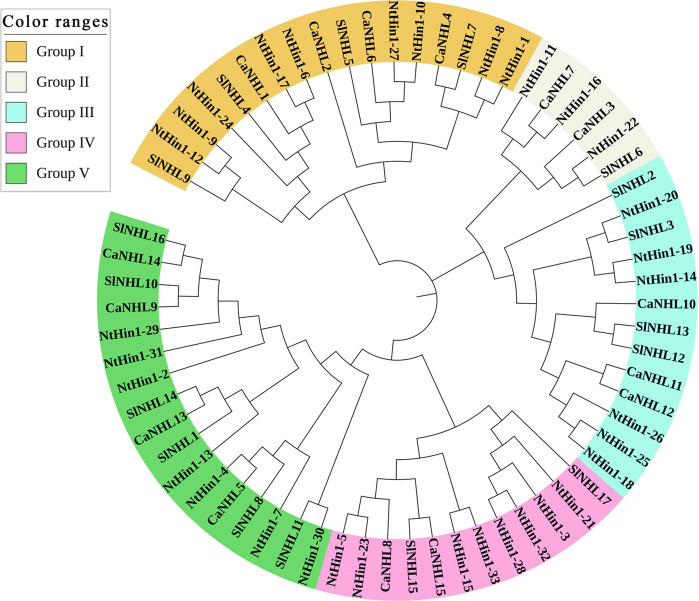
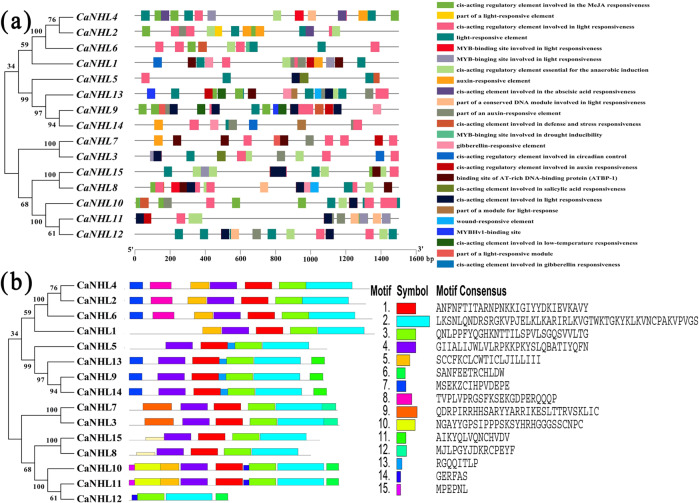
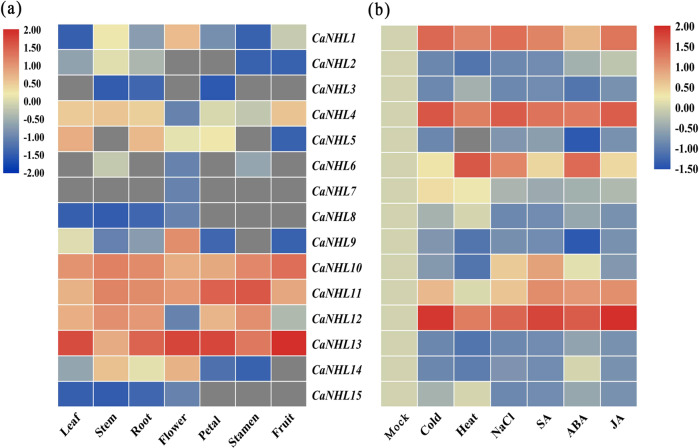
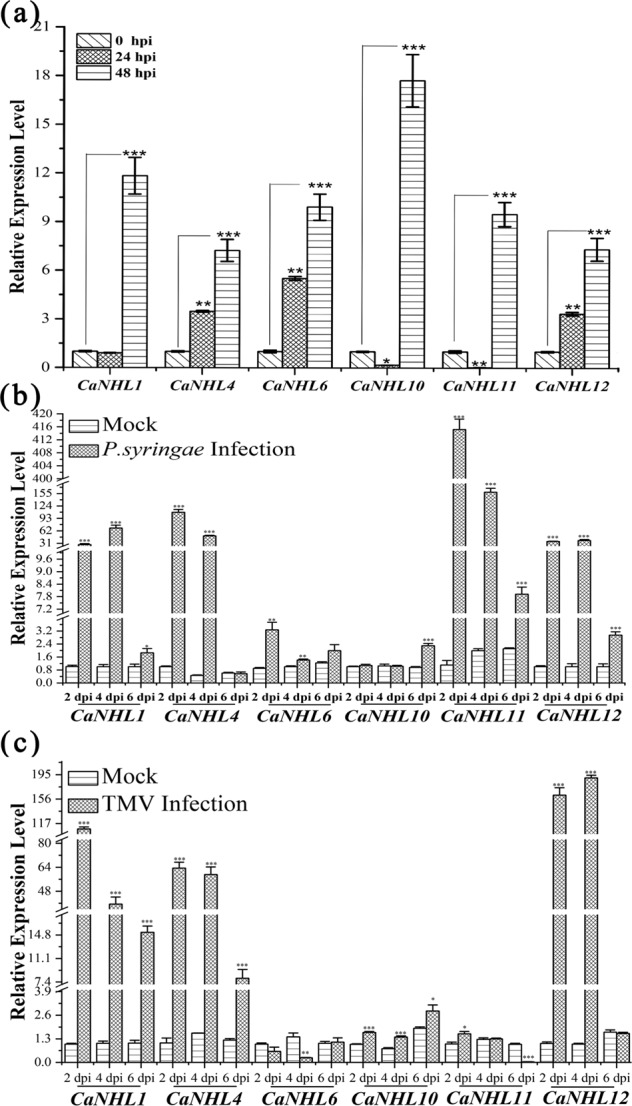
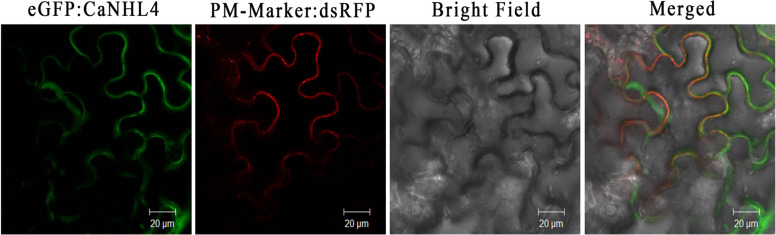
Plant NDR1/HIN1-like () genes play an important role in triggering plant defenses in response to biotic stresses. In this study, we performed a genome-wide identification of the genes in pepper ( L.) and characterized the functional roles of these genes in response to abiotic stresses and infection by different pathogens. Phylogenetic analysis revealed that s can be classified into five distinct subgroups, with each group containing generic and specific motifs. Regulatory element analysis showed that the majority of the promoter regions of the identified s contain jasmonic acid (JA)-responsive and salicylic acid (SA)-responsive elements, and transcriptomic analysis revealed that genes are expressed in all the examined tissues of pepper. The , , , , , and genes were significantly upregulated under abiotic stress as well as in response to different pathogens, such as TMV, and . In addition, we found that CaNHL4 localizes to the plasma membrane. -silenced pepper plants display significantly increased susceptibility to TMV, and , exhibiting reduced expression of JA-related and SA-related genes and reduced ROS production. However, transient overexpression of in pepper increases the expression of JA-related and SA-related genes, enhances the accumulation of ROS, and inhibits the infection of these three pathogens. Collectively, for the first time, we identified the genes in pepper and demonstrated that is involved in the production of ROS and that it also regulates the expression of JA-related and SA-related genes in response to different pathogens, suggesting that members of the CaNHL family play an essential role in the disease resistance of pepper.
植物NDR1/HIN1样(NHL)基因在触发植物对生物胁迫的防御反应中发挥重要作用。在本研究中,我们对辣椒(Capsicum annuum L.)中的NHL基因进行了全基因组鉴定,并表征了这些NHL基因在应对非生物胁迫和不同病原体感染时的功能作用。系统发育分析表明,NHLs可分为五个不同的亚组,每个亚组包含通用和特定的基序。调控元件分析表明,所鉴定的NHLs的大多数启动子区域含有茉莉酸(JA)响应元件和水杨酸(SA)响应元件,转录组分析表明NHL基因在辣椒所有检测的组织中均有表达。CaNHL1、CaNHL2、CaNHL3、CaNHL4、CaNHL5和CaNHL6基因在非生物胁迫下以及对不同病原体(如烟草花叶病毒、辣椒疫霉和炭疽病菌)的响应中显著上调。此外,我们发现CaNHL4定位于质膜。CaNHL基因沉默的辣椒植株对烟草花叶病毒、辣椒疫霉和炭疽病菌的易感性显著增加,表现出JA相关和SA相关基因的表达降低以及活性氧产生减少。然而,CaNHL4在辣椒中的瞬时过表达增加了JA相关和SA相关基因的表达,增强了活性氧的积累,并抑制了这三种病原体的感染。总体而言,我们首次在辣椒中鉴定了NHL基因,并证明CaNHL4参与活性氧的产生,并且它还响应不同病原体调节JA相关和SA相关基因的表达,表明CaNHL家族成员在辣椒的抗病性中起重要作用。