Department of Global Health, University of Washington, Seattle, WA, United States of America.
International Training and Education Center for Health (I-TECH), Seattle, WA, United States of America.
PLoS One. 2020 Jun 16;15(6):e0233234. doi: 10.1371/journal.pone.0233234. eCollection 2020.
Voluntary medical male circumcision (MC) is safe and effective. Nevertheless, MC programs require multiple post-operative visits. In Zimbabwe, a randomized control trial (RCT) found that post-operative two-way texting (2wT) between clients and MC providers instead of in-person reviews reduced provider workload and safeguarded patient safety. A critical component of the RCT assessed usability and acceptability of 2wT among providers and clients. These findings inform scale-up of the 2wT approach to post-operative follow-up.
The RCT assigned 362 adult MC clients with cell phones into 2wT; these men responded to 13 automated daily texts supported by interactive texting or in-person follow-up, when needed. A subset of 100 texting clients filled a self-administered usability survey on day 14. 2wT acceptability was ascertained via 2wT response rates. Among 2wT providers, eight key informant interviews focused on 2wT acceptability and usability. Influences of wage and age on response rates and client-reported potential AEs were explored using linear and logistic regression models, respectively.
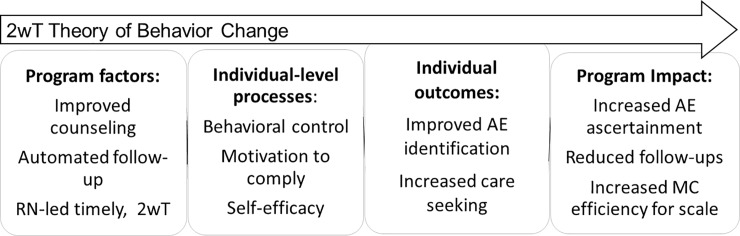
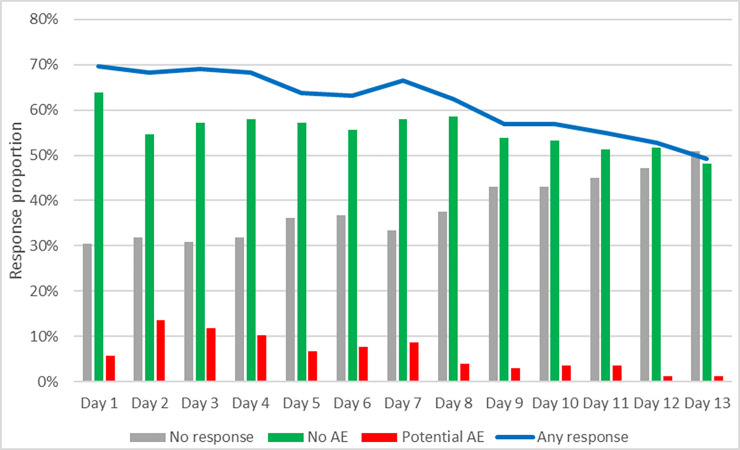
Clients felt confident, comfortable, satisfied, and well-supported with 2wT-based follow-up; few noted texting challenges or concerns about healing. Clients felt 2wT saved them time and money. Response rates (92%) suggested 2wT acceptability. Both clients and providers felt 2wT was highly usable. Providers noted 2wT saved them time, empowered clients to engage in their healing, and closed gaps in MC service quality. For scale, providers reinforced good post-operative counseling on AEs and texting instructions. Wage and age did not influence text response rates or potential AE texts.
Results strongly suggest that 2wT is highly usable and acceptable for providers and patients. Men with concerns solicited provider guidance and reassurance offered via text. Providers noted that men engaged proactively in their healing. 2wT between providers and patients should be expanded for MC and considered for other short-term care contexts. The trial is registered on ClinicalTrials.gov, trial NCT03119337, and was activated on April 18, 2017. https://clinicaltrials.gov/ct2/show/NCT03119337.
自愿男性包皮环切术(MC)是安全有效的。然而,MC 项目需要多次术后随访。在津巴布韦,一项随机对照试验(RCT)发现,客户与 MC 提供者之间的术后双向短信(2wT)而不是面对面的评估减少了提供者的工作量并保障了患者的安全。RCT 的一个关键组成部分评估了提供者和客户对 2wT 的可用性和可接受性。这些发现为将 2wT 方法应用于术后随访提供了依据。
RCT 将 362 名成年 MC 客户分配到 2wT 组;这些男性每天通过 13 个自动短信回复,必要时可通过互动短信或面对面随访进行回复。2wT 客户的一个子集在第 14 天填写了自我管理的可用性调查。通过 2wT 响应率确定 2wT 的可接受性。在 2wT 提供者中,进行了八次重点信息访谈,重点关注 2wT 的可接受性和可用性。使用线性和逻辑回归模型分别探讨了工资和年龄对响应率和客户报告的潜在不良反应的影响。
客户对基于 2wT 的随访感到自信、舒适、满意和得到很好的支持;少数人表示短信存在挑战或对愈合有担忧。客户认为 2wT 为他们节省了时间和金钱。响应率(92%)表明 2wT 是可接受的。客户和提供者都认为 2wT 非常好用。提供者指出,2wT 为他们节省了时间,使客户能够参与自己的愈合,并提高了 MC 服务质量。为了扩大规模,提供者加强了对不良反应的术后咨询和短信指导。工资和年龄不影响短信响应率或潜在不良反应短信。
结果强烈表明,2wT 对提供者和患者来说非常好用且可接受。有顾虑的男性会征求提供者的指导和安慰。提供者指出,男性积极参与自己的愈合。应该在 MC 中扩大提供者与患者之间的 2wT,并考虑将其应用于其他短期护理环境。该试验已在 ClinicalTrials.gov 注册,试验编号为 NCT03119337,于 2017 年 4 月 18 日启动。https://clinicaltrials.gov/ct2/show/NCT03119337。