Ali Md Arshad, Ahmed Temoor, Wu Wenge, Hossain Afsana, Hafeez Rahila, Islam Masum Md Mahidul, Wang Yanli, An Qianli, Sun Guochang, Li Bin
State Key Laboratory of Rice Biology and Ministry of Agriculture Key Lab of Molecular Biology of Crop Pathogens and Insects, Institute of Biotechnology, College of Agricultural and Biotechnology, Zhejiang University, Hangzhou 310058, China.
Rice Research Institute, Anhui Academy of Agricultural Sciences, Hefei 230001, China.
Nanomaterials (Basel). 2020 Jun 11;10(6):1146. doi: 10.3390/nano10061146.
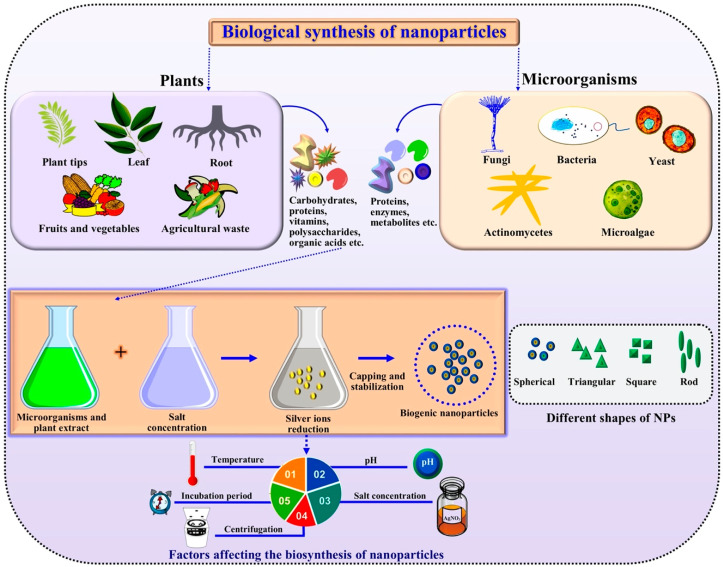
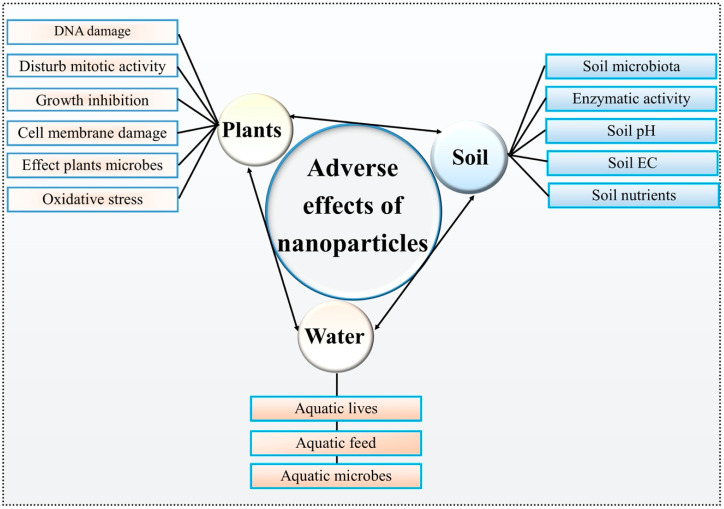
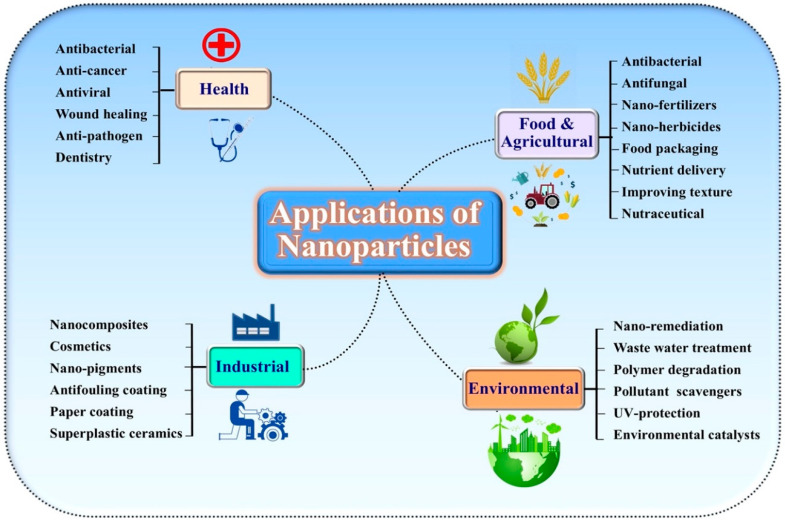
A large number of metallic nanoparticles have been successfully synthesized by using different plant extracts and microbes including bacteria, fungi viruses and microalgae. Some of these metallic nanoparticles showed strong antimicrobial activities against phytopathogens. Here, we summarized these green-synthesized nanoparticles from plants and microbes and their applications in the control of plant pathogens. We also discussed the potential deleterious effects of the metallic nanoparticles on plants and beneficial microbial communities associated with plants. Overall, this review calls for attention regarding the use of green-synthesized metallic nanoparticles in controlling plant diseases and clarification of the risks to plants, plant-associated microbial communities, and environments before using them in agriculture.
通过使用不同的植物提取物和微生物(包括细菌、真菌、病毒和微藻),已经成功合成了大量金属纳米颗粒。其中一些金属纳米颗粒对植物病原体表现出强大的抗菌活性。在此,我们总结了这些从植物和微生物中绿色合成的纳米颗粒及其在控制植物病原体方面的应用。我们还讨论了金属纳米颗粒对植物以及与植物相关的有益微生物群落可能产生的有害影响。总体而言,本综述呼吁关注绿色合成金属纳米颗粒在控制植物病害方面的应用,并在将其用于农业之前,阐明其对植物、与植物相关的微生物群落和环境的风险。