Xie Jing, Chen Chang, Hou Li-Juan, Zhou Chan-Juan, Fang Liang, Chen Jian-Jun
Chongqing Emergency Medical Center, Department of Endocrinology and Nephrology, The Fourth People's Hospital of Chongqing, Central Hospital of Chongqing University , Chongqing, 400014, People's Republic of China.
Institute of Life Sciences, Chongqing Medical University, Chongqing 400016, People's Republic of China.
Diabetes Metab Syndr Obes. 2020 May 18;13:1677-1683. doi: 10.2147/DMSO.S251034. eCollection 2020.
Depression could make the treatment outcome worse. However, up to now, no objective methods were developed to diagnose depression in hepatitis B virus (HBV)-infected patients. Therefore, the dual metabolomic platforms were used here to identify potential biomarkers for diagnosing HBV-infected patients with depression (dHB).
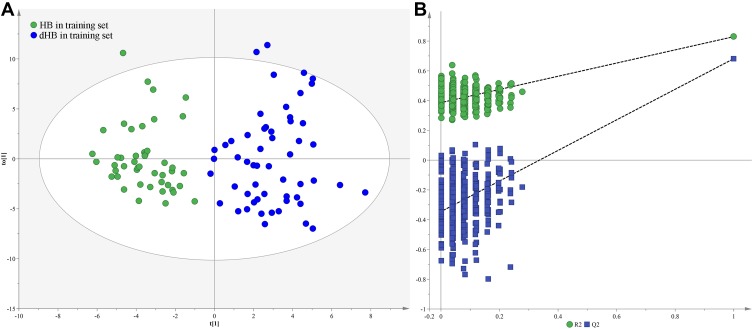
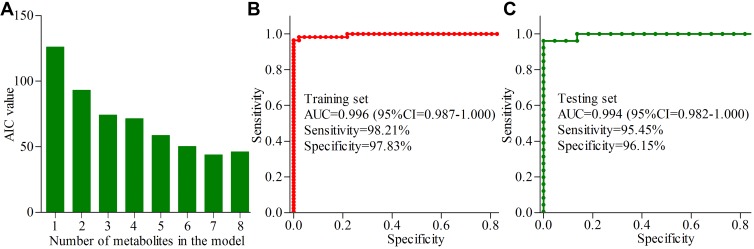
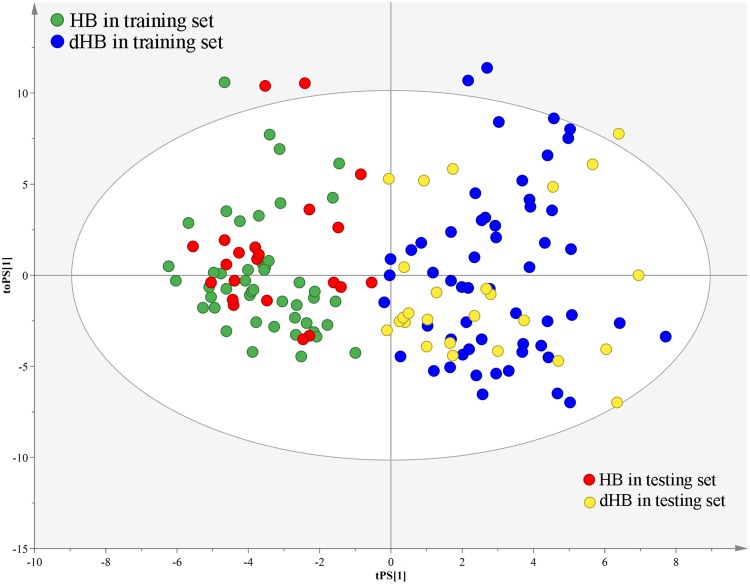
Both gas chromatography-mass spectrometry-based and nuclear magnetic resonance-based metabolomic platforms were used to conduct urine metabolic profiling of dHB subjects and HBV-infected patients without depression (HB). Orthogonal partial least-squares discriminant analysis was used to identify the differential metabolites between dHB subjects and HB subjects, and the step-wise logistic regression analysis was used to identify potential biomarkers.
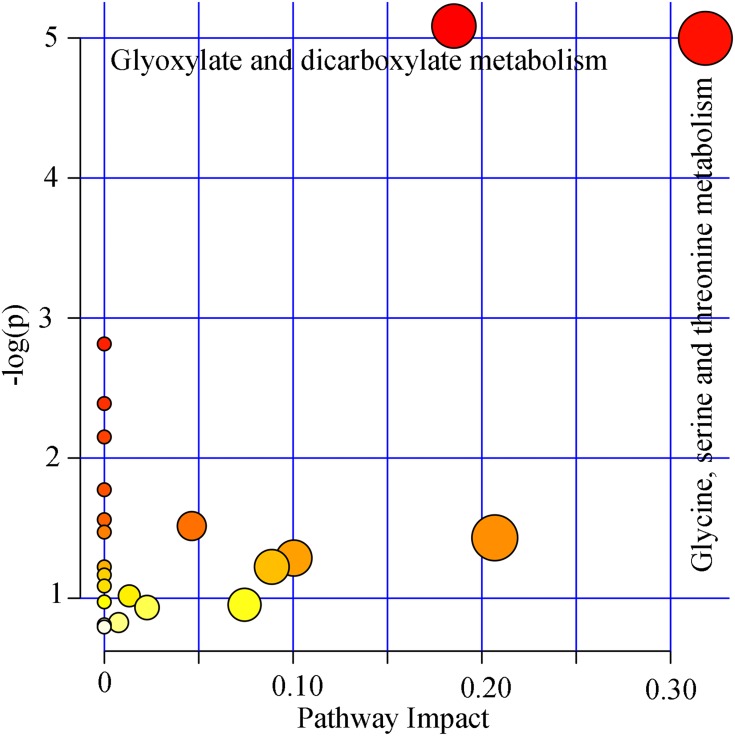
In total, 21 important metabolites responsible for distinguishing dHB subjects from HB subjects were identified. Meanwhile, seven potential biomarkers (α-ydroxyisobutyric acid, hippuric acid, azelaic acid, isobutyric acid, malonic acid, levulinic acid, and phenylacetylglycine) were viewed as potential biomarkers. The simplified biomarker panel consisting of these seven metabolites had an excellent diagnostic performance in discriminating dHB subjects from HB subjects. Moreover, this panel could yield a higher accuracy in separating dHB subjects from HB subjects than our previous panels (identified by single metabolomic platform) did.
These results suggested that the dual metabolomic platforms could yield a better urinary biomarker panel for dHB subjects than any single metabolomic platform did, and our results could be helpful for developing an objective method in future to diagnose depression in HBV-infected patients.
抑郁症可能会使治疗结果更差。然而,截至目前,尚未开发出客观方法来诊断乙型肝炎病毒(HBV)感染患者的抑郁症。因此,本研究使用双代谢组学平台来识别诊断HBV感染的抑郁症患者(dHB)的潜在生物标志物。
基于气相色谱 - 质谱和基于核磁共振的代谢组学平台用于对dHB受试者和未患抑郁症的HBV感染患者(HB)进行尿液代谢谱分析。采用正交偏最小二乘判别分析来识别dHB受试者和HB受试者之间的差异代谢物,并使用逐步逻辑回归分析来识别潜在的生物标志物。
总共鉴定出21种可区分dHB受试者和HB受试者的重要代谢物。同时,七种潜在生物标志物(α - 羟基异丁酸、马尿酸、壬二酸、异丁酸、丙二酸、乙酰丙酸和苯乙酰甘氨酸)被视为潜在生物标志物。由这七种代谢物组成的简化生物标志物组在区分dHB受试者和HB受试者方面具有出色的诊断性能。此外,与我们之前的组(通过单一代谢组学平台鉴定)相比,该组在区分dHB受试者和HB受试者方面能产生更高的准确性。
这些结果表明,双代谢组学平台比任何单一代谢组学平台能为dHB受试者提供更好的尿液生物标志物组,我们的结果可能有助于未来开发一种客观方法来诊断HBV感染患者的抑郁症。