Chase Bruce A, Markopoulou Katerina
Department of Biology, University of Nebraska at Omaha, Omaha, NE, United States.
Department of Neurology, NorthShore University HealthSystem, Evanston, IL, United States.
Front Neurol. 2020 May 29;11:447. doi: 10.3389/fneur.2020.00447. eCollection 2020.
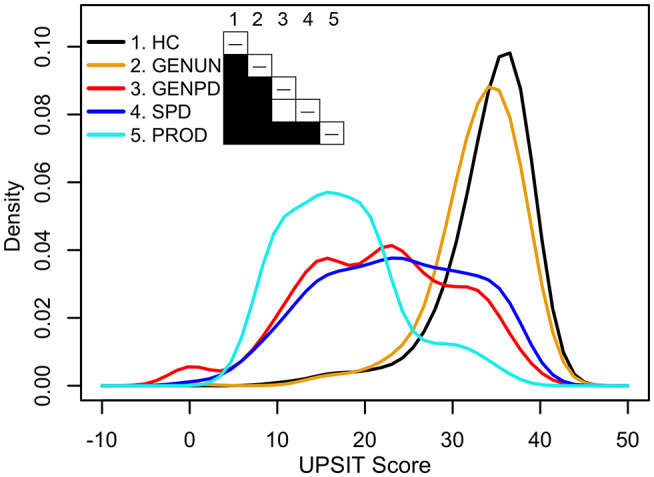
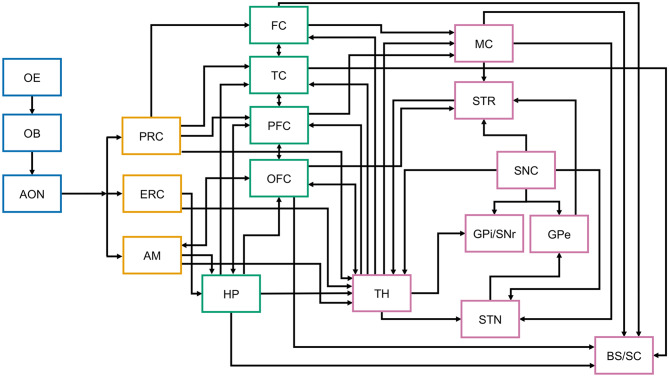
This minireview discusses our current understanding of the olfactory dysfunction that is frequently observed in sporadic and familial forms of Parkinson's disease and parkinsonian syndromes. We review the salient characteristics of olfactory dysfunction in these conditions, discussing its prevalence and characteristics, how neuronal processes and circuits are altered in Parkinson's disease, and what is assessed by clinically used measures of olfactory function. We highlight how studies of monogenic Parkinson's disease and investigations in ethnically diverse populations have contributed to understanding the mechanisms underlying olfactory dysfunction. Furthermore, we discuss how imaging and system-level approaches have been used to understand the pathogenesis of olfactory dysfunction. We discuss the challenging, remaining gaps in understanding the basis of olfactory dysfunction in neurodegeneration. We propose that insights could be obtained by following longitudinal cohorts with familial forms of Parkinson's disease using a combination of approaches: a multifaceted longitudinal assessment of olfactory function during disease progression is essential to identify not only how dysfunction arises, but also to address its relationship to motor and non-motor Parkinson's disease symptoms. An assessment of cohorts having monogenic forms of Parkinson's disease, available within the Genetic Epidemiology of Parkinson's Disease (GEoPD), as well as other international consortia, will have heuristic value in addressing the complexity of olfactory dysfunction in the context of the neurodegenerative process. This will inform our understanding of Parkinson's disease as a multisystem disorder and facilitate the more effective use of olfactory dysfunction assessment in identifying prodromal Parkinson's disease and understanding disease progression.
本综述讨论了我们目前对嗅觉功能障碍的理解,这种功能障碍常见于散发性和家族性帕金森病及帕金森综合征。我们回顾了这些病症中嗅觉功能障碍的显著特征,讨论了其患病率和特点、帕金森病中神经元过程和神经回路是如何改变的,以及临床使用的嗅觉功能测量方法所评估的内容。我们强调了单基因帕金森病的研究以及在不同种族人群中的调查如何有助于理解嗅觉功能障碍的潜在机制。此外,我们讨论了成像和系统层面的方法如何被用于理解嗅觉功能障碍的发病机制。我们讨论了在理解神经退行性变中嗅觉功能障碍基础方面存在的具有挑战性的、仍然存在的差距。我们提出,可以通过以下方法跟踪帕金森病家族形式的纵向队列来获得见解:在疾病进展过程中对嗅觉功能进行多方面的纵向评估不仅对于确定功能障碍如何产生至关重要,而且对于解决其与帕金森病运动和非运动症状的关系也至关重要。对帕金森病基因流行病学(GEoPD)以及其他国际联盟中可用的单基因形式帕金森病队列进行评估,将对解决神经退行性变背景下嗅觉功能障碍的复杂性具有启发价值。这将增进我们对帕金森病作为一种多系统疾病的理解,并有助于更有效地利用嗅觉功能障碍评估来识别帕金森病前驱期以及理解疾病进展。