Espinosa-Vellarino Francisco L, Garrido Inmaculada, Ortega Alfonso, Casimiro Ilda, Espinosa Francisco
Research Group of Physiology, Cellular and Molecular Biology of Plants, University of Extremadura, Badajoz, Spain.
Front Plant Sci. 2020 May 27;11:674. doi: 10.3389/fpls.2020.00674. eCollection 2020.
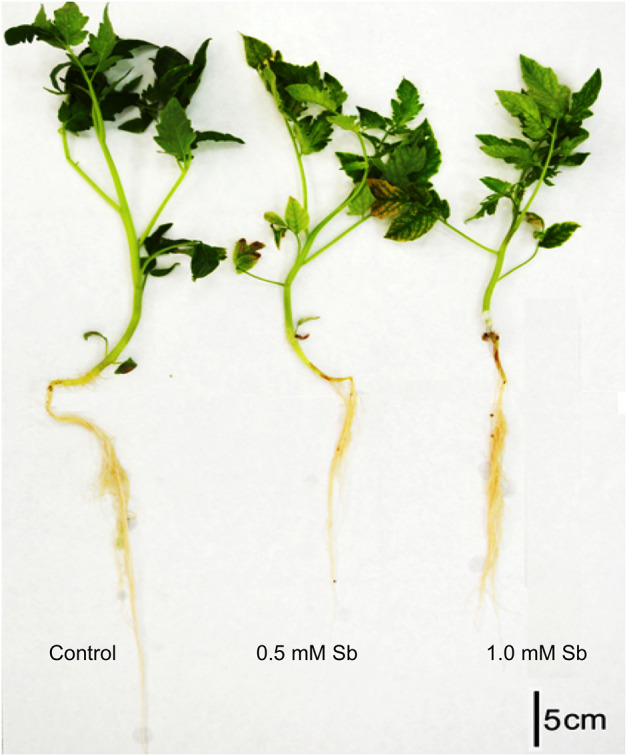
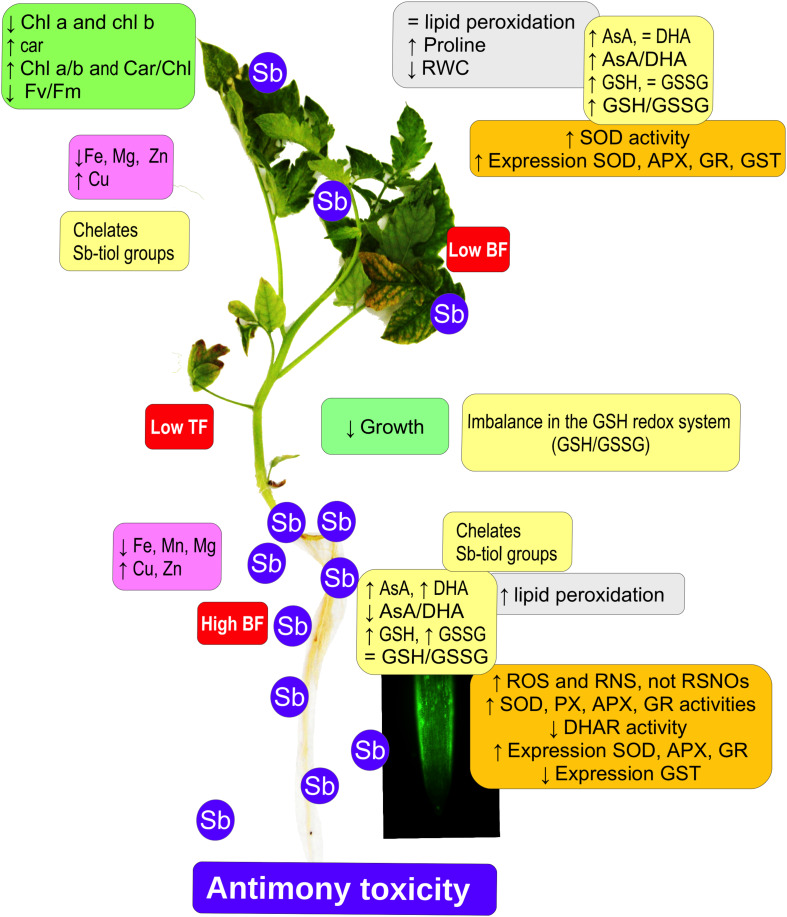
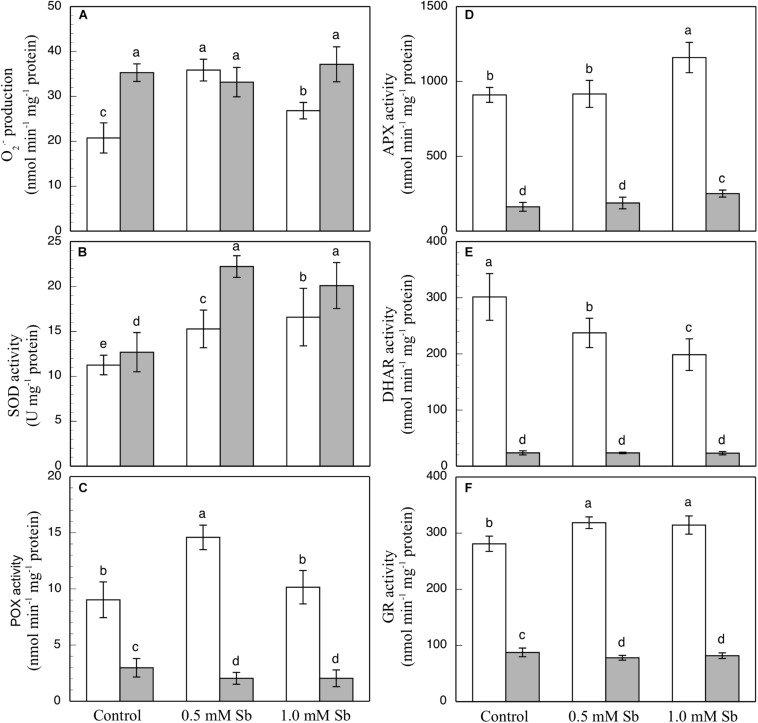
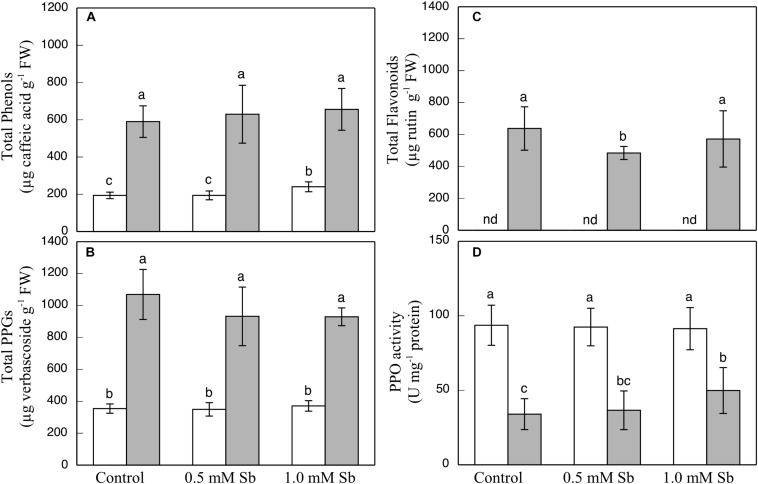
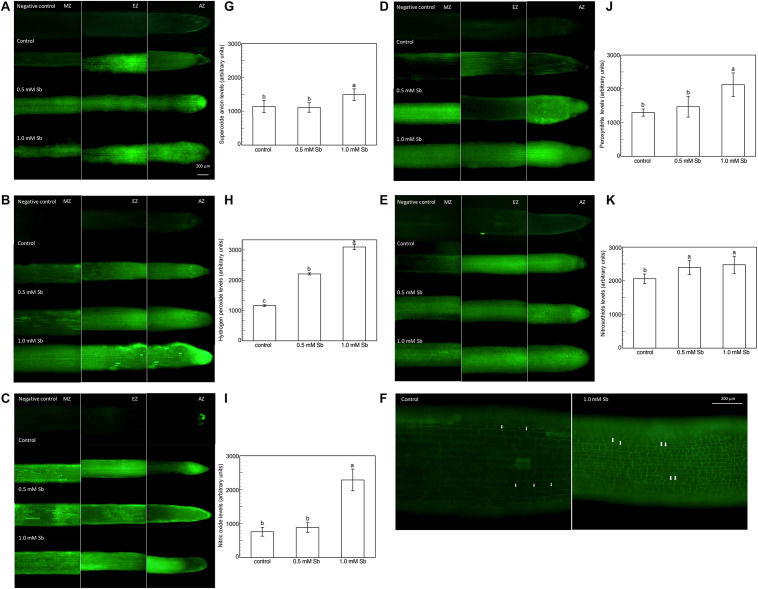
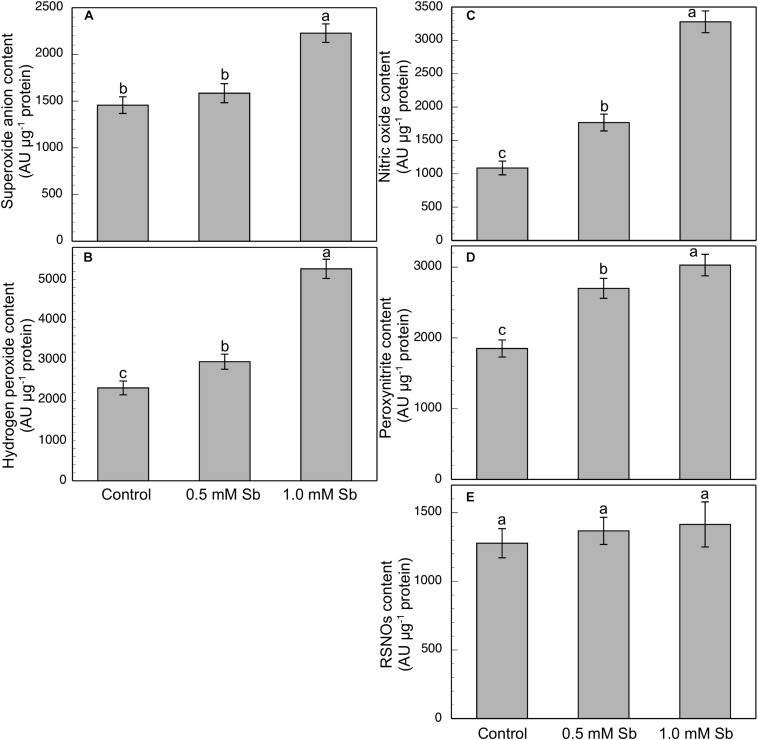
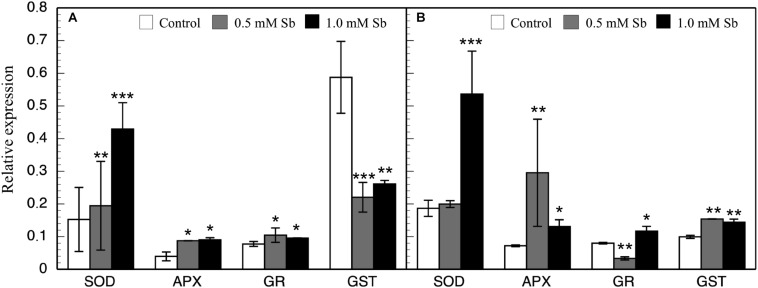
This research studies the effects that Sb toxicity (0.0, 0.5, and 1.0 mM) has on the growth, reactive oxygen and nitrogen species, and antioxidant systems in tomato plants. Sb is accumulated preferentially in the roots, with little capacity for its translocation to the leaves where the concentration is much lower. The growth of the seedlings is reduced, with alteration in the content in other nutrients. There is a decrease in the content of Fe, Mg, and Mn, while Cu and Zn increase. The contents in chlorophyll a and b decrease, as does the photosynthetic efficiency. On the contrary the carotenoids increase, indicating a possible action as antioxidants and protectors against Sb. The phenolic compounds do not change, and seem not to be involved in the defense response of the tomato against the stress by Sb. The water content of the leaves decreases while that of proline increases in response to the Sb toxicity. Fluorescence microscopy images and spectrofluorometric detection showed increases in the production of O., HO, NO, and ONOO, but not of nitrosothiols. The Sb toxicity induces changes in the SOD, POX, APX, and GR antioxidant activities, which show a clear activation in the roots. In leaves, only the SOD and APX increase. The DHAR activity is inhibited in roots but undergoes no changes in the leaves, as is also the case for the POX and GR activities. Ascorbate increases while GSH decreases in the roots. The total AsA + DHA content increases in the roots, but the total GSH + GSSG content decreases, while neither is altered in the leaves. Under Sb toxicity increases the expression of the SOD, APX, and GR genes, while the expression of GST decreases dramatically in roots but increases in leaves. In addition, an alteration is observed in the pattern of the growth of the cells in the elongation zone, with smaller and disorganized cells. All these effects appear to be related to the ability of the Sb to form complexes with thiol groups, including GSH, altering both redox homeostasis and the levels of auxin in the roots and the quiescent center.
本研究探讨了锑毒性(0.0、0.5和1.0 mM)对番茄植株生长、活性氧和氮物种以及抗氧化系统的影响。锑优先积累在根部,向叶片转运的能力较弱,叶片中的浓度要低得多。幼苗生长受到抑制,其他养分含量也发生变化。铁、镁和锰的含量降低,而铜和锌的含量增加。叶绿素a和b的含量降低,光合效率也降低。相反,类胡萝卜素增加,表明其可能作为抗氧化剂和抗锑保护剂发挥作用。酚类化合物含量不变,似乎未参与番茄对锑胁迫的防御反应。叶片含水量降低,而脯氨酸含量因锑毒性而增加。荧光显微镜图像和荧光光谱检测显示超氧阴离子、过氧化氢、一氧化氮和过氧亚硝酸盐的生成增加,但亚硝基硫醇未增加。锑毒性诱导超氧化物歧化酶(SOD)、过氧化物酶(POX)、抗坏血酸过氧化物酶(APX)和谷胱甘肽还原酶(GR)抗氧化活性发生变化,根部表现出明显的激活。在叶片中,只有SOD和APX增加。脱氢抗坏血酸还原酶(DHAR)活性在根部受到抑制,但在叶片中没有变化,POX和GR活性也是如此。根部抗坏血酸增加而谷胱甘肽减少。根部抗坏血酸总量(AsA + DHA)增加,但谷胱甘肽总量(GSH + GSSG)减少,而叶片中两者均未改变。在锑毒性作用下,根部SOD、APX和GR基因的表达增加,而谷胱甘肽S-转移酶(GST)基因的表达在根部显著降低,但在叶片中增加。此外,在伸长区观察到细胞生长模式发生改变,细胞变小且排列紊乱。所有这些影响似乎都与锑与包括谷胱甘肽在内的巯基形成复合物的能力有关,从而改变了氧化还原稳态以及根部和静止中心的生长素水平。