Wohnhaas Christian T, Schmid Ramona, Rolser Marcel, Kaaru Eric, Langgartner Dominik, Rieber Kathrin, Strobel Benjamin, Eisele Claudia, Wiech Franziska, Jakob Ines, Gantner Florian, Herichova Ivona, Vinisko Richard, Böcher Wulf O, Visvanathan Sudha, Shen Fei, Panzenbeck Mark, Raymond Ernest, Reber Stefan O, Delić Denis, Baum Patrick
Boehringer Ingelheim Pharma GmbH & Co. KG, Biberach, Germany.
Department of Psychosomatic Medicine and Psychotherapy, University of Ulm, Ulm, Germany.
Crohns Colitis 360. 2020 Jan;2(1):otaa003. doi: 10.1093/crocol/otaa003. Epub 2020 Feb 14.
Short non-coding microRNAs (miRNAs) are involved in various cellular processes during disease progression of Crohn's disease (CD) and remarkably stable in feces, which make them attractive biomarker candidates for reflecting intestinal inflammatory processes. Here we investigated the potential of fecal miRNAs as noninvasive and translational CD biomarkers.
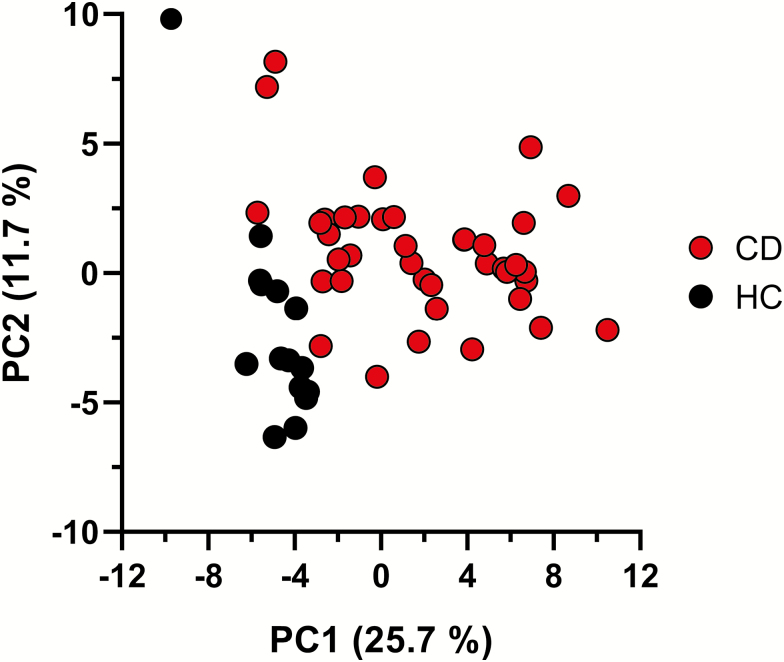
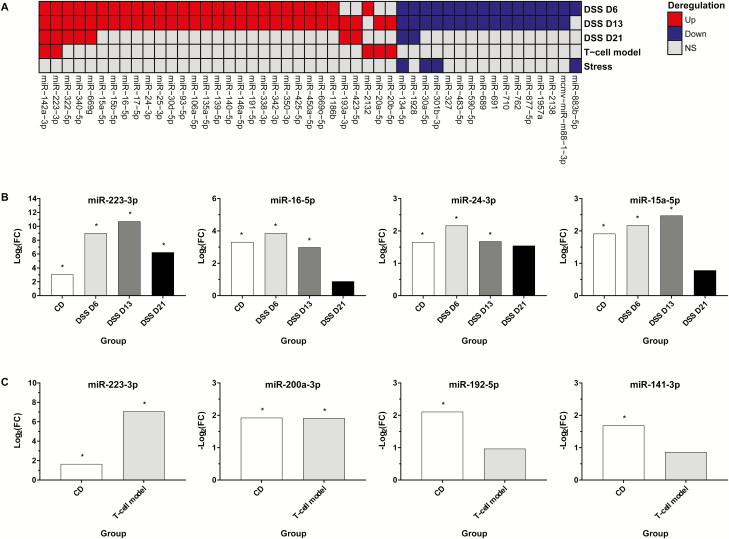
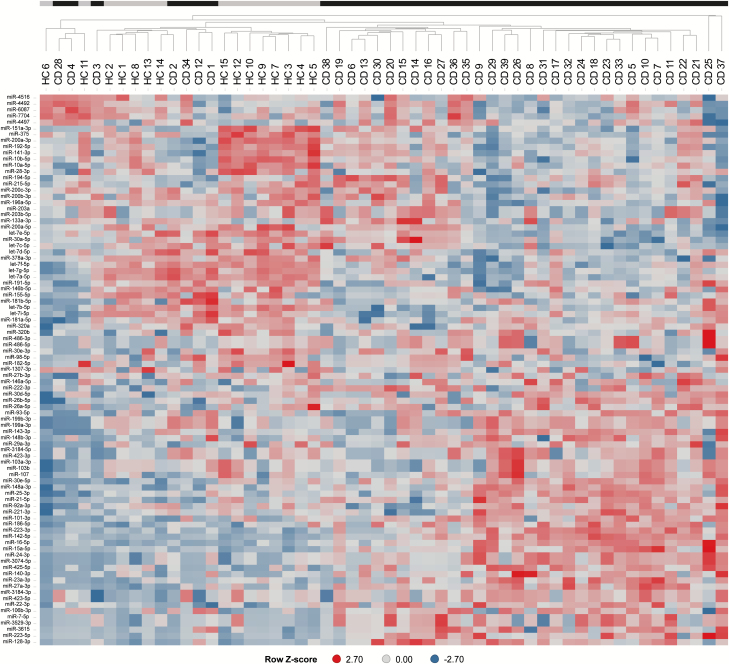
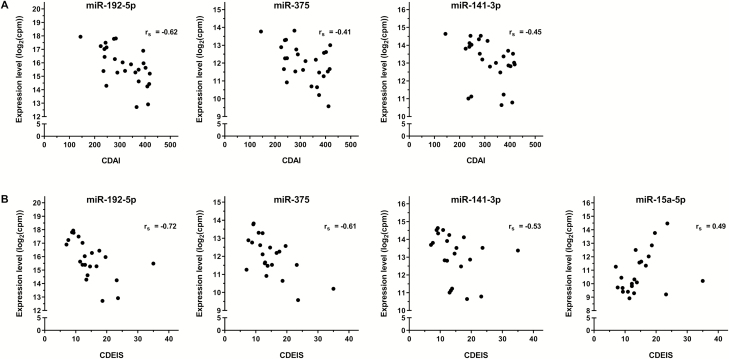
MiRNAs were screened in feces of 52 patients with CD and 15 healthy controls using RNA sequencing and the results were confirmed by PCR. The relationship between fecal miRNA levels and the clinical CD activity index (CDAI) or CD endoscopic index of severity (CDEIS) was explored, respectively. Additionally, fecal miRNAs were investigated in dextran sodium sulfate, adoptive T-cell transfer, and /stress-induced murine colitis models using the NanoString platform.
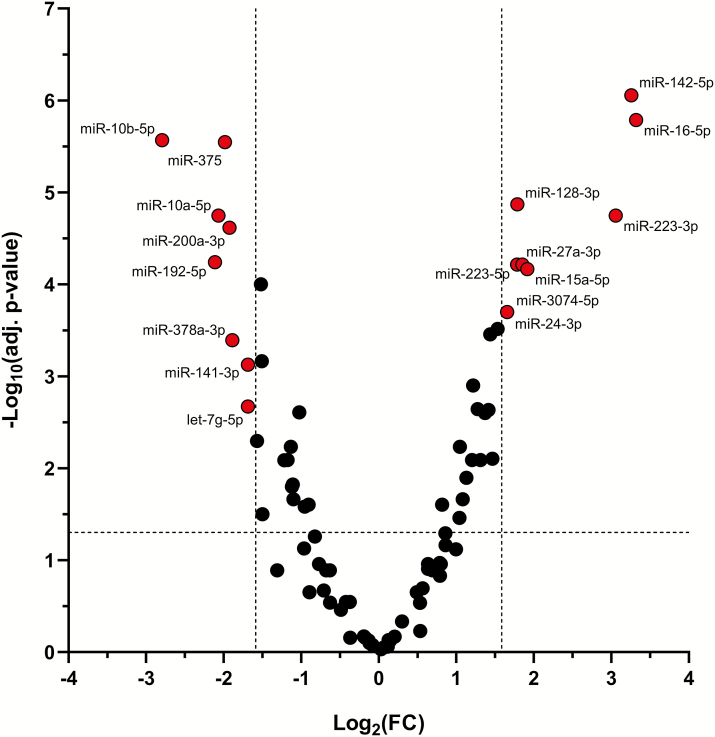
Nine miRNAs (miR-15a-5p, miR-16-5p, miR-128-3p, miR-142-5p, miR-24-3p, miR-27a-3p, miR-223-3p, miR-223-5p, and miR-3074-5p) were significantly (adj. < 0.05, >3-fold) increased whereas 8 miRNAs (miR-10a-5p, miR-10b-5p, miR-141-3p, miR-192-5p, miR-200a-3p, miR-375, miR-378a-3p, and let-7g-5p) were significantly decreased in CD. MiR-192-5p, miR-375, and miR-141-3p correlated ( < 0.05) with both CDAI and CDEIS whereas miR-15a-5p correlated only with CDEIS. Deregulated expression of miR-223-3p, miR-16-5p, miR-15a-5p, miR-24-3p, and miR-200a-3p was also observed in murine models. The identified altered fecal miRNA levels reflect pathophysiological mechanisms in CD, such as Th1 and Th17 inflammation, autophagy, and fibrotic processes.
Our translational study assessed global fecal miRNA changes of patients with CD and relevant preclinical models. These fecal miRNAs show promise as translational and clinically useful noninvasive biomarkers for mechanistic investigation of intestinal pathophysiology, including monitoring of disease progression.
短链非编码微小RNA(miRNA)参与克罗恩病(CD)疾病进展过程中的各种细胞进程,且在粪便中非常稳定,这使其成为反映肠道炎症过程的有吸引力的生物标志物候选物。在此,我们研究了粪便miRNA作为非侵入性和可转化的CD生物标志物的潜力。
使用RNA测序在52例CD患者和15名健康对照者的粪便中筛选miRNA,结果通过PCR进行确认。分别探讨了粪便miRNA水平与临床CD活动指数(CDAI)或CD内镜严重程度指数(CDEIS)之间的关系。此外,使用NanoString平台在葡聚糖硫酸钠、过继性T细胞转移和应激诱导的小鼠结肠炎模型中研究了粪便miRNA。
9种miRNA(miR-15a-5p、miR-16-5p、miR-128-3p、miR-142-5p、miR-24-3p、miR-27a-3p、miR-223-3p、miR-223-5p和miR-3074-5p)显著上调(校正P<0.05,>3倍),而8种miRNA(miR-10a-5p、miR-10b-5p、miR-141-3p、miR-192-5p、miR-200a-3p、miR-375、miR-378a-3p和let-7g-5p)在CD中显著下调。miR-192-5p、miR-375和miR-141-3p与CDAI和CDEIS均相关(P<0.05),而miR-15a-5p仅与CDEIS相关。在小鼠模型中也观察到miR-223-3p、miR-16-5p、miR-15a-5p、miR-24-3p和miR-200a-3p的表达失调。所确定的粪便miRNA水平变化反映了CD中的病理生理机制,如Th1和Th17炎症、自噬和纤维化过程。
我们的转化研究评估了CD患者和相关临床前模型中粪便miRNA的整体变化。这些粪便miRNA有望作为可转化的、临床上有用的非侵入性生物标志物,用于肠道病理生理学的机制研究,包括疾病进展的监测。