Mestrovic Antonio, Perkovic Nikola, Bozic Dorotea, Kumric Marko, Vilovic Marino, Bozic Josko
Department of Gastroenterology, University Hospital of Split, Spinciceva 2, 21000 Split, Croatia.
Department of Pathophysiology, University of Split School of Medicine, Soltanska 2A, 21000 Split, Croatia.
Biomedicines. 2024 Jul 8;12(7):1520. doi: 10.3390/biomedicines12071520.
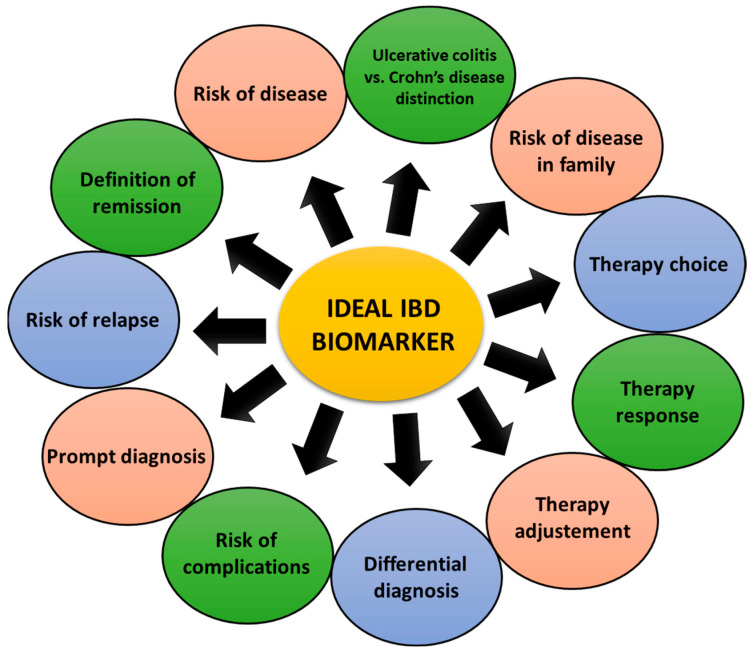
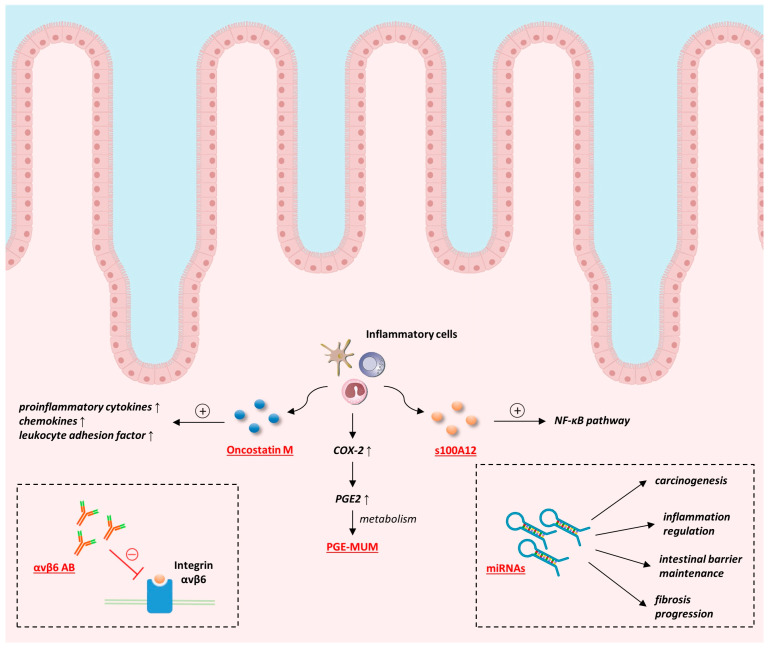
Inflammatory bowel diseases (IBD) remain challenging in terms of understanding their causes and in terms of diagnosing, treating, and monitoring patients. Modern diagnosis combines biomarkers, imaging, and endoscopic methods. Common biomarkers like CRP and fecal calprotectin, while invaluable tools, have limitations and are not entirely specific to IBD. The limitations of existing markers and the invasiveness of endoscopic procedures highlight the need to discover and implement new markers. With an ideal biomarker, we could predict the risk of disease development, as well as the possibility of response to a particular therapy, which would be significant in elucidating the pathogenesis of the disease. Recent research in the fields of machine learning, proteomics, epigenetics, and gut microbiota provides further insight into the pathogenesis of the disease and is also revealing new biomarkers. New markers, such as BAFF, PGE-MUM, oncostatin M, microRNA panels, αvβ6 antibody, and S100A12 from stool, are increasingly being identified, with αvβ6 antibody and oncostatin M being potentially close to being presented into clinical practice. However, the specificity of certain markers still remains problematic. Furthermore, the use of expensive and less accessible technology for detecting new markers, such as microRNAs, represents a limitation for widespread use in clinical practice. Nevertheless, the need for non-invasive, comprehensive markers is becoming increasingly important regarding the complexity of treatment and overall management of IBD.
炎症性肠病(IBD)在病因理解以及患者诊断、治疗和监测方面仍然具有挑战性。现代诊断结合了生物标志物、影像学和内镜检查方法。常见的生物标志物如C反应蛋白(CRP)和粪便钙卫蛋白,虽然是非常有价值的工具,但也有局限性,并非IBD所特有。现有标志物的局限性以及内镜检查的侵入性凸显了发现和应用新标志物的必要性。有了理想的生物标志物,我们就能预测疾病发展的风险以及对特定治疗产生反应的可能性,这对阐明疾病的发病机制具有重要意义。机器学习、蛋白质组学、表观遗传学和肠道微生物群领域的最新研究为疾病的发病机制提供了进一步的见解,也揭示了新的生物标志物。越来越多的新标志物被发现,如B细胞活化因子(BAFF)、前列腺素E-黏膜相关分子(PGE-MUM)、抑瘤素M、微小RNA面板、αvβ6抗体和粪便中的S100A12,其中αvβ6抗体和抑瘤素M可能即将应用于临床实践。然而,某些标志物的特异性仍然存在问题。此外,用于检测新标志物(如微小RNA)的技术昂贵且不易获得,这限制了其在临床实践中的广泛应用。尽管如此,鉴于IBD治疗和整体管理的复杂性,对非侵入性、全面性标志物的需求变得越来越重要。