Department of Civil and Environmental Engineering, Nazarbayev University, Nur-Sultan 010000, Kazakhstan.
Department of Electrical and Computer Engineering, Nazarbayev University, Nur-Sultan 010000, Kazakhstan.
Sensors (Basel). 2020 Jun 17;20(12):3408. doi: 10.3390/s20123408.
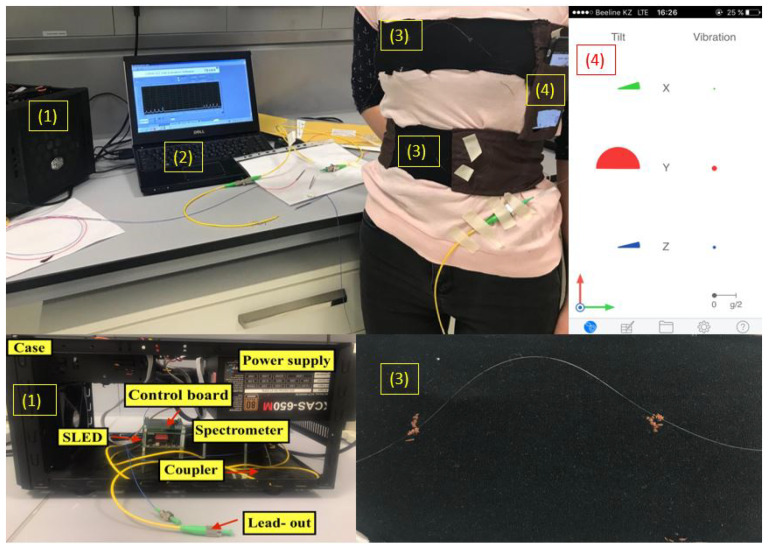
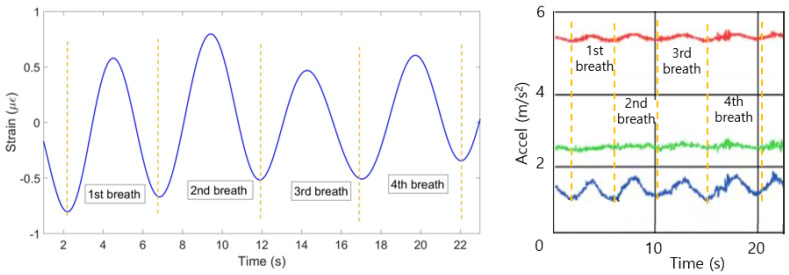
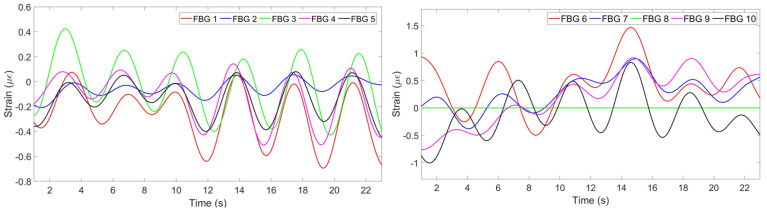
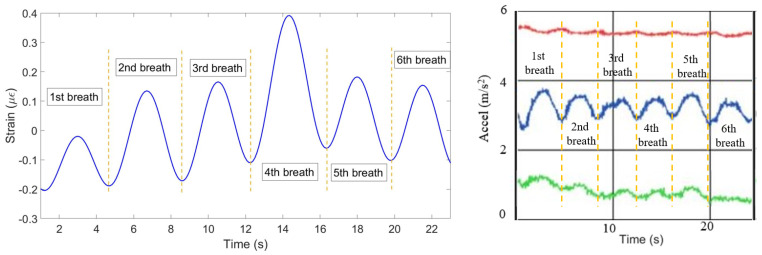
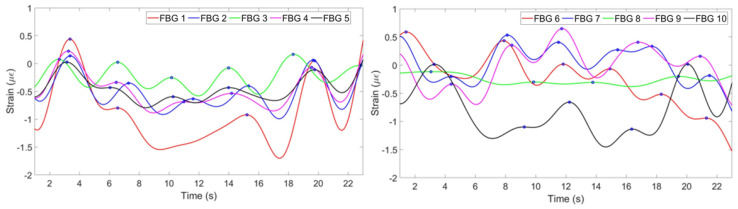
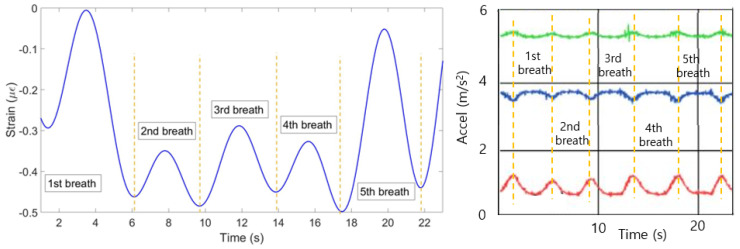
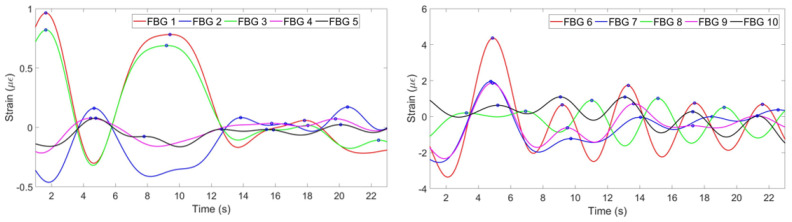
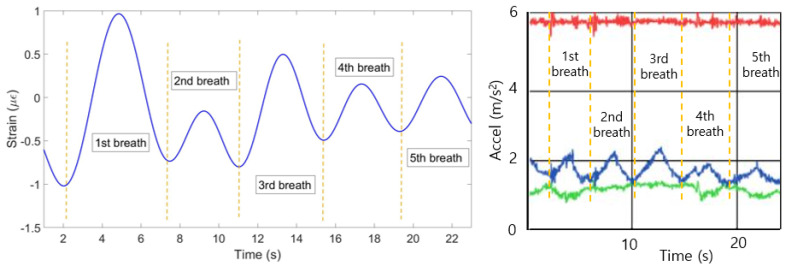
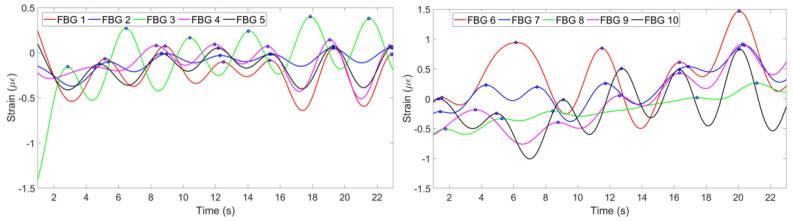
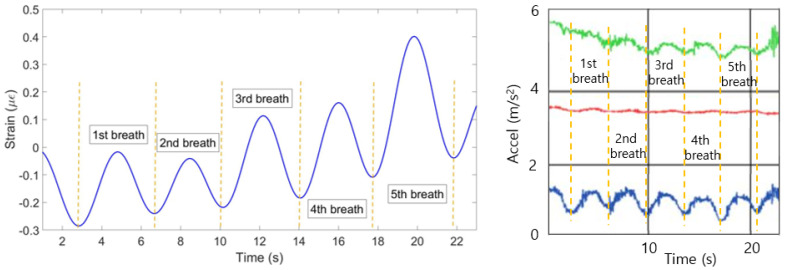
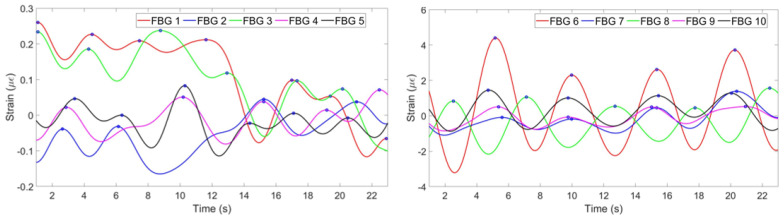
Wearable light textiles are gaining widespread interest in application for measurement and monitoring of biophysical parameters. Fiber optic sensors, in particular Bragg Grating (FBG) sensors, can be a competitive method for monitoring of respiratory behavior for chest and abdomen regions since the sensors are able to convert physical movement into wavelength shift. This study aims to show the performance of elastic belts with integrated optical fibers during the breathing activities done by two volunteers. Additionally, the work aims to determine how the positions of the volunteers affect the breathing pattern detected by optical fibers. As a reference, commercial mobile application for sensing vibration is used. The obtained results show that the FBGs are able to detect chest and abdomen movements during breathing and consequently reconstruct the breathing pattern. The accuracy of the results varies for two volunteers but remains consistent.
可穿戴式轻便纺织品在生物物理参数的测量和监测方面的应用受到了广泛关注。光纤传感器,特别是布拉格光栅(FBG)传感器,由于能够将物理运动转换为波长移动,因此可作为监测胸部和腹部呼吸行为的一种有竞争力的方法。本研究旨在展示在两名志愿者进行呼吸活动时,集成光纤的弹性带的性能。此外,本工作旨在确定志愿者的位置如何影响光纤检测到的呼吸模式。为此,使用了商用的用于感测振动的移动应用程序作为参考。所得结果表明,FBG 能够检测呼吸过程中的胸部和腹部运动,并由此重建呼吸模式。两个志愿者的结果准确性有所不同,但保持一致。