Department of Legal and Forensic Medicine, Biomedical Research Institute (IMIB), Regional Campus of International Excellence "Campus Mare Nostrum", Faculty of Medicine, University of Murcia, Murcia, Spain.
Department of Dermatology, Stomatology, Radiology and Physical Medicine, University of Murcia, Murcia, Spain.
Sci Rep. 2020 Jun 19;10(1):9964. doi: 10.1038/s41598-020-66472-1.
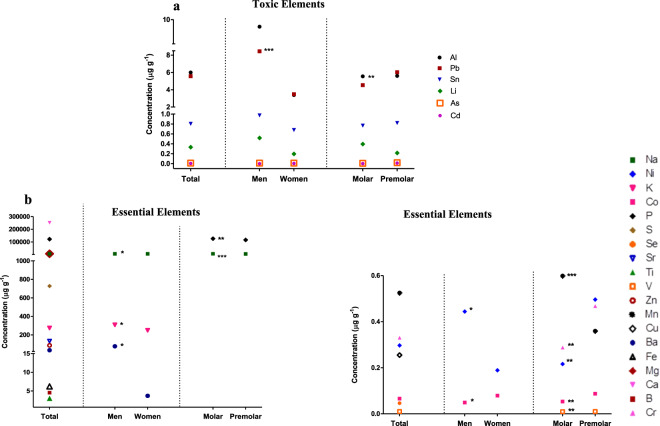
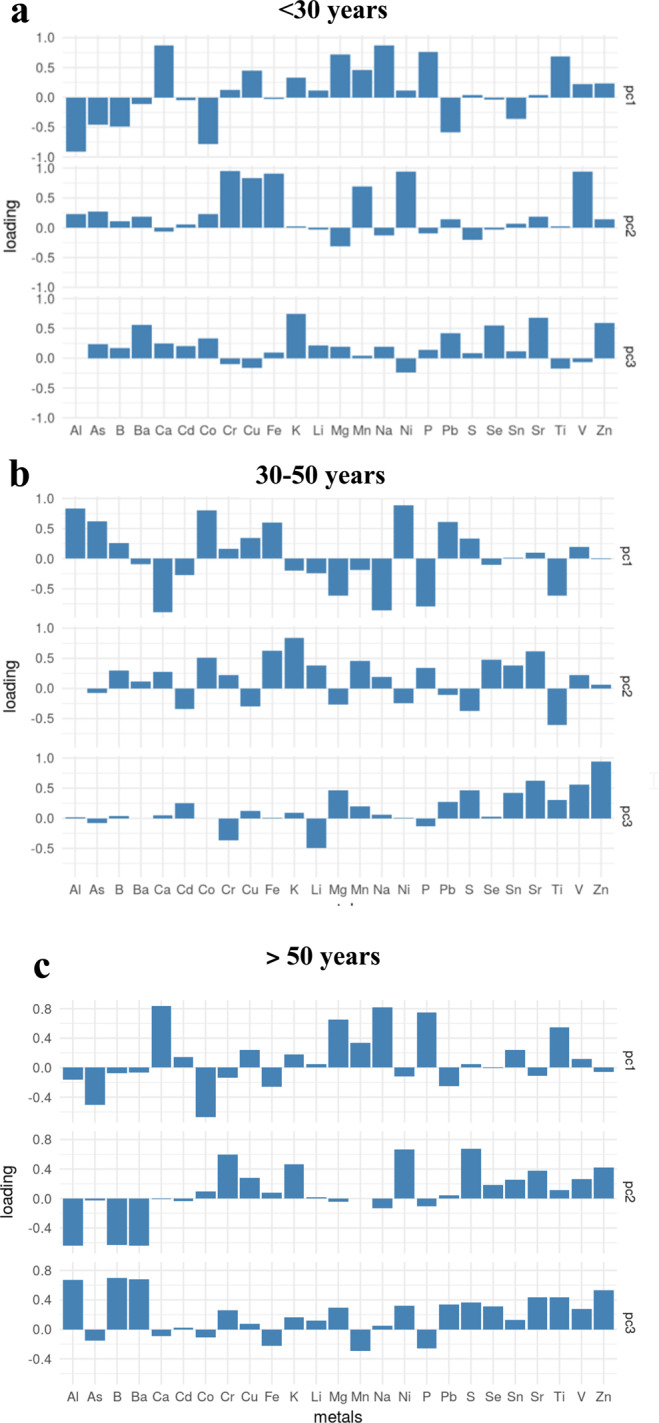
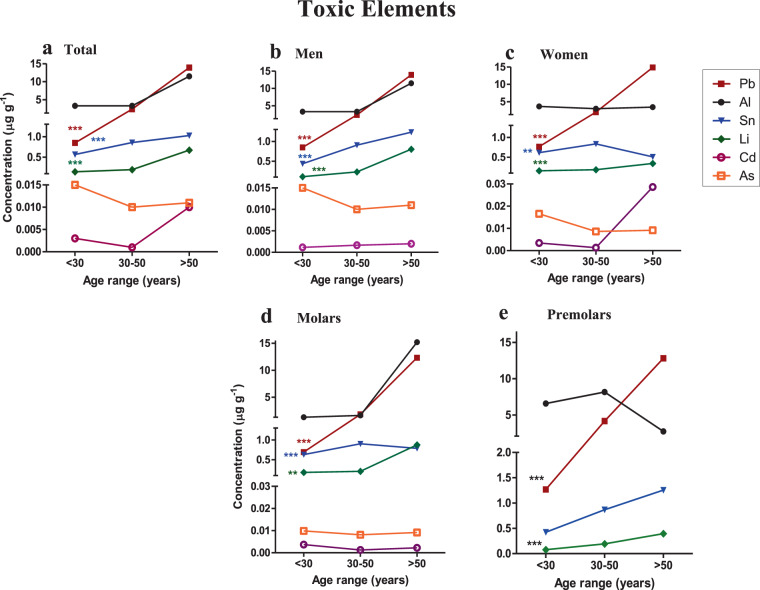
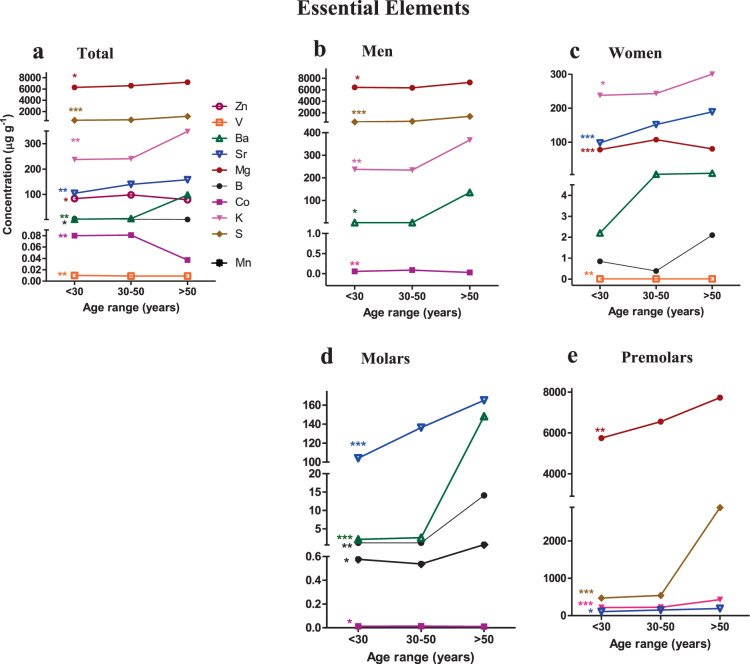
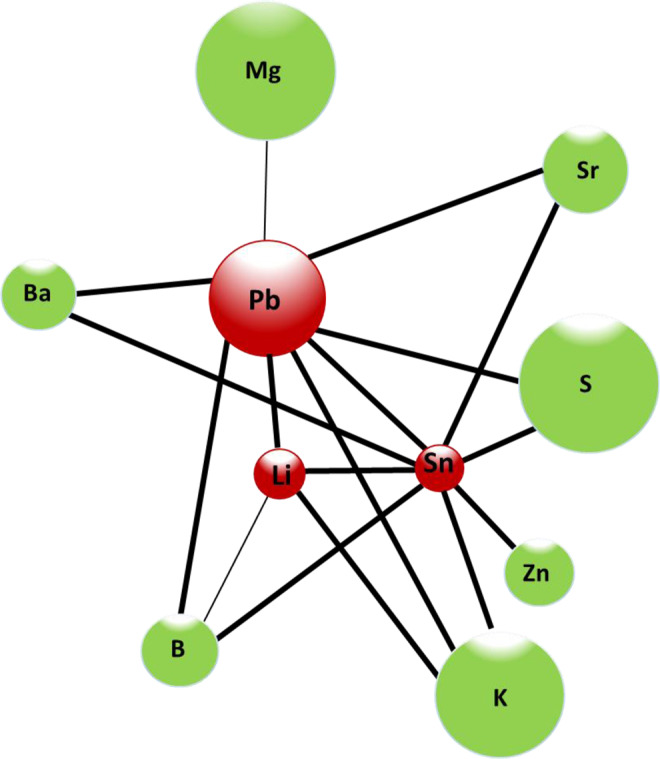
Teeth are a fundamental tool in forensic odontology for identification in a legal context of those individuals who cannot be identified visually or by other means. Dentine presents physiological exchanges of in trace elements after a period of mineralization and several factors can affect its concentration. The aim of this study was to investigate the concentration of 25 trace elements in the coronal dentine according to sex and type of tooth to determine their relationship with age. A total of 25 trace elements were analyzed in 150 human coronal dentine. Teeth were classified into three age groups, sex and tooth type. The trace elements were grouped as potentially toxic or essential. Inductively Coupled Plasma-Mass Spectrometry and Atomic Emission Spectroscopy were used. The toxic and essential elements were detected in the following order of concentration: Al > Pb > Sn > Li > As > Cd and Ca > P > Mg > Na > S > K > Sr > Zn > Ba > Fe > B > Ti > Mn > Cr > Ni > Cu > Co > Se > V. Our findings show an increase in the concentration of toxic (Pb, Li and Sn) and essential (B, Ba, K, Sr, S and Mg) elements in coronal dentin related to the age of the teeth, regardless of sex. The concentrations of Pb and K in dentin of molars and premolars are the elements that best relate their variations with age. In view of our results, the analysis of these trace elements in dentin in combination with other types of techniques could be established as an element to consider in age dating studies in different forensic situations.
牙齿是法医牙科学在法律背景下识别那些无法通过肉眼或其他方式识别的个体的基本工具。牙本质在矿化后会进行微量元素的生理交换,并且有几个因素会影响其浓度。本研究旨在调查 25 种微量元素在牙本质冠状部的浓度,根据性别和牙齿类型,确定它们与年龄的关系。总共分析了 150 个人类牙本质冠状部的 25 种微量元素。牙齿被分为三个年龄组、性别和牙齿类型。微量元素被分为潜在有毒或必需元素。使用电感耦合等离子体质谱法和原子发射光谱法进行分析。有毒和必需元素的浓度顺序为:Al > Pb > Sn > Li > As > Cd 和 Ca > P > Mg > Na > S > K > Sr > Zn > Ba > Fe > B > Ti > Mn > Cr > Ni > Cu > Co > Se > V。我们的研究结果表明,无论性别如何,与牙齿年龄相关的牙本质中有毒(Pb、Li 和 Sn)和必需(B、Ba、K、Sr、S 和 Mg)元素的浓度均增加。磨牙和前磨牙牙本质中 Pb 和 K 的浓度是与其年龄变化关系最密切的元素。鉴于我们的结果,牙本质中这些微量元素的分析与其他类型的技术相结合,可以作为不同法医情况下年龄测定研究中考虑的因素。