Norwegian Centre for E-health Research, University Hospital of North Norway, 9019, Tromsø, Norway.
Department of Community Medicine, Faculty of Health Sciences, UiT The Arctic University of Norway, 9037, Tromsø, Norway.
BMC Med Inform Decis Mak. 2020 Jun 22;20(1):116. doi: 10.1186/s12911-020-01147-5.
Learning from routine healthcare data is important for the improvement of the quality of care. Providing feedback on clinicians' performance in comparison to their peers has been shown to be more efficient for quality improvements. However, the current methods for providing feedback do not fully address the privacy concerns of stakeholders.
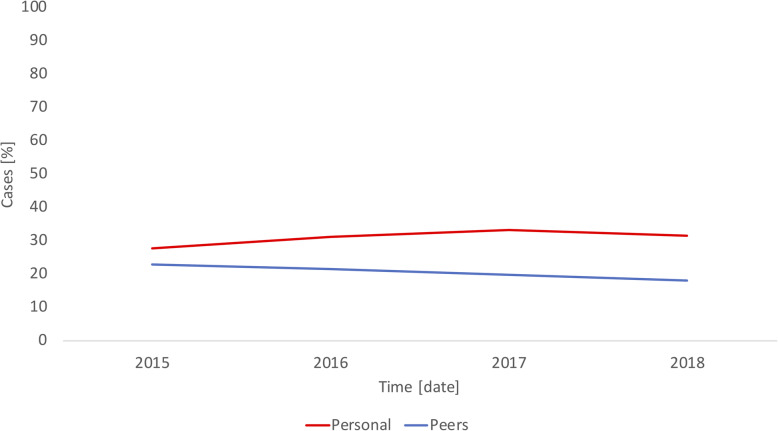
The paper proposes a distributed architecture for providing feedback to clinicians on their clinical performances while protecting their privacy. The indicators for the clinical performance of a clinician are computed within a healthcare institution based on pseudonymized data extracted from the electronic health record (EHR) system. Group-level indicators of clinicians across healthcare institutions are computed using privacy-preserving distributed data-mining techniques. A clinician receives feedback reports that compare his or her personal indicators with the aggregated indicators of the individual's peers. Indicators aggregated across different geographical levels are the basis for monitoring changes in the quality of care. The architecture feasibility was practically evaluated in three general practitioner (GP) offices in Norway that consist of about 20,245 patients. The architecture was applied for providing feedback reports to 21 GPs on their antibiotic prescriptions for selected respiratory tract infections (RTIs). Each GP received one feedback report that covered antibiotic prescriptions between 2015 and 2018, stratified yearly. We assessed the privacy protection and computation time of the architecture.
Our evaluation indicates that the proposed architecture is feasible for practical use and protects the privacy of the patients, clinicians, and healthcare institutions. The architecture also maintains the physical access control of healthcare institutions over the patient data. We sent a single feedback report to each of the 21 GPs. A total of 14,396 cases were diagnosed with the selected RTIs during the study period across the institutions. Of these cases, 2924 (20.3%) were treated with antibiotics, where 40.8% (1194) of the antibiotic prescriptions were narrow-spectrum antibiotics.
It is feasible to provide feedback to clinicians on their clinical performance in comparison to peers across healthcare institutions while protecting privacy. The architecture also enables monitoring changes in the quality of care following interventions.
从常规医疗保健数据中学习对于提高护理质量很重要。与同行相比,提供临床医生绩效反馈对于质量改进更为有效。然而,目前提供反馈的方法并没有完全解决利益相关者的隐私问题。
本文提出了一种分布式架构,用于在保护隐私的同时向临床医生提供其临床绩效反馈。临床医生的临床绩效指标是根据从电子健康记录(EHR)系统中提取的匿名化数据在医疗机构内计算的。使用隐私保护的分布式数据挖掘技术计算医疗机构之间的临床医生的组级指标。临床医生收到的反馈报告将其个人指标与同行的个体指标进行比较。不同地理水平上聚合的指标是监测护理质量变化的基础。该架构的可行性在挪威的三个全科医生(GP)办公室中进行了实际评估,这三个办公室共包含约 20245 名患者。该架构应用于为 21 名 GP 提供有关选定呼吸道感染(RTI)抗生素处方的反馈报告。每位 GP 都收到一份涵盖 2015 年至 2018 年的反馈报告,每年分层。我们评估了架构的隐私保护和计算时间。
我们的评估表明,所提出的架构可实际使用,并保护患者、临床医生和医疗机构的隐私。该架构还维护了医疗机构对患者数据的物理访问控制。我们向 21 名 GP 中的每一位都发送了一份反馈报告。在整个机构中,研究期间共有 14396 例被诊断出患有所选 RTI。其中,2924 例(20.3%)接受了抗生素治疗,其中 40.8%(1194)的抗生素处方为窄谱抗生素。
在保护隐私的同时,向临床医生提供与医疗机构内同行相比的临床绩效反馈是可行的。该架构还能够在干预后监测护理质量的变化。