García-Calderón Margarita, Pérez-Delgado Carmen M, Palove-Balang Peter, Betti Marco, Márquez Antonio J
Departamento de Bioquímica Vegetal y Biología Molecular, Facultad de Química, Universidad de Sevilla, Calle Profesor García González, 1, 41012-Sevilla, Spain.
Institute of Biology and Ecology, Faculty of Science, P.J. Šafárik University in Košice, Mánesova 23, SK-04001 Košice, Slovakia.
Plants (Basel). 2020 Jun 20;9(6):774. doi: 10.3390/plants9060774.
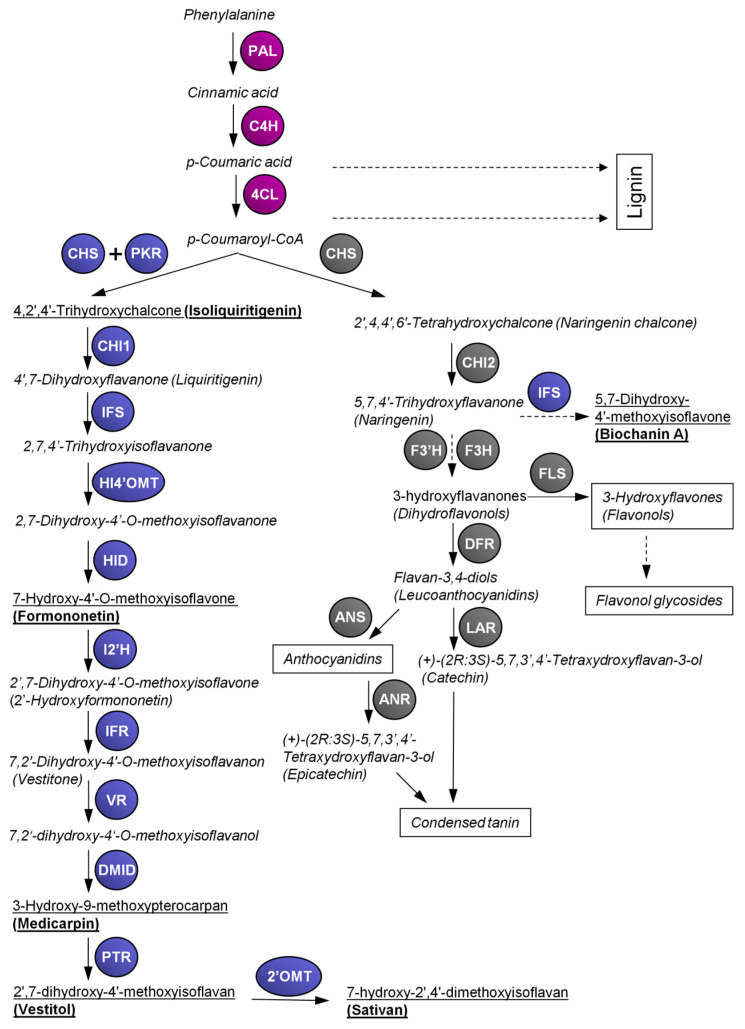
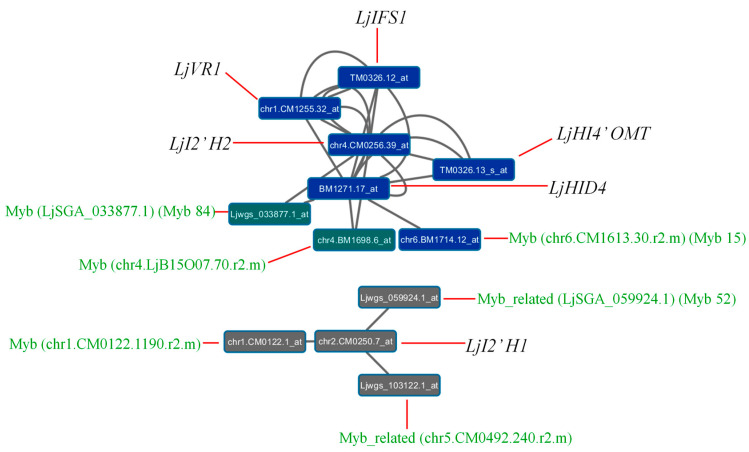
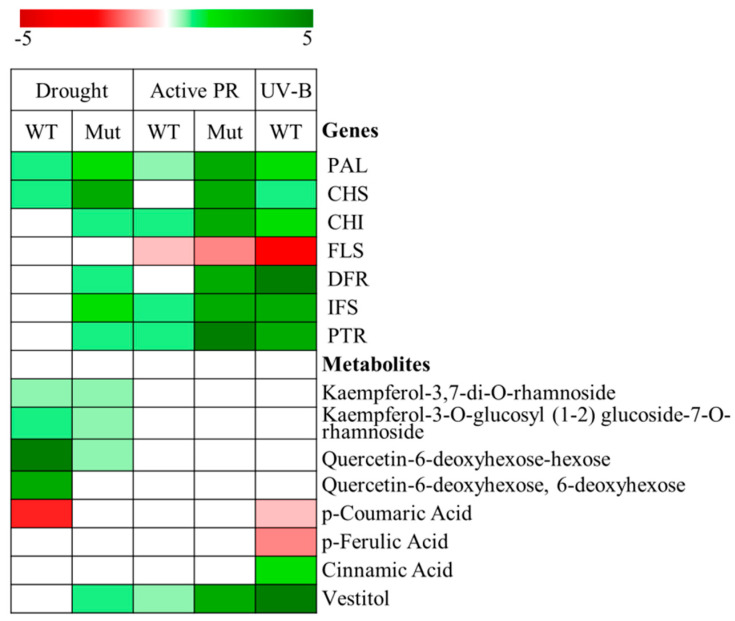
Phenylpropanoid metabolism represents an important metabolic pathway from which originates a wide number of secondary metabolites derived from phenylalanine or tyrosine, such as flavonoids and isoflavonoids, crucial molecules in plants implicated in a large number of biological processes. Therefore, various types of interconnection exist between different aspects of nitrogen metabolism and the biosynthesis of these compounds. For legumes, flavonoids and isoflavonoids are postulated to play pivotal roles in adaptation to their biological environments, both as defensive compounds (phytoalexins) and as chemical signals in symbiotic nitrogen fixation with rhizobia. In this paper, we summarize the recent progress made in the characterization of flavonoid and isoflavonoid biosynthetic pathways in the model legume (Regel) Larsen under different abiotic stress situations, such as drought, the impairment of photorespiration and UV-B irradiation. Emphasis is placed on results obtained using photorespiratory mutants deficient in glutamine synthetase. The results provide different types of evidence showing that an enhancement of isoflavonoid compared to standard flavonol metabolism frequently occurs in under abiotic stress conditions. The advance produced in the analysis of isoflavonoid regulatory proteins by the use of co-expression networks, particularly MYB transcription factors, is also described. The results obtained in plants can be also extrapolated to other cultivated legume species, such as soybean, of extraordinary agronomic importance with a high impact in feeding, oil production and human health.
苯丙烷类代谢是一条重要的代谢途径,由此产生了许多源自苯丙氨酸或酪氨酸的次生代谢产物,如类黄酮和异黄酮,这些都是植物中参与大量生物过程的关键分子。因此,氮代谢的不同方面与这些化合物的生物合成之间存在着各种类型的相互联系。对于豆科植物而言,类黄酮和异黄酮被认为在适应其生物环境中起着关键作用,既作为防御性化合物(植保素),又作为与根瘤菌共生固氮中的化学信号。在本文中,我们总结了模式豆科植物( Regel) Larsen在干旱、光呼吸受损和UV - B辐射等不同非生物胁迫情况下,类黄酮和异黄酮生物合成途径表征方面的最新进展。重点是使用谷氨酰胺合成酶缺陷的光呼吸突变体获得的结果。这些结果提供了不同类型的证据,表明在非生物胁迫条件下,与标准黄酮醇代谢相比,异黄酮的合成通常会增强。还描述了通过共表达网络,特别是MYB转录因子,在异黄酮调节蛋白分析方面取得的进展。在 植物中获得的结果也可以外推到其他具有重要农艺价值的栽培豆科植物物种,如大豆,其在饲料、油脂生产和人类健康方面具有重大影响。