Committee on Microbiology, The University of Chicago, Chicago, Illinois, USA.
Department of Pathology, The University of Chicago, Chicago, Illinois, USA.
J Virol. 2020 Aug 17;94(17). doi: 10.1128/JVI.00837-20.
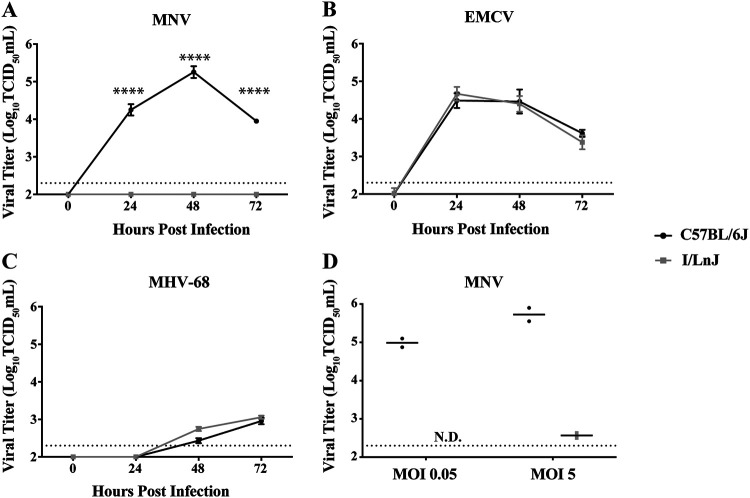
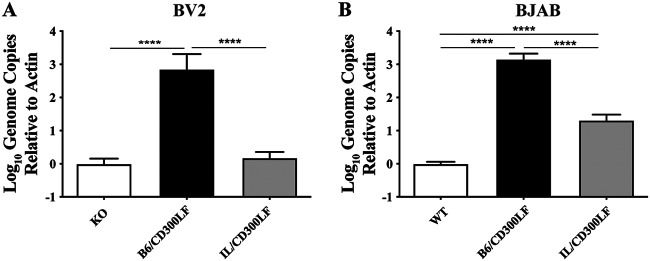
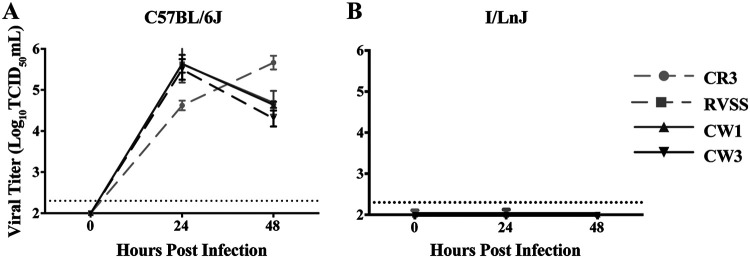
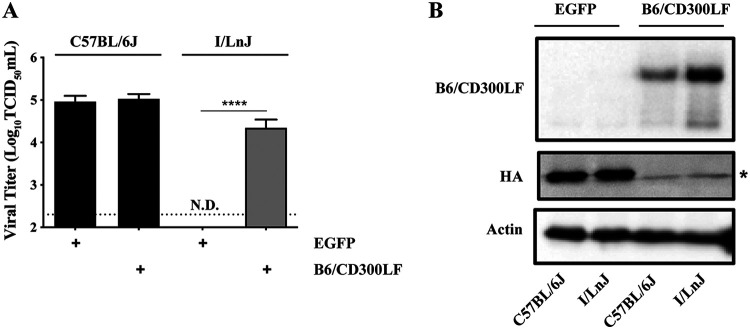
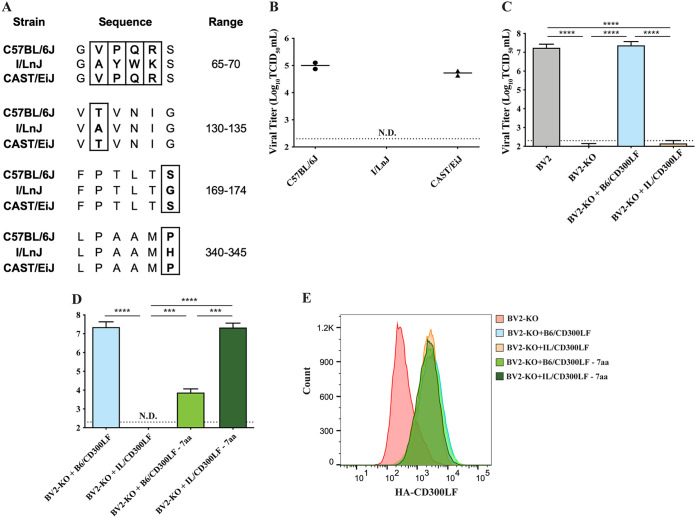
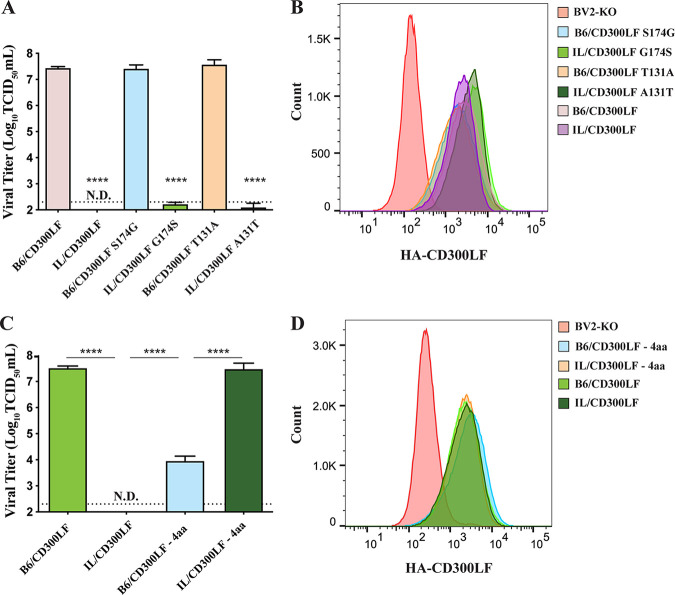
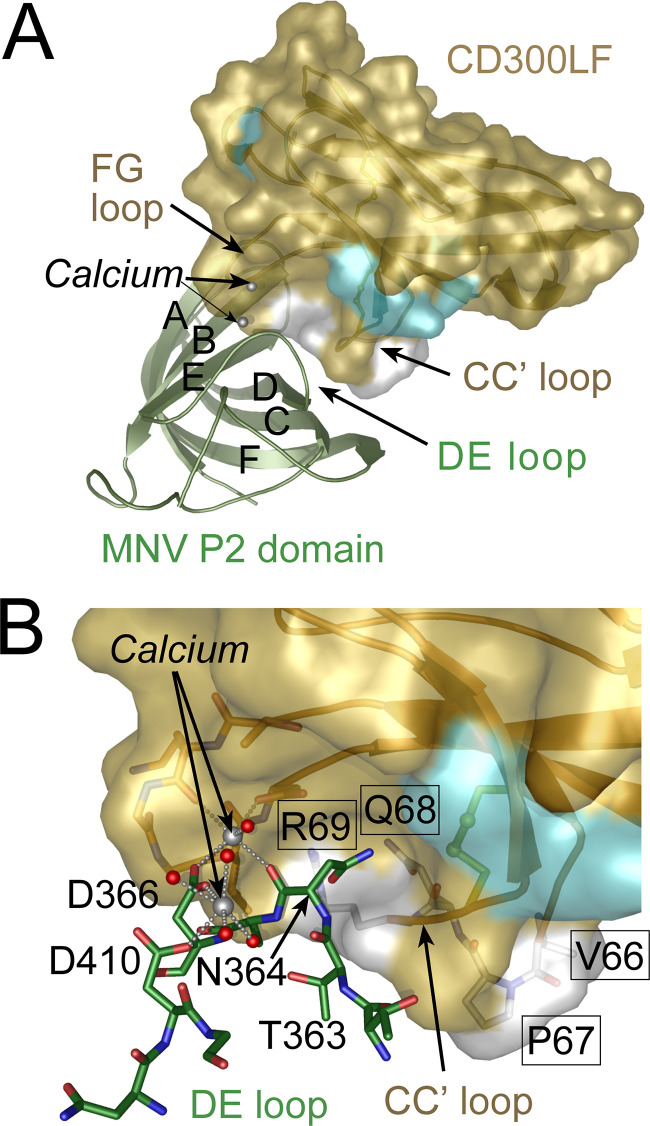
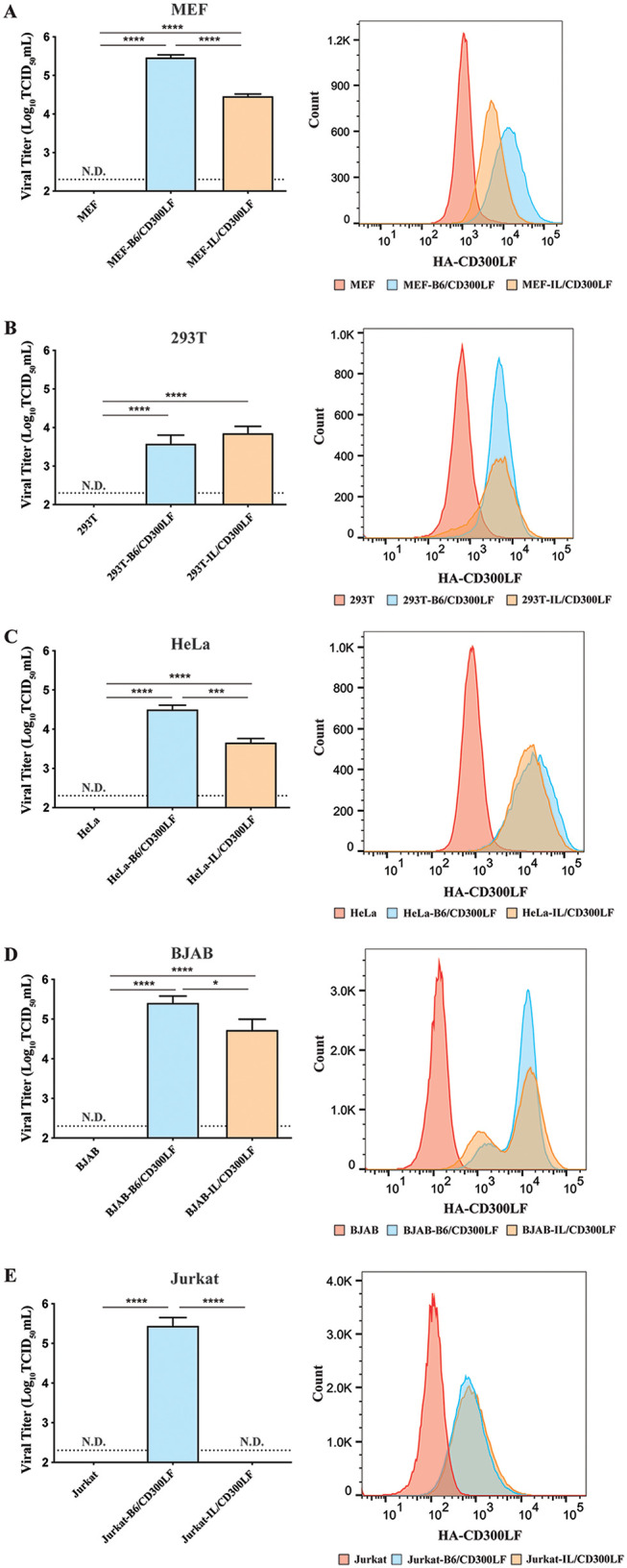
Human norovirus is the leading cause of gastroenteritis worldwide, yet basic questions about its life cycle remain unanswered due to an historical lack of robust experimental systems. Recent studies on the closely related murine norovirus (MNV) have identified CD300LF as an indispensable entry factor for MNV. We compared the MNV susceptibilities of cells from different mouse strains and identified polymorphisms in murine CD300LF which are critical for its function as an MNV receptor. Bone marrow-derived macrophages (BMDMs) from I/LnJ mice were resistant to infection from multiple MNV strains which readily infect BMDMs from C57BL/6J mice. The resistance of I/LnJ BMDMs was specific to MNV, since the cells supported infection of other viruses comparably to C57BL/6J BMDMs. Transduction of I/LnJ BMDMs with C57BL/6J CD300LF made the cells permissible to MNV infection, suggesting that the cause of resistance lies in the entry step of MNV infection. In fact, we mapped this phenotype to a 4-amino-acid difference at the CC' loop of CD300LF; swapping of these amino acids between C57BL/6J and I/LnJ CD300LF proteins made the mutant C57BL/6J CD300LF functionally impaired and the corresponding mutant of I/LnJ CD300LF functional as an MNV entry factor. Surprisingly, expression of the I/LnJ CD300LF in other cell types made the cells infectible by MNV, even though the I/LnJ allele did not function as an MNV receptor in macrophage-like cells. Correspondingly, I/LnJ CD300LF bound MNV virions in permissive cells but not in nonpermissive cells. Collectively, our data suggest the existence of a cell type-specific modifier of MNV entry. MNV is a prevalent model system for studying human norovirus, which is the leading cause of gastroenteritis worldwide and thus a sizeable public health burden. Elucidating mechanisms underlying susceptibility of host cells to MNV infection can lead to insights on the roles that specific cell types play during norovirus pathogenesis. Here, we show that different alleles of the proteinaceous receptor for MNV, CD300LF, function in a cell type-dependent manner. In contrast to the C57BL/6J allele, which functions as an MNV entry factor in all tested cell types, including human cells, I/LnJ CD300LF does not function as an MNV entry factor in macrophage-like cells but does allow MNV entry in other cell types. Together, these observations indicate the existence of cell type-specific modifiers of CD300LF-dependent MNV entry.
人类诺如病毒是全世界范围内导致肠胃炎的主要病原体,但由于历史上缺乏稳健的实验系统,其生命周期的基本问题仍未得到解答。最近对密切相关的鼠诺如病毒(MNV)的研究确定了 CD300LF 是 MNV 的必需进入因子。我们比较了来自不同小鼠品系的细胞对 MNV 的易感性,并鉴定了作为 MNV 受体的关键的鼠 CD300LF 多态性。来自 I/LnJ 小鼠的骨髓来源的巨噬细胞(BMDMs)对多种 MNV 株的感染具有抗性,而这些株很容易感染来自 C57BL/6J 小鼠的 BMDMs。I/LnJ BMDMs 的抗性是特异性的 MNV,因为这些细胞对其他病毒的感染与 C57BL/6J BMDMs 相比具有可比性。用 C57BL/6J CD300LF 转导 I/LnJ BMDMs 可使细胞对 MNV 感染具有允许性,表明抗性的原因在于 MNV 感染的进入步骤。事实上,我们将这种表型映射到 CD300LF 的 CC'环中的 4 个氨基酸差异上;在 C57BL/6J 和 I/LnJ CD300LF 蛋白之间交换这些氨基酸,使突变的 C57BL/6J CD300LF 功能受损,而相应的 I/LnJ CD300LF 突变体则作为 MNV 进入因子发挥功能。令人惊讶的是,即使在巨噬样细胞中 I/LnJ 等位基因不能作为 MNV 受体发挥作用,在其他细胞类型中表达 I/LnJ CD300LF 也可使细胞对 MNV 感染具有易感性。相应地,I/LnJ CD300LF 在允许的细胞中结合 MNV 病毒粒子,但在不允许的细胞中不结合。总的来说,我们的数据表明存在 MNV 进入的细胞类型特异性修饰因子。MNV 是研究人类诺如病毒的流行模型系统,人类诺如病毒是全世界范围内肠胃炎的主要病原体,因此对公共卫生造成了相当大的负担。阐明宿主细胞对 MNV 感染的易感性的机制可以为诺如病毒发病机制中特定细胞类型所起的作用提供见解。在这里,我们表明 MNV 的蛋白受体 CD300LF 的不同等位基因以细胞类型依赖的方式发挥作用。与在所有测试的细胞类型(包括人类细胞)中作为 MNV 进入因子的 C57BL/6J 等位基因不同,I/LnJ CD300LF 不作为巨噬样细胞中的 MNV 进入因子发挥作用,但允许 MNV 在其他细胞类型中进入。这些观察结果共同表明存在 CD300LF 依赖性 MNV 进入的细胞类型特异性修饰因子。