Chaves Arthur R, Devasahayam Augustine J, Riemenschneider Morten, Pretty Ryan W, Ploughman Michelle
Recovery and Performance Laboratory, Faculty of Medicine, L. A. Miller Centre, Memorial University of Newfoundland, St. John's, NL, Canada.
Section for Sports Science, Department of Public Health, Aarhus University, Aarhus, Denmark.
Front Neurol. 2020 Jun 4;11:422. doi: 10.3389/fneur.2020.00422. eCollection 2020.
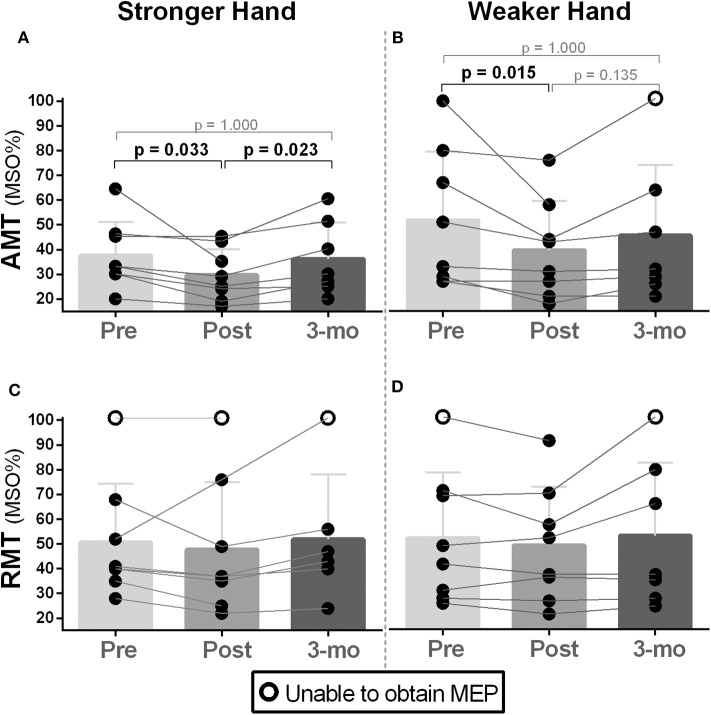
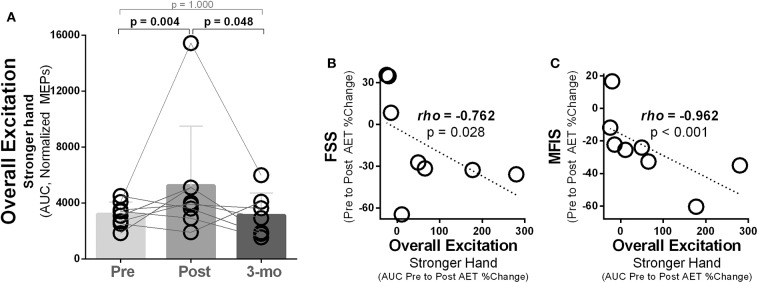
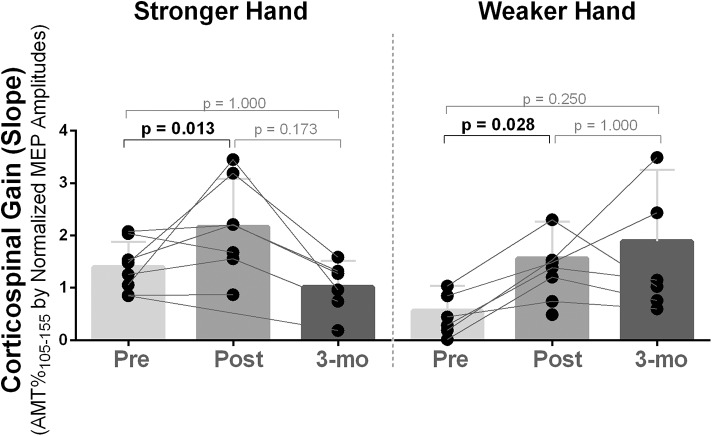
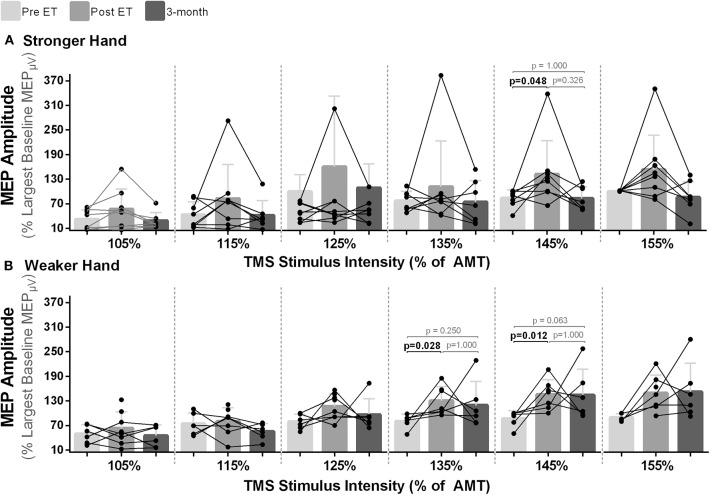
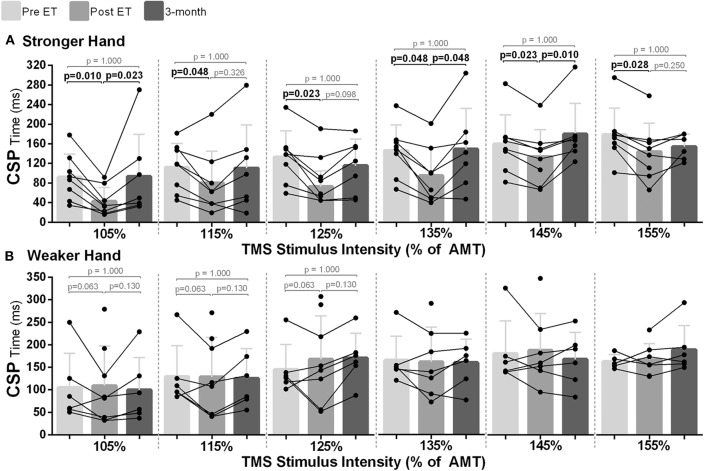
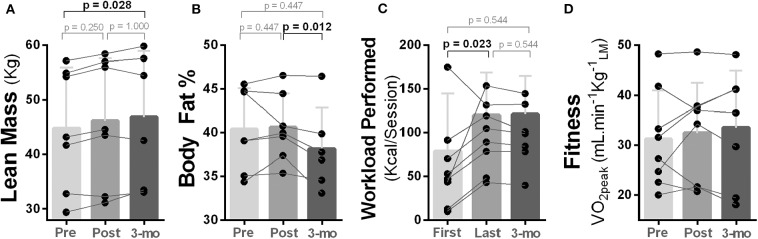
Inflammatory lesions and neurodegeneration lead to motor, cognitive, and sensory impairments in people with multiple sclerosis (MS). Accumulation of disability is at least partially due to diminished capacity for neuroplasticity within the central nervous system. Aerobic exercise is a potentially important intervention to enhance neuroplasticity since it causes upregulation of neurotrophins and enhances corticospinal excitability, which can be probed using single-pulse transcranial magnetic stimulation (TMS). Whether people with progressive MS who have accumulated substantial disability could benefit from walking rehabilitative training to enhance neuroplasticity is not known. We aimed to determine whether 10 weeks of task-specific walking training would affect corticospinal excitability over time (pre, post, and 3-month follow-up) among people with progressive MS who required walking aids. Eight people with progressive MS (seven female; 29-74 years old) with an Expanded Disability Status Scale of 6-6.5 underwent harness-supported treadmill walking training in a temperature controlled room at 16°C (10 weeks; three times/week; 40 min at 40-65% heart rate reserve). After training, there was significantly higher corticospinal excitability in both brain hemispheres, reductions in TMS active motor thresholds, and increases in motor-evoked potential amplitudes and slope of the recruitment curve (REC). Decreased intracortical inhibition (shorter cortical silent period) after training was noted in the hemisphere corresponding to the stronger hand only. These effects were not sustained at follow-up. There was a significant relationship between increases in corticospinal excitability (REC, area under the curve) in the hemisphere corresponding to the stronger hand and lessening of both intensity and impact of fatigue on activities of daily living (Fatigue Severity Scale and Modified Fatigue Impact Scale, respectively). Our pilot results support that vigorous treadmill training can potentially improve neuroplastic potential and mitigate symptoms of the disease even among people who have accumulated substantial disability due to MS.
炎症性病变和神经退行性变会导致多发性硬化症(MS)患者出现运动、认知和感觉障碍。残疾的累积至少部分归因于中枢神经系统内神经可塑性能力的下降。有氧运动是增强神经可塑性的一种潜在重要干预措施,因为它会导致神经营养因子上调并增强皮质脊髓兴奋性,这可以通过单脉冲经颅磁刺激(TMS)进行检测。尚不清楚累积了严重残疾的进展型MS患者是否能从步行康复训练中受益以增强神经可塑性。我们旨在确定10周的特定任务步行训练是否会随着时间推移(训练前、训练后和3个月随访)影响需要使用助行器的进展型MS患者的皮质脊髓兴奋性。8名进展型MS患者(7名女性;年龄29 - 74岁),扩展残疾状态量表评分为6 - 6.5,在温度控制为16°C的房间内接受了吊带辅助跑步机步行训练(10周;每周3次;心率储备40 - 65%时进行40分钟)。训练后,两个脑半球的皮质脊髓兴奋性均显著升高,TMS主动运动阈值降低,运动诱发电位幅度和募集曲线(REC)斜率增加。仅在优势手对应的半球中观察到训练后皮质内抑制减少(皮质静息期缩短)。这些效应在随访时未持续存在。优势手对应的半球中皮质脊髓兴奋性增加(REC、曲线下面积)与疲劳对日常生活活动的强度和影响减轻(分别为疲劳严重程度量表和改良疲劳影响量表)之间存在显著关系。我们的初步结果支持,即使对于因MS累积了严重残疾的患者,剧烈的跑步机训练也可能改善神经可塑性潜力并减轻疾病症状。