Mittal Parul, Saxena Rituja, Gupta Atul, Mahajan Shruti, Sharma Vineet K
Metagenomics and Systems Biology Group, Department of Biological Sciences, Indian Institute of Science Education and Research Bhopal, Bhopal, India.
Van Vihar National Park, Bhopal, India.
Front Microbiol. 2020 Jun 4;11:1012. doi: 10.3389/fmicb.2020.01012. eCollection 2020.
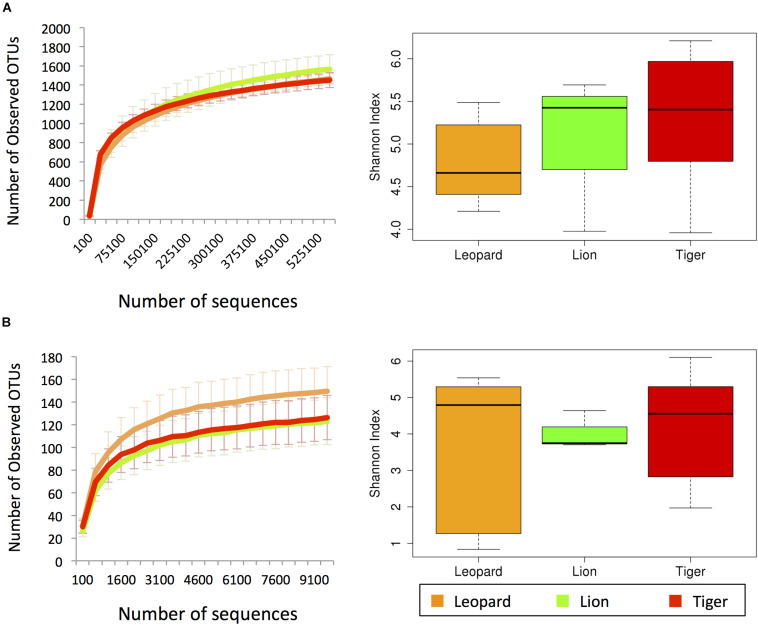
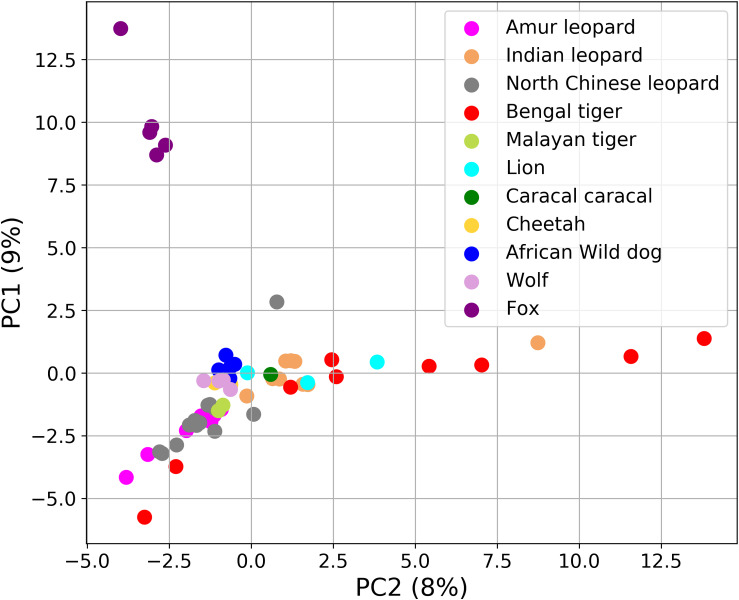
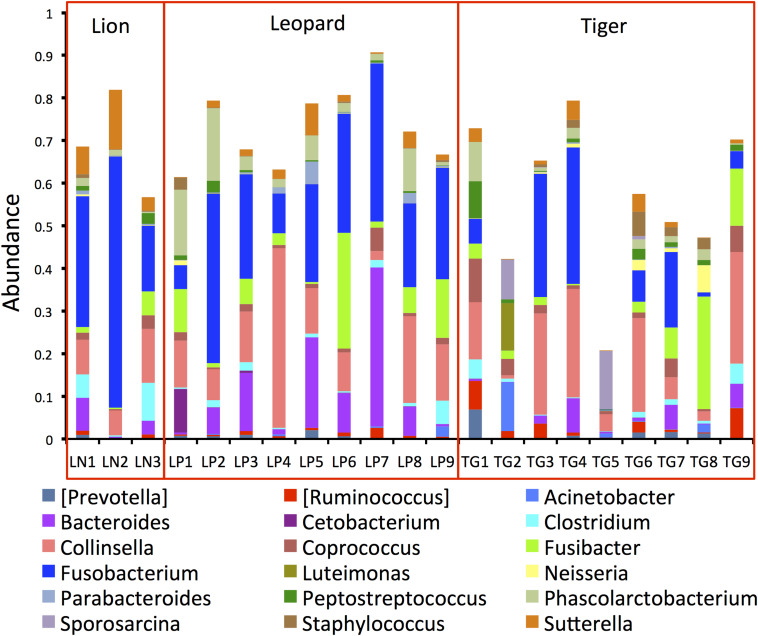
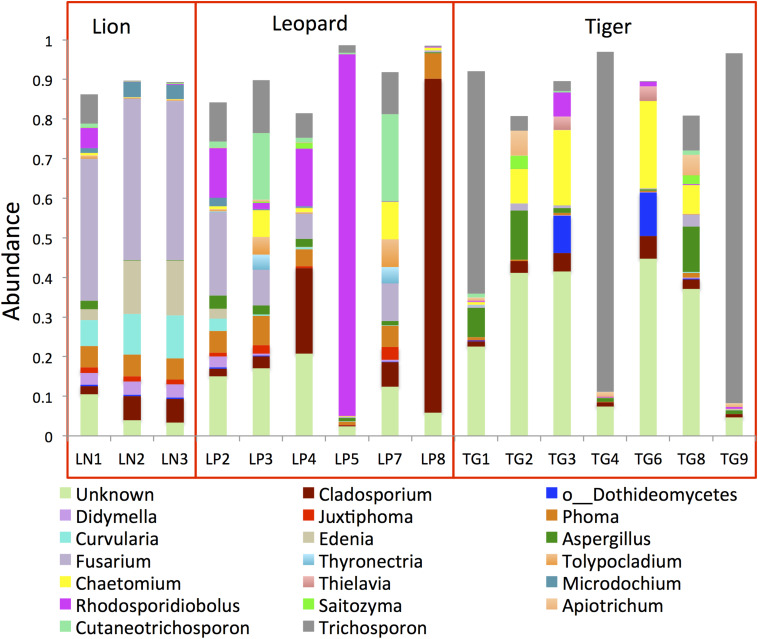
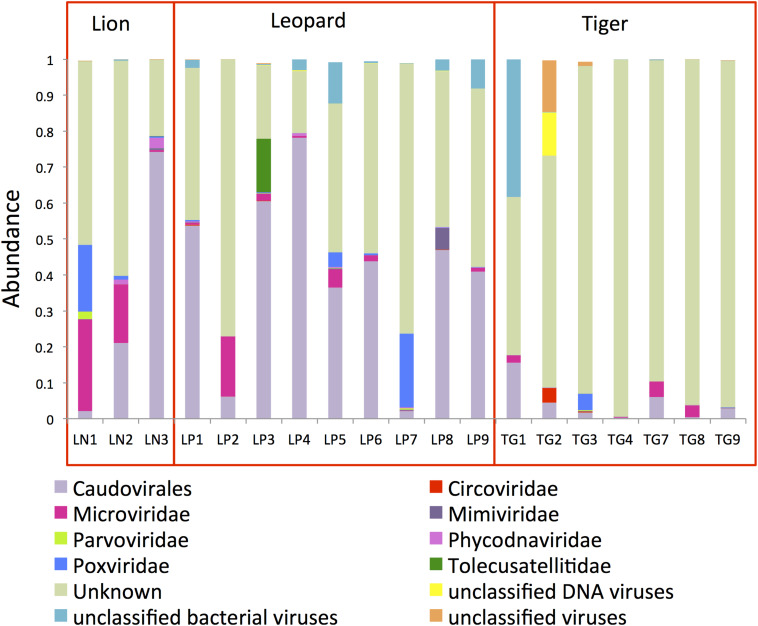
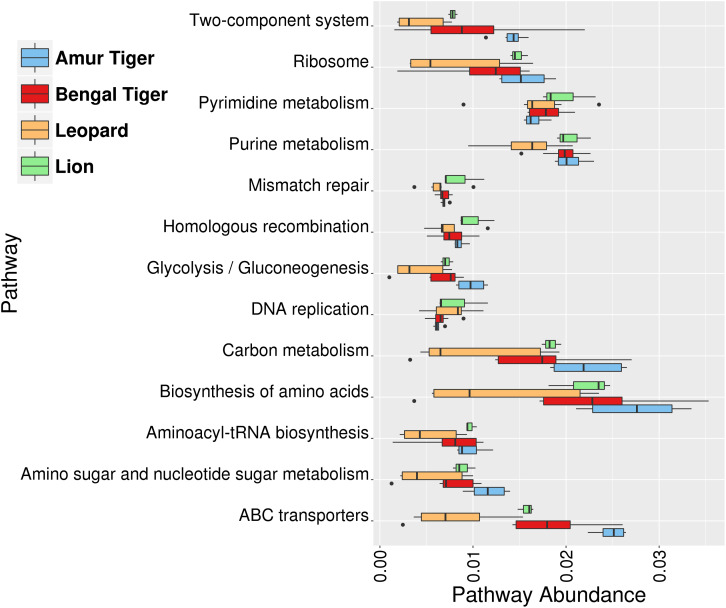
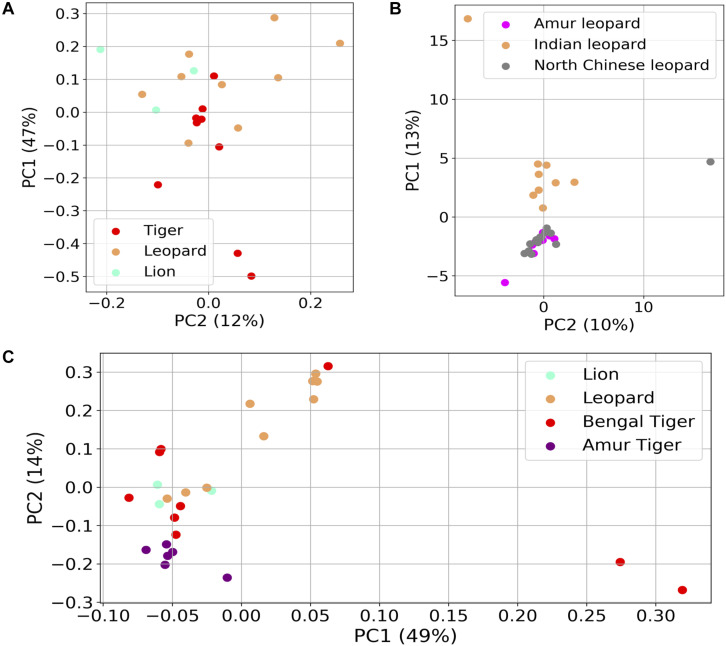
Majority of metagenomic studies in the last decade have focused on revealing the gut microbiomes of humans, rodents, and ruminants; however, the gut microbiome and genic information (gene catalog) of large felids such as species are largely unknown to date. In this study, the gut bacterial, fungal, and viral metagenomic composition was assessed from three species (lion, leopard, and tiger) of Indian origin, which were consuming the same diet and belonged to the same geographical location. A non-redundant bacterial gene catalog of the gut consisting of 1,507,035 putative genes was constructed from 27 individuals, which revealed a higher abundance of purine metabolism genes correlating with their purine-rich dietary intake. Analysis with Carbohydrate Active enZyme (CAZy) and MEROPS databases identified enrichment of glycoside hydrolases (GHs), glycoside-transferases, and collagenases in the gut, which are important for nutrient acquisition from animal biomass. The bacterial, fungal, and viral community analysis provided the first comprehensive insights into the -specific microbial community. The gene catalog and the largest comparative study of the gut bacterial composition of 68 individuals of Carnivora species from different geographical locations and diet underscore the role of diet and geography in shaping the gut microbiome, which is significant for the health and conservation management of these highly endangered species.
在过去十年中,大多数宏基因组学研究都集中在揭示人类、啮齿动物和反刍动物的肠道微生物群;然而,迄今为止,大型猫科动物(如该物种)的肠道微生物群和基因信息(基因目录)在很大程度上仍不为人知。在本研究中,对来自印度、食用相同饮食且属于同一地理位置的三种大型猫科动物(狮子、豹和老虎)的肠道细菌、真菌和病毒宏基因组组成进行了评估。从27个个体构建了一个由1,507,035个推定基因组成的非冗余肠道细菌基因目录,该目录显示与它们富含嘌呤的饮食摄入相关的嘌呤代谢基因丰度更高。通过碳水化合物活性酶(CAZy)和MEROPS数据库分析,发现肠道中糖苷水解酶(GHs)、糖苷转移酶和胶原酶富集,这些酶对于从动物生物质中获取营养很重要。细菌、真菌和病毒群落分析首次全面深入了解了大型猫科动物特定的微生物群落。该基因目录以及对来自不同地理位置和饮食的68种食肉动物肠道细菌组成的最大规模比较研究强调了饮食和地理位置在塑造大型猫科动物肠道微生物群中的作用,这对于这些高度濒危物种的健康和保护管理具有重要意义。