
用于二氧化碳加氢的负载型碳化钼和氮化钼催化剂
Supported Molybdenum Carbide and Nitride Catalysts for Carbon Dioxide Hydrogenation.
作者信息
Abou Hamdan Marwa, Nassereddine Abdallah, Checa Ruben, Jahjah Mohamad, Pinel Catherine, Piccolo Laurent, Perret Noémie
机构信息
Univ Lyon, Université Claude Bernard Lyon 1, CNRS, IRCELYON, Villeurbanne, France.
LCIO, Laboratoire de Chimie de Coordination Inorganique et Organométallique, Université Libanaise- Faculté des Sciences I, Beyrouth, Lebanon.
出版信息
Front Chem. 2020 Jun 9;8:452. doi: 10.3389/fchem.2020.00452. eCollection 2020.
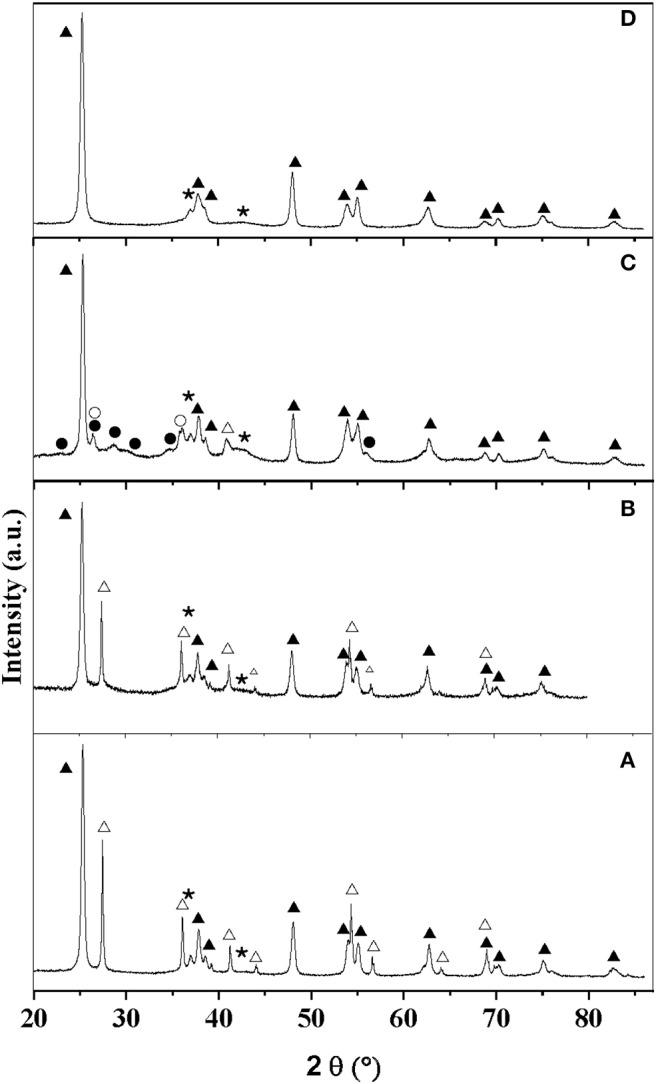
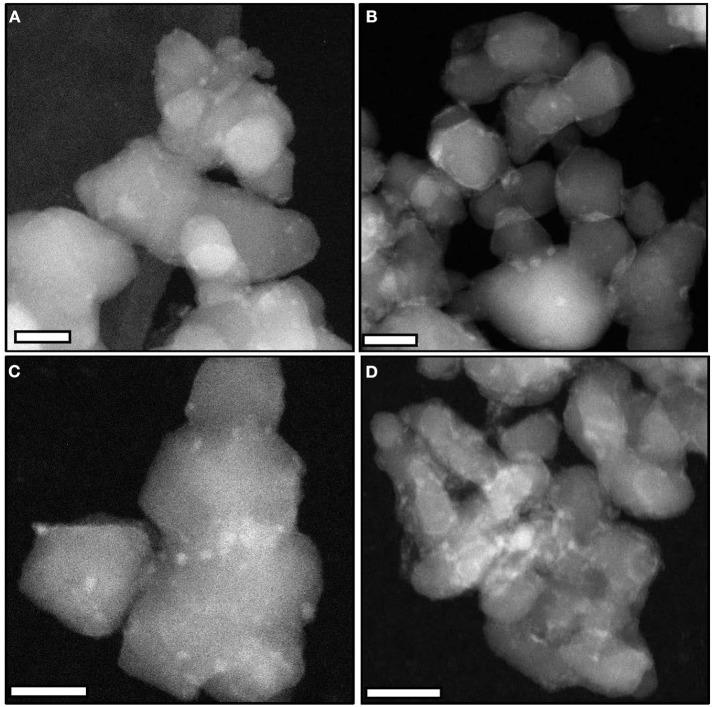
Catalysts based on molybdenum carbide or nitride nanoparticles (2-5 nm) supported on titania were prepared by wet impregnation followed by a thermal treatment under alkane (methane or ethane)/hydrogen or nitrogen/hydrogen mixture, respectively. The samples were characterized by elemental analysis, volumetric adsorption of nitrogen, X-ray diffraction, and aberration-corrected transmission electron microscopy. They were evaluated for the hydrogenation of CO in the 2-3 MPa and 200-300°C ranges using a gas-phase flow fixed bed reactor. CO, methane, methanol, and ethane (in fraction-decreasing order) were formed on carbides, whereas CO, methanol, and methane were formed on nitrides. The carbide and nitride phase stoichiometries were tuned by varying the preparation conditions, leading to C/Mo and N/Mo atomic ratios of 0.2-1.8 and 0.5-0.7, respectively. The carbide activity increased for lower carburizing alkane concentration and temperature, i.e., lower C/Mo ratio. Enhanced carbide performances were obtained with pure anatase titania support as compared to P25 (anatase/rutile) titania or zirconia, with a methanol selectivity up to 11% at 250°C. The nitride catalysts appeared less active but reached a methanol selectivity of 16% at 250°C.
通过湿浸渍法制备了负载在二氧化钛上的碳化钼或氮化钼纳米颗粒(2 - 5纳米)催化剂,随后分别在烷烃(甲烷或乙烷)/氢气或氮气/氢气混合物中进行热处理。通过元素分析、氮气的体积吸附、X射线衍射和像差校正透射电子显微镜对样品进行了表征。使用气相流动固定床反应器在2 - 3兆帕和200 - 300℃范围内对它们进行了一氧化碳加氢评估。在碳化物上生成了一氧化碳、甲烷、甲醇和乙烷(按分数递减顺序),而在氮化物上生成了一氧化碳、甲醇和甲烷。通过改变制备条件来调整碳化物和氮化物相的化学计量比,使得碳/钼和氮/钼原子比分别为0.2 - 1.8和0.5 - 0.7。对于较低的渗碳烷烃浓度和温度,即较低的碳/钼比,碳化物活性增加。与P25(锐钛矿/金红石)二氧化钛或氧化锆相比,使用纯锐钛矿二氧化钛载体可获得更高的碳化物性能,在250℃时甲醇选择性高达11%。氮化物催化剂活性较低,但在250℃时甲醇选择性达到16%。



 Zotero 插件