Guo Gangqiang, Wang Huijing, Shi Xinyu, Ye Lele, Yan Kejing, Chen Zhiyuan, Zhang Huidi, Jin Zibing, Xue Xiangyang
School of Life Sciences and Technology, Tongji University, Shanghai, China.
Department of Microbiology and Immunology, Institute of Molecular Virology and Immunology, Institute of Tropical Medicine, School of Basic Medical Sciences, Wenzhou Medical University, Wenzhou, China.
Front Cell Dev Biol. 2020 Jun 5;8:430. doi: 10.3389/fcell.2020.00430. eCollection 2020.
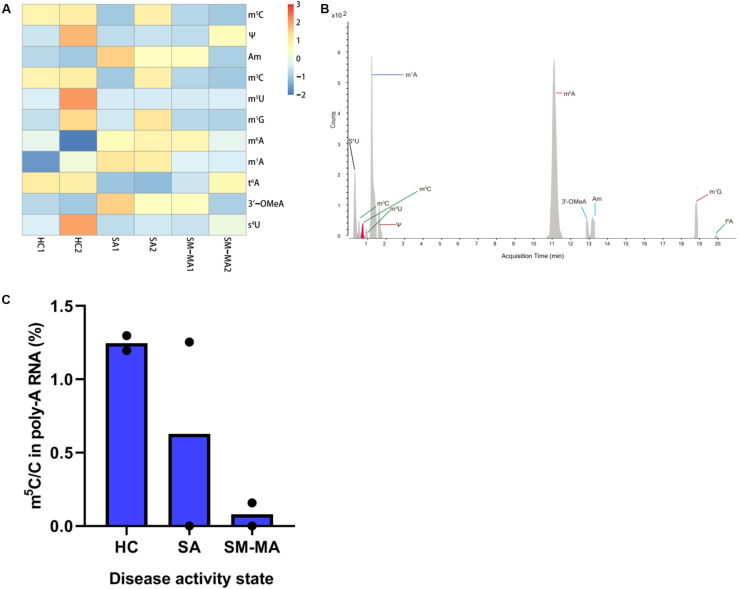
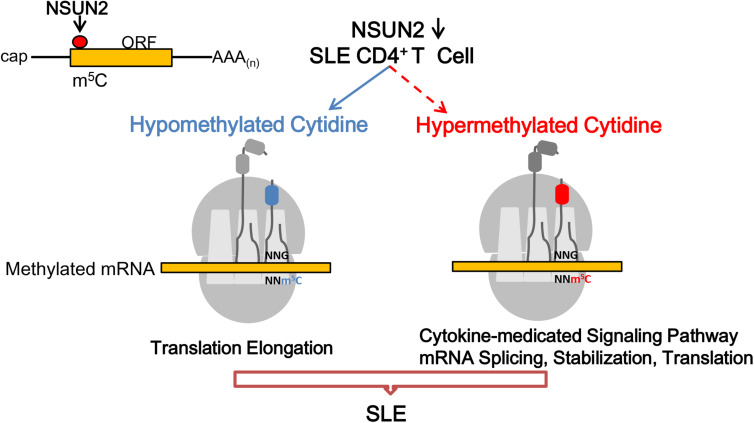
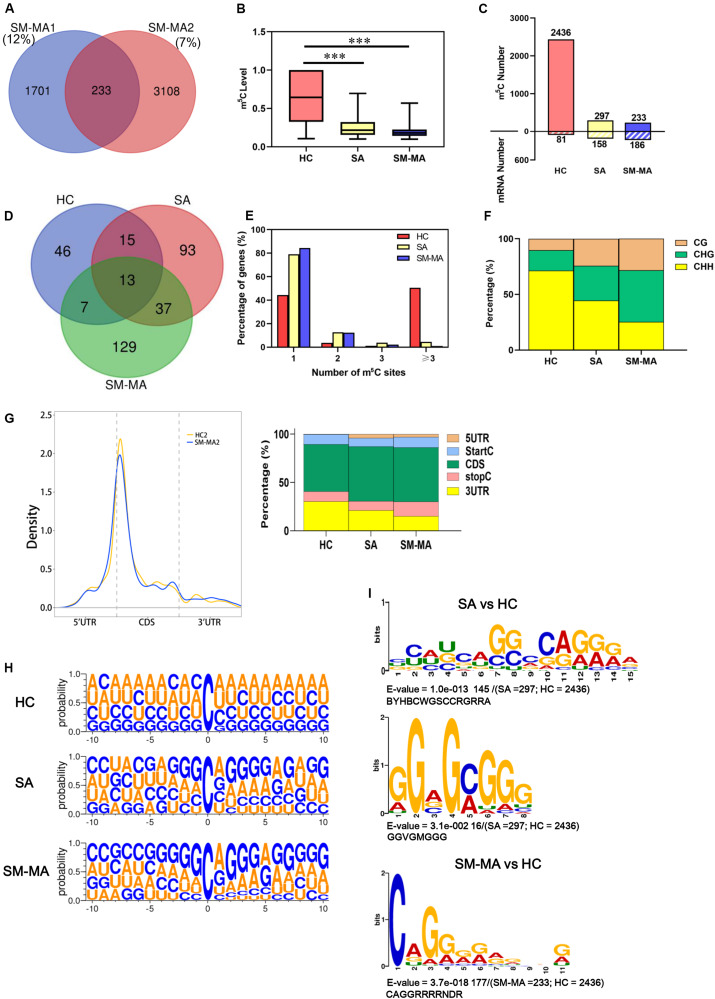
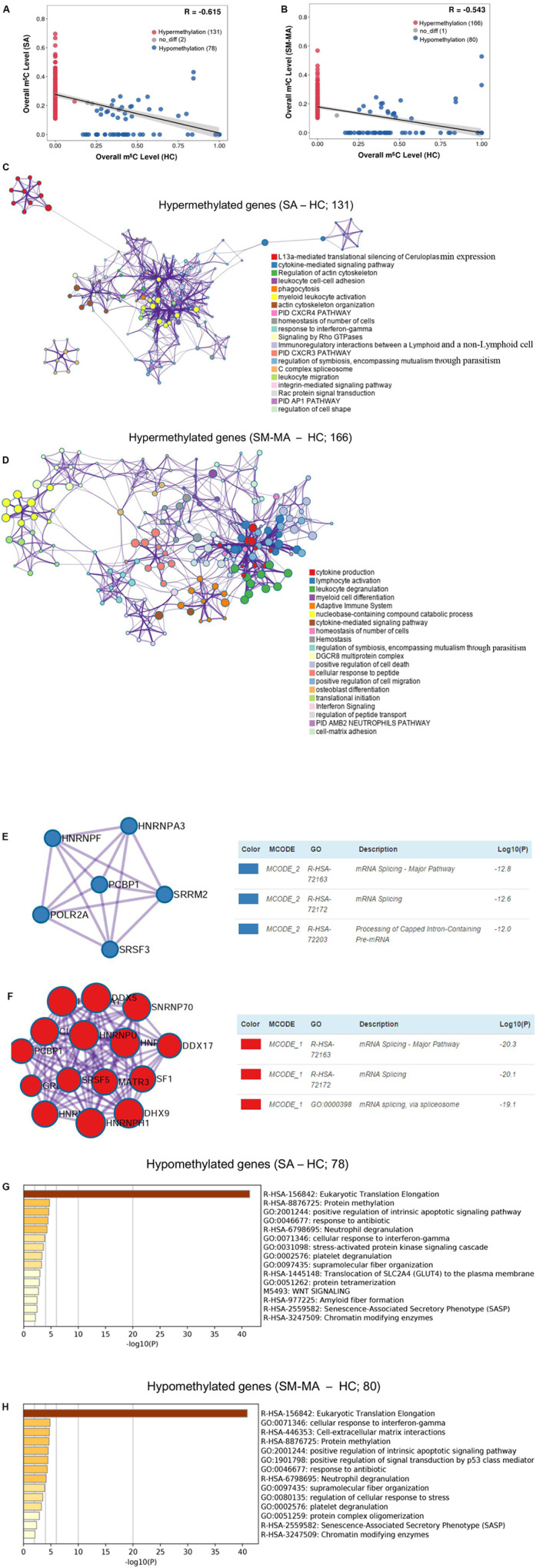
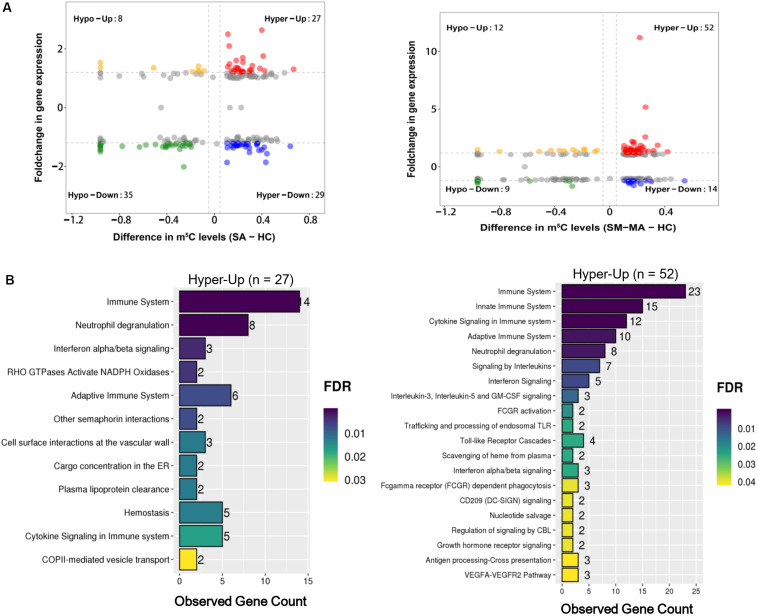
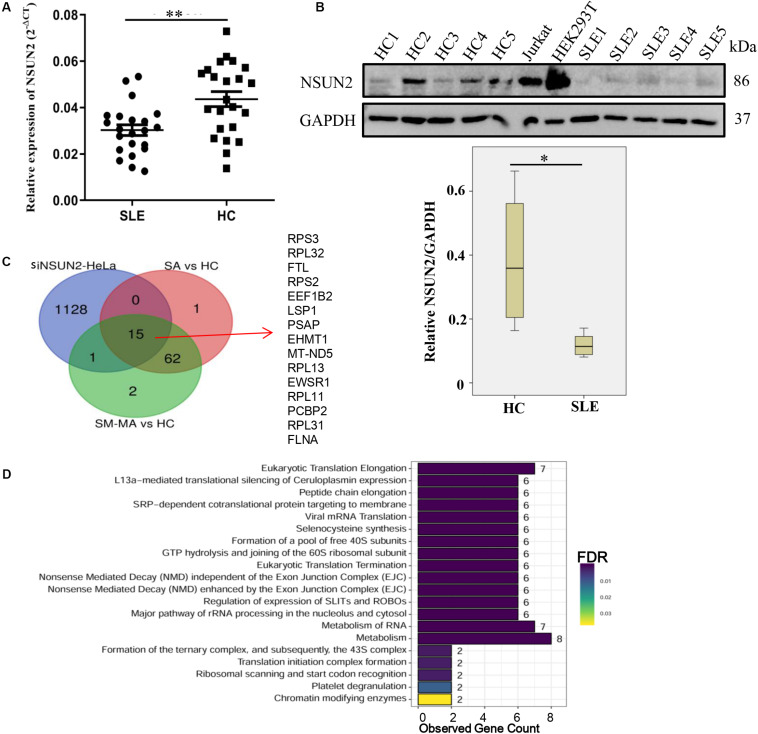
Epigenetic processes including RNA methylation, post-translational modifications, and non-coding RNA expression have been associated with the heritable risks of systemic lupus erythematosus (SLE). In this study, we aimed to explore the dysregulated expression of 5-methylcytosine (mC) in CD4 T cells from patients with SLE and the potential function of affected mRNAs in SLE pathogenesis. mRNA methylation profiles were ascertained through chromatography-coupled triple quadrupole mass spectrometry in CD4 T cells from two pools of patients with SLE exhibiting stable activity, two pools with moderate-to-major activity, and two pools of healthy controls (HCs). Simultaneously, mRNA methylation profiles and expression profiling were performed using RNA-Bis-Seq and RNA-Seq, respectively. Integrated mRNA methylation and mRNA expression bioinformatics analysis was comprehensively performed. mRNA methyltransferase NSUN2 expression was validated in CD4 T cells from 27 patients with SLE and 28 HCs using real-time polymerase chain reaction and western blot analyses. Hypomethylated-mRNA profiles of NSUN2-knockdown HeLa cells and of CD4 T cells of patients with SLE were jointly analyzed using bioinformatics. Eleven methylation modifications (including elevated Am, 3'OMeA, mA, and mA and decreased Ψ, mC, mG, mU, and tA levels) were detected in CD4 T cells of patients with SLE. Additionally, decreased mC levels, albeit increased number of mC-containing mRNAs, were observed in CD4 T cells of patients with SLE compared with that in CD4 T cells of HCs. mC site distribution in mRNA transcripts was highly conserved and enriched in mRNA translation initiation sites. In particular, hypermethylated mC or/and significantly up-regulated genes in SLE were significantly involved in immune-related and inflammatory pathways, including immune system, cytokine signaling pathway, and interferon signaling. Compared to that in HCs, NSUN2 expression was significantly lower in SLE CD4 T cells. Notably, hypomethylated mC genes in SLE and in NSUN2-knockdown HeLa cells revealed linkage between eukaryotic translation elongation and termination, and mRNA metabolism. Our study identified novel aberrant mC mRNAs relevant to critical immune pathways in CD4 T cells from patients with SLE. These data provide valuable perspectives for future studies of the multifunctionality and post-transcriptional significance of mRNA mC modification in SLE.
包括RNA甲基化、翻译后修饰和非编码RNA表达在内的表观遗传过程与系统性红斑狼疮(SLE)的遗传风险相关。在本研究中,我们旨在探索SLE患者CD4 T细胞中5-甲基胞嘧啶(mC)的表达失调情况以及受影响的mRNA在SLE发病机制中的潜在功能。通过色谱联用三重四极杆质谱法确定了来自两组病情稳定的SLE患者、两组中重度活动患者以及两组健康对照(HC)的CD4 T细胞中的mRNA甲基化谱。同时,分别使用RNA-Bis-Seq和RNA-Seq进行mRNA甲基化谱和表达谱分析。全面进行了整合的mRNA甲基化和mRNA表达生物信息学分析。使用实时聚合酶链反应和蛋白质免疫印迹分析在27例SLE患者和28例HC的CD4 T细胞中验证了mRNA甲基转移酶NSUN2的表达。使用生物信息学联合分析了NSUN2敲低的HeLa细胞和SLE患者CD4 T细胞的低甲基化mRNA谱。在SLE患者的CD4 T细胞中检测到11种甲基化修饰(包括Am、3'OMeA、mA和mA升高以及Ψ、mC、mG、mU和tA水平降低)。此外,与HC的CD4 T细胞相比,在SLE患者的CD4 T细胞中观察到mC水平降低,尽管含mC的mRNA数量增加。mRNA转录本中的mC位点分布高度保守且在mRNA翻译起始位点富集。特别是,SLE中高甲基化的mC或/和显著上调的基因显著参与免疫相关和炎症途径,包括免疫系统、细胞因子信号通路和干扰素信号通路。与HC相比,SLE CD4 T细胞中NSUN2的表达显著降低。值得注意的是,SLE和NSUN2敲低的HeLa细胞中的低甲基化mC基因揭示了真核生物翻译延伸和终止与mRNA代谢之间的联系。我们的研究确定了与SLE患者CD4 T细胞中关键免疫途径相关的新型异常mC mRNA。这些数据为未来研究SLE中mRNA mC修饰的多功能性和转录后意义提供了有价值的观点。