Wilson Centre, Department of Psychiatry, University of Toronto, University Health Network, Toronto, Canada.
Wilson Centre, Department of Occupational Science and Occupational Therapy, University of Toronto, University Health Network, Toronto, Canada.
Adv Health Sci Educ Theory Pract. 2020 Dec;25(5):1243-1253. doi: 10.1007/s10459-020-09977-8. Epub 2020 Jun 24.
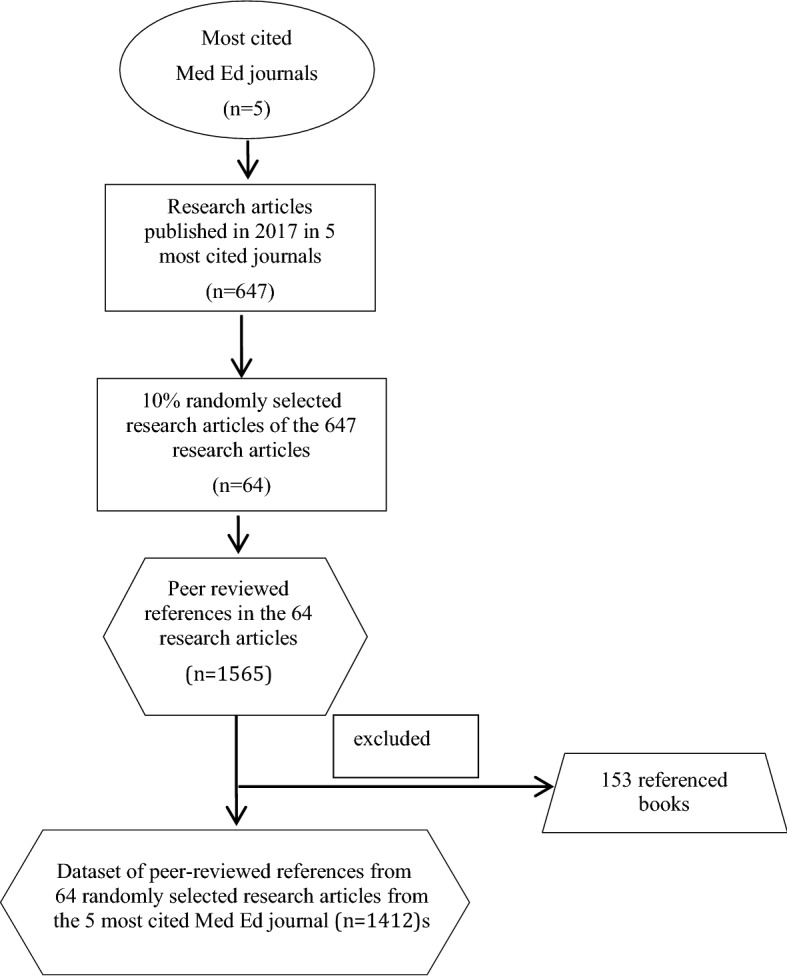
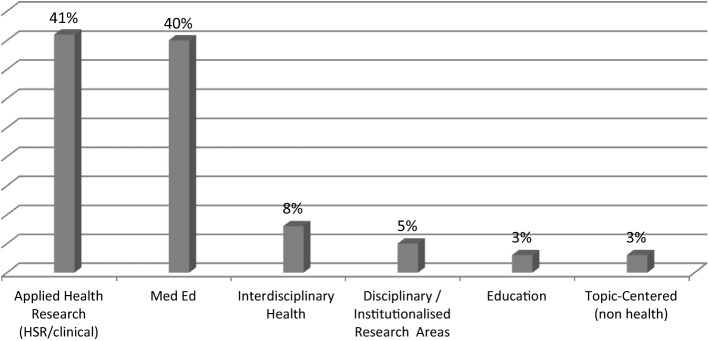
The medical education (Med Ed) research community characterises itself as drawing on the insights, methods, and knowledge from multiple disciplines and research domains (e.g. Sociology, Anthropology, Education, Humanities, Psychology). This common view of Med Ed research is echoed and reinforced by the narrative used by leading Med Ed departments and research centres to describe their activities as "interdisciplinary." Bibliometrics offers an effective method of investigating scholarly communication to determine what knowledge is valued, recognized, and utilized. By empirically examining whether knowledge production in Med Ed research draws from multiple disciplines and research areas, or whether it primarily draws on the knowledge generated internally within the field of Med Ed, this article explores whether the characterisation of Med Ed research as interdisciplinary is substantiated. A citation analysis of 1412 references from research articles published in 2017 in the top five Med Ed journals was undertaken. A typology of six knowledge clusters was inductively developed. Findings show that the field of Med Ed research draws predominantly from two knowledge clusters: the Applied Health Research cluster (made of clinical and health services research), which represents 41% of the references, and the Med Ed research cluster, which represents 40% of the references. These two clusters cover 81% of all references in our sample, leaving 19% distributed among the other knowledge clusters (i.e., Education, disciplinary, interdisciplinary and topic centered research). The quasi-hegemonic position held by the Applied Health and Med Ed research clusters confines the other sources of knowledge to a peripheral role within the Med Ed research field. Our findings suggest that the assumption that Med Ed research is an interdisciplinary field is not convincingly supported by empirical data and that the knowledge entering Med Ed comes mostly from the health research domain.
医学教育(Med Ed)研究界自称为借鉴了多个学科和研究领域的见解、方法和知识(例如社会学、人类学、教育、人文学科、心理学)。这种对医学教育研究的共同看法,在领先的医学教育部门和研究中心用来描述其活动的叙述中得到了呼应和强化,即“跨学科”。文献计量学提供了一种有效的方法来调查学术交流,以确定哪些知识是有价值的、被认可的和被利用的。通过实证检验医学教育研究的知识生产是否来自多个学科和研究领域,或者主要是从医学教育领域内部产生的知识中汲取,本文探讨了医学教育研究的跨学科性质是否得到证实。对 2017 年在顶级 5 本医学教育期刊上发表的研究文章中的 1412 条参考文献进行了引文分析。采用归纳法开发了一个六类知识群的分类法。研究结果表明,医学教育研究领域主要来自两个知识群:应用健康研究群(由临床和卫生服务研究组成),占参考文献的 41%,以及医学教育研究群,占参考文献的 40%。这两个群涵盖了我们样本中 81%的参考文献,其余 19%分布在其他知识群(即教育、学科、跨学科和以主题为中心的研究)中。应用健康和医学教育研究群的准霸权地位将其他知识来源限制在医学教育研究领域的边缘角色。我们的研究结果表明,医学教育研究是一个跨学科领域的假设并没有得到经验数据的有力支持,进入医学教育领域的知识主要来自健康研究领域。