Chen Zu-Hua, Li Yun-Jiang, Wang Xiu-Juan, Ye Yun-Feng, Wu Bao-Liang, Zhang Yan, Xuan Wei-Ling, Bao Jian-Feng, Deng Xue-Ying
Department of Radiology.
Department of Science and Education, The Hangzhou Xixi Hospital Affiliated to Zhejiang Chinese Medical University.
Medicine (Baltimore). 2020 Jun 26;99(26):e20837. doi: 10.1097/MD.0000000000020837.
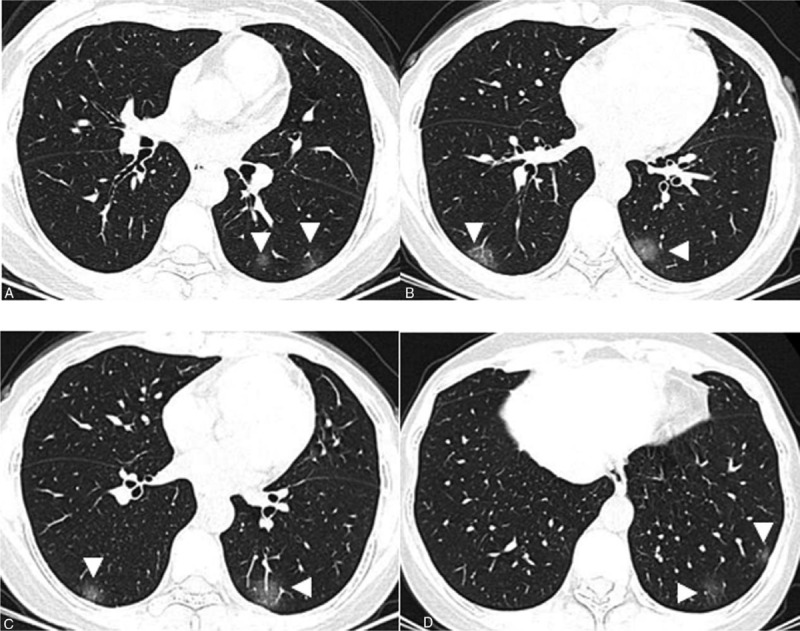
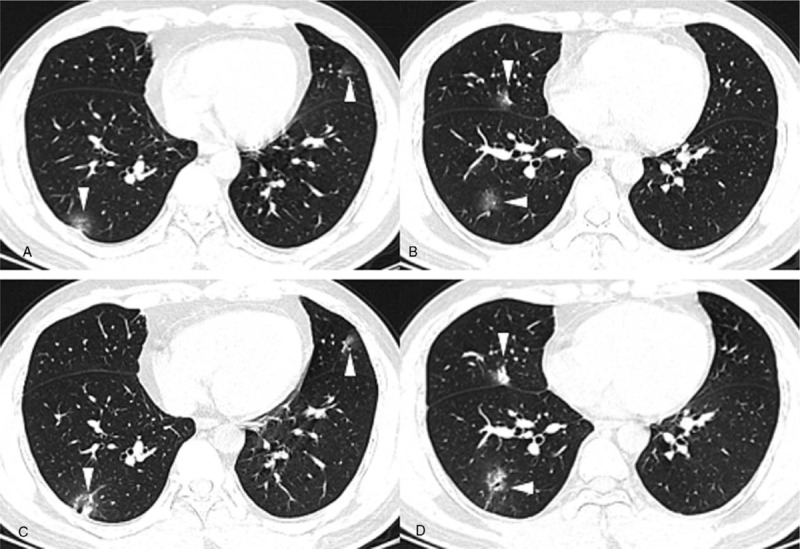
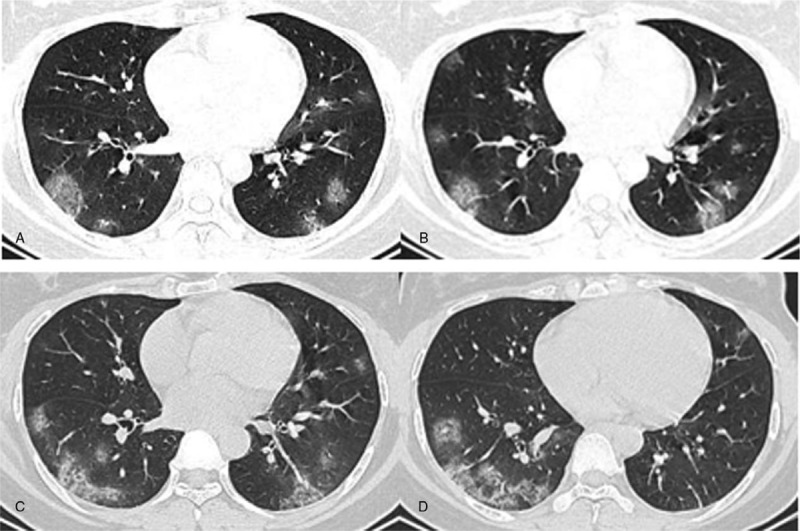
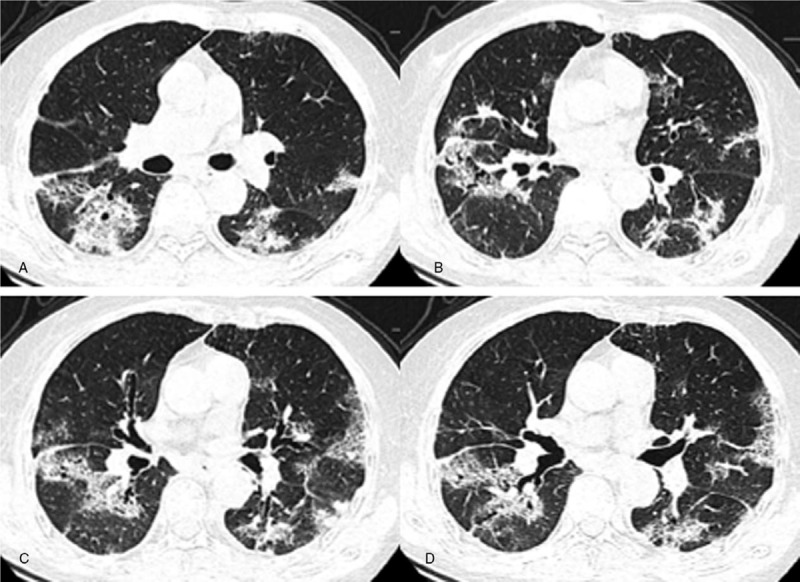
To compare clinical and imaging features between patients with an initial negative reverse-transcription-polymerase chain-reaction (RT-PCR) test and patients with an initial positive RT-PCR test. CT follow-up analysis in the negative RT-PCR group is also described.Thirty-three patients with SARS-CoV-2 infection confirmed by RT-PCR, with 216 lesions upon CT, were included. Demographic information and chest CT imaging features were collected.The average age in the whole study group was 46.9 ± 11.1 years, with 18 males and 15 females. Patients in the positive RT-PCR test group were more likely to have a fever than patients in the negative RT-PCR test group (85.7% vs 50%, P < .05). Lesions in the positive group were more likely to be located in the peripheral area than lesions in the negative group (83.6% vs 68.2%, P < .05). Regarding the appearance of 216 lesions, ground-glass opacities (GGOs) with consolidation (43.2%) was the most common appearance in the negative group, followed by pure GGOs (31.8%), while in the positive group, pure GGOs (32%) and GGOs with interlobular septal thickening (32.8%) were both most frequent, and the difference between them was evident (P < .05). For the follow-up analysis, the largest short-axis of a lesion was smaller upon follow-up (median size 13.6 mm vs 14 mm), albeit by a smaller margin. Pure GGOs decreased in frequency, from 31.3% to 21.3%, while consolidation increased in frequency, from 7.5% to 12.5%.The manifestations of COVID-19 in patients with a first negative RT-PCR test and patients with a positive first RT-PCR test are different to some extent. The consolidation component may increase after follow-up.
比较初次逆转录聚合酶链反应(RT-PCR)检测结果为阴性的患者与初次RT-PCR检测结果为阳性的患者之间的临床和影像学特征。还描述了RT-PCR检测结果为阴性的患者的CT随访分析。纳入了33例经RT-PCR确诊的新型冠状病毒肺炎(SARS-CoV-2)感染患者,其CT上共有216个病灶。收集了人口统计学信息和胸部CT影像特征。整个研究组的平均年龄为46.9±11.1岁,男性18例,女性15例。RT-PCR检测结果为阳性的患者比RT-PCR检测结果为阴性的患者更易出现发热(85.7%对50%,P<0.05)。阳性组的病灶比阴性组的病灶更易位于外周区域(83.6%对68.2%,P<0.05)。关于216个病灶的表现,在阴性组中,磨玻璃影(GGO)合并实变(43.2%)是最常见的表现,其次是单纯GGO(31.8%),而在阳性组中,单纯GGO(32%)和伴有小叶间隔增厚的GGO(32.8%)最为常见,两者之间差异明显(P<0.05)。对于随访分析,病灶的最大短轴在随访时变小(中位大小13.6mm对14mm),尽管幅度较小。单纯GGO的频率从31.3%降至21.3%,而实变的频率从7.5%增至12.5%。初次RT-PCR检测结果为阴性的患者和初次RT-PCR检测结果为阳性的患者的新型冠状病毒肺炎表现存在一定差异。随访后实变成分可能增加。