• 文献检索
  • 文档翻译
  • 深度研究
  • 学术资讯
  • Suppr Zotero 插件Zotero 插件
  • 邀请有礼
  • 套餐&价格
  • 历史记录
应用&插件
Suppr Zotero 插件Zotero 插件浏览器插件Mac 客户端Windows 客户端微信小程序
定价
高级版会员购买积分包购买API积分包
服务
文献检索文档翻译深度研究API 文档MCP 服务
关于我们
关于 Suppr公司介绍联系我们用户协议隐私条款
关注我们

Suppr 超能文献

核心技术专利:CN118964589B侵权必究
粤ICP备2023148730 号-1Suppr @ 2026

文献检索

告别复杂PubMed语法,用中文像聊天一样搜索,搜遍4000万医学文献。AI智能推荐,让科研检索更轻松。

立即免费搜索

文件翻译

保留排版,准确专业,支持PDF/Word/PPT等文件格式,支持 12+语言互译。

免费翻译文档

深度研究

AI帮你快速写综述,25分钟生成高质量综述,智能提取关键信息,辅助科研写作。

立即免费体验

用新的调查工具评估转化研究的组织氛围。

Assessing the Organizational Climate for Translational Research with a New Survey Tool.

机构信息

German Centre for Higher Education Research and Science Studies (DZHW), Schützenstraße 6A, 10117, Berlin, Germany.

Department of Social Sciences, Humboldt-Universität zu Berlin, Berlin, Germany.

出版信息

Sci Eng Ethics. 2020 Dec;26(6):2893-2910. doi: 10.1007/s11948-020-00234-0. Epub 2020 Jun 26.

DOI:10.1007/s11948-020-00234-0
PMID:32592136
原文链接:https://pmc.ncbi.nlm.nih.gov/articles/PMC7755863/
Abstract

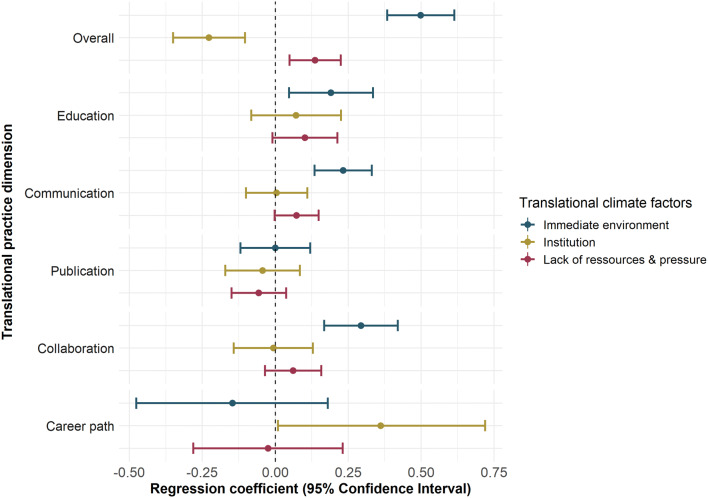
Promoting translational research as a means to overcoming chasms in the translation of knowledge through successive fields of research from basic science to public health impacts and back is a central challenge for research managers and policymakers. Organizational leaders need to assess baseline conditions, identify areas needing improvement, and to judge the impact of specific initiatives to sustain or improve translational research practices at their institutions. Currently, there is a lack of such an assessment tool addressing the specific context of translational biomedical research. To close this gap, we have developed a new survey for assessing the organizational climate for translational research. This self-assessment tool measures employees' perceptions of translational research climate and underlying research practices in organizational environments and builds on the established Survey of Organizational Research Climate, assessing research integrity. Using this tool, we show that scientists at a large university hospital (Charité Berlin) perceive translation as a central and important component of their work. Importantly, local resources and direct support are main contributing factors for the practical implementation of translation into their own research practice. We identify and discuss potential leverage points for an improvement of research climate to foster successful translational research.

摘要

将转化研究作为一种手段来克服从基础科学到公共卫生影响等连续研究领域中知识转化的鸿沟,是研究经理人和政策制定者面临的核心挑战。组织领导者需要评估基线条件,确定需要改进的领域,并评估特定举措的影响,以维持或改善其机构的转化研究实践。目前,缺乏针对转化生物医学研究特定背景的这种评估工具。为了弥补这一差距,我们开发了一种新的调查工具,用于评估转化研究的组织氛围。这个自我评估工具衡量了员工对组织环境中转化研究氛围和潜在研究实践的看法,并以已建立的组织研究氛围调查为基础,评估研究诚信。使用这个工具,我们表明,一家大型大学医院(柏林夏里特医院)的科学家将转化视为其工作的核心和重要组成部分。重要的是,当地资源和直接支持是将转化实际应用于自己的研究实践的主要因素。我们确定并讨论了提高研究氛围以促进成功转化研究的潜在杠杆点。

https://cdn.ncbi.nlm.nih.gov/pmc/blobs/b18f/7755863/427d607dd64a/11948_2020_234_Fig2_HTML.jpg
https://cdn.ncbi.nlm.nih.gov/pmc/blobs/b18f/7755863/b6c376b05a70/11948_2020_234_Fig1_HTML.jpg
https://cdn.ncbi.nlm.nih.gov/pmc/blobs/b18f/7755863/427d607dd64a/11948_2020_234_Fig2_HTML.jpg
https://cdn.ncbi.nlm.nih.gov/pmc/blobs/b18f/7755863/b6c376b05a70/11948_2020_234_Fig1_HTML.jpg
https://cdn.ncbi.nlm.nih.gov/pmc/blobs/b18f/7755863/427d607dd64a/11948_2020_234_Fig2_HTML.jpg

相似文献

1
Assessing the Organizational Climate for Translational Research with a New Survey Tool.用新的调查工具评估转化研究的组织氛围。
Sci Eng Ethics. 2020 Dec;26(6):2893-2910. doi: 10.1007/s11948-020-00234-0. Epub 2020 Jun 26.
2
Perceptions of Research Integrity Climate in Hungarian Universities: Results from A Survey among Academic Researchers.匈牙利大学科研诚信氛围的认知:一项针对学术研究人员的调查结果。
Sci Eng Ethics. 2022 Jun 30;28(4):30. doi: 10.1007/s11948-022-00382-5.
3
Relationships between the Survey of Organizational Research Climate (SORC) and self-reported research practices.组织研究氛围调查(SORC)与自我报告的研究实践之间的关系。
Sci Eng Ethics. 2013 Sep;19(3):835-50. doi: 10.1007/s11948-012-9409-0. Epub 2012 Oct 25.
4
A Multisite Health System Survey to Assess Organizational Context to Support Evidence-Based Practice.多地点卫生系统调查,评估支持循证实践的组织背景。
Worldviews Evid Based Nurs. 2019 Aug;16(4):271-280. doi: 10.1111/wvn.12375. Epub 2019 Jun 23.
5
Development and validation of the Survey of Organizational Research Climate (SORC).组织研究氛围调查(SORC)的编制与验证。
Sci Eng Ethics. 2013 Sep;19(3):813-34. doi: 10.1007/s11948-012-9410-7. Epub 2012 Oct 25.
6
Impact of organizational climate on organizational commitment and perceived organizational performance: empirical evidence from public hospitals.组织氛围对组织承诺和感知组织绩效的影响:来自公立医院的实证证据
BMC Health Serv Res. 2018 Jun 1;18(1):399. doi: 10.1186/s12913-018-3149-z.
7
Identifying organizational cultures that promote patient safety.识别促进患者安全的组织文化。
Health Care Manage Rev. 2009 Oct-Dec;34(4):300-11. doi: 10.1097/HMR.0b013e3181afc10c.
8
Collective intelligence for translational medicine: Crowdsourcing insights and innovation from an interdisciplinary biomedical research community.转化医学中的集体智慧:来自跨学科生物医学研究社区的众包见解与创新。
Ann Med. 2015;47(7):570-5. doi: 10.3109/07853890.2015.1091945. Epub 2015 Oct 15.
9
Unpacking Contexting and Institutionalizing as Complex Sustaining Practices Comment on "Sustaining Knowledge Translation Practices: A Critical Interpretive Synthesis".解析语境化和制度化作为复杂的维持实践——对“维持知识转化实践:批判性解释性综合”的评论。
Int J Health Policy Manag. 2023;12:7523. doi: 10.34172/ijhpm.2023.7523. Epub 2023 Feb 13.
10
Perceptions of research integrity climate differ between academic ranks and disciplinary fields: Results from a survey among academic researchers in Amsterdam.学术研究人员在科研诚信氛围方面的感知因学术等级和学科领域而异:来自阿姆斯特丹学术研究人员调查的结果。
PLoS One. 2019 Jan 18;14(1):e0210599. doi: 10.1371/journal.pone.0210599. eCollection 2019.

引用本文的文献

1
Assessing the climate for research ethics in labs: Development and validation of a brief measure.评估实验室研究伦理氛围:简短测量工具的开发与验证。
Account Res. 2022 Jan;29(1):2-17. doi: 10.1080/08989621.2021.1881891. Epub 2021 Feb 4.
2
Improving the trustworthiness, usefulness, and ethics of biomedical research through an innovative and comprehensive institutional initiative.通过创新和全面的机构举措,提高生物医学研究的可信度、有用性和伦理性。
PLoS Biol. 2020 Feb 11;18(2):e3000576. doi: 10.1371/journal.pbio.3000576. eCollection 2020 Feb.

本文引用的文献

1
Improving the trustworthiness, usefulness, and ethics of biomedical research through an innovative and comprehensive institutional initiative.通过创新和全面的机构举措,提高生物医学研究的可信度、有用性和伦理性。
PLoS Biol. 2020 Feb 11;18(2):e3000576. doi: 10.1371/journal.pbio.3000576. eCollection 2020 Feb.
2
Perceptions of research integrity climate differ between academic ranks and disciplinary fields: Results from a survey among academic researchers in Amsterdam.学术研究人员在科研诚信氛围方面的感知因学术等级和学科领域而异:来自阿姆斯特丹学术研究人员调查的结果。
PLoS One. 2019 Jan 18;14(1):e0210599. doi: 10.1371/journal.pone.0210599. eCollection 2019.
3
Survey of organizational research climates in three research intensive, doctoral granting universities.
对三所研究密集型、授予博士学位的大学的组织研究氛围的调查。
J Empir Res Hum Res Ethics. 2014 Dec;9(5):72-88. doi: 10.1177/1556264614552798. Epub 2014 Oct 2.
4
Challenges and opportunities for reinvigorating the physician-scientist pipeline.重振医学科研人才培养渠道面临的挑战与机遇。
J Clin Invest. 2015 Mar 2;125(3):883-7. doi: 10.1172/JCI80933. Epub 2015 Feb 17.
5
Characterization of investigators' approach to translational research: a qualitative study.研究人员开展转化研究方法的特征:一项定性研究
Clin Transl Sci. 2014 Dec;7(6):441-6. doi: 10.1111/cts.12196. Epub 2014 Jul 25.
6
Increasing value and reducing waste in research design, conduct, and analysis.提高研究设计、实施和分析的价值并减少浪费。
Lancet. 2014 Jan 11;383(9912):166-75. doi: 10.1016/S0140-6736(13)62227-8. Epub 2014 Jan 8.
7
How to increase value and reduce waste when research priorities are set.如何在设定研究重点时增加价值和减少浪费。
Lancet. 2014 Jan 11;383(9912):156-65. doi: 10.1016/S0140-6736(13)62229-1. Epub 2014 Jan 8.
8
Development and validation of the Survey of Organizational Research Climate (SORC).组织研究氛围调查(SORC)的编制与验证。
Sci Eng Ethics. 2013 Sep;19(3):813-34. doi: 10.1007/s11948-012-9410-7. Epub 2012 Oct 25.
9
Relationships between the Survey of Organizational Research Climate (SORC) and self-reported research practices.组织研究氛围调查(SORC)与自我报告的研究实践之间的关系。
Sci Eng Ethics. 2013 Sep;19(3):835-50. doi: 10.1007/s11948-012-9409-0. Epub 2012 Oct 25.
10
How do we change practice when we have the evidence?当我们有了证据,我们如何改变实践?
Am J Occup Ther. 2012 Sep-Oct;66(5):e85-8. doi: 10.5014/ajot.2012.004432.